Deus stetit in synagoga deorum Versus 1 Deus stetit in synagoga deorum; in medio autem deos dijudicat.God stands in the assembly of the gods; in the midst he judges the gods. Word Notes: Versus 2 Usquequo judicatis iniquitatem, et facies peccatorum sumitis?How long will you judge unjustly and show favour to the wicked? Word Notes: …
Month: November 2025

A close reading of the Nicene–Constantinopolitan Creed reveals how little of it reflects the actual teaching of Jesus. Instead, it draws heavily on Paul, John, and fourth-century metaphysics shaped by imperial needs. This article examines why Christianity drifted so far from Jesus’ ethical message and how doctrine replaced the original moral vision of the Gospels.

A historical reflection on how Christianity once shaped a unified Mediterranean world, how Islam transformed the East, and how centuries of tension reshaped Europe. The article argues for a renewed moral centre today—not doctrinal, but rooted in mutual respect and the ethical core of Jesus’ teaching.
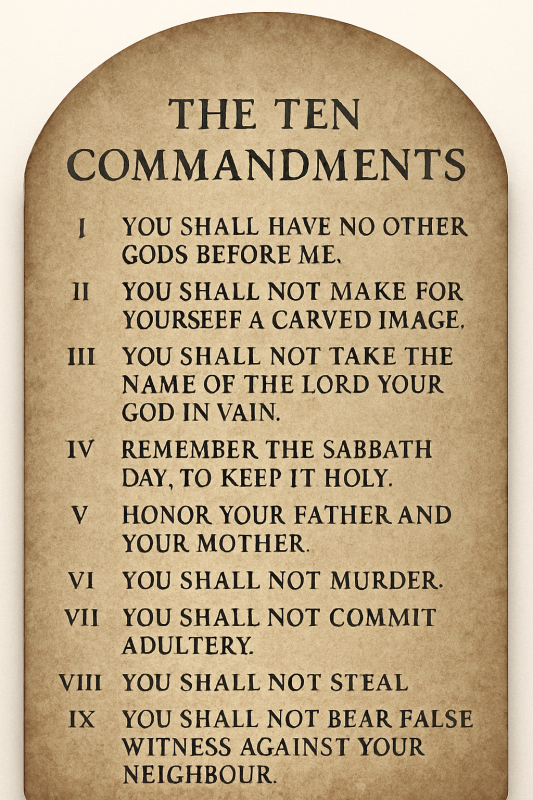
A reflection on how Europe might rediscover a shared moral centre without enforcing religious uniformity. Using Jesus’ ethic as one integrative voice among many, this piece explores innate moral capacities, cultural modelling, and the creative–destructive axis at the heart of human behaviour. Includes scientific notes and two asides on moral development and plural ethics.
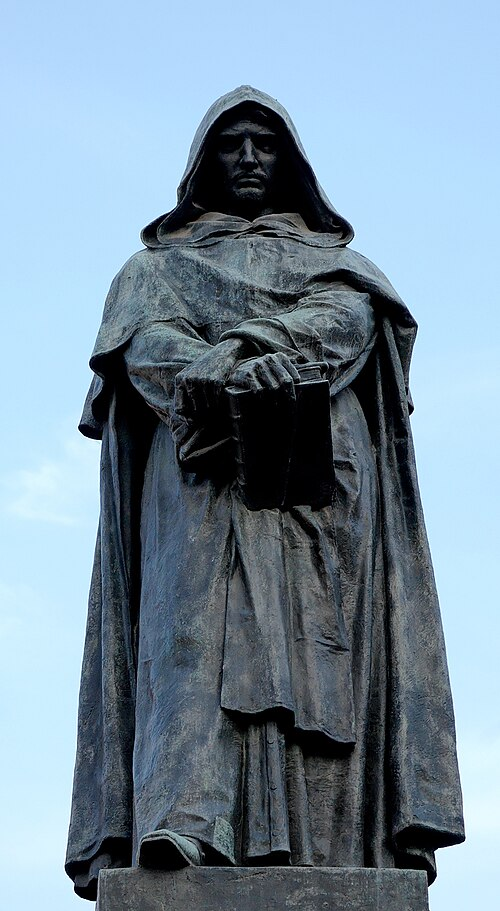
Giordano Bruno saw, more than 500 years ago, that human beings project their inner life onto the cosmos. His “infinite universe” was not astronomy but a vision of the human psyche speaking through myth — a truth that echoes across my own work. In an age that has lost its spiritual depth, Bruno’s voice returns with renewed urgency.
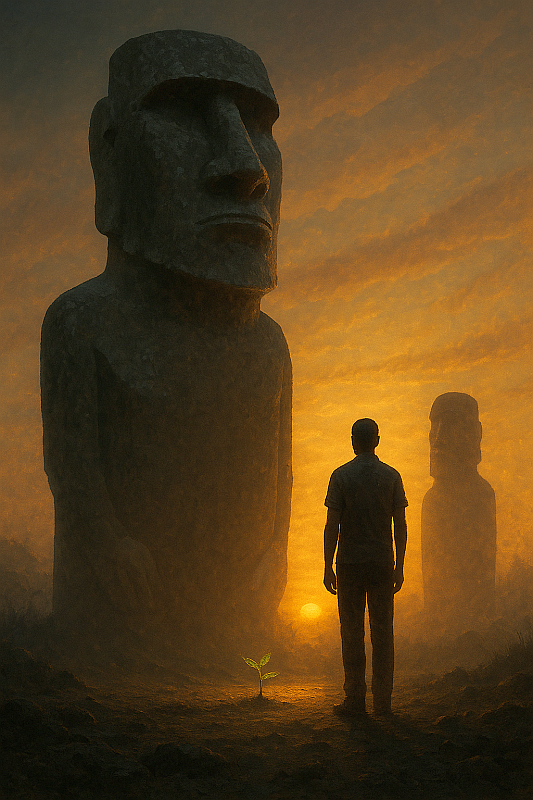
A sweeping reflection on humanity’s struggle to reconcile instinct and intellect, from the ancient gods of Mesopotamia to the teachings of Jesus. This essay argues that true transcendence lies not in power but in inner integration, and that mortality presses us toward completion. Through myth, psychology, memory, and personal experience, it shows that the only moment for wholeness is now.
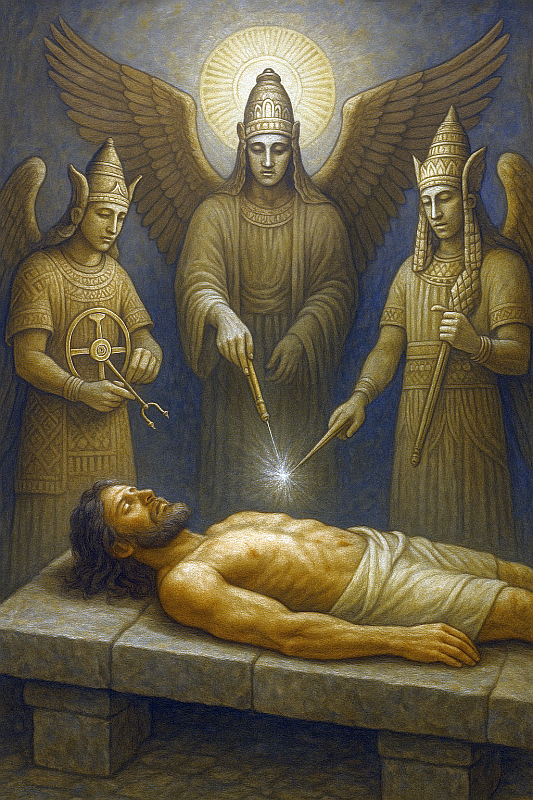
A demythologised reading of Genesis and the Gospels reveals a single thread running through human history: we are conflicted, powerful, unstable creatures trying to understand ourselves. Eden describes why we are dangerous; Jesus offers a path to inner transformation. Later doctrine turned this into metaphysics, but the original insight was psychological. This article explores Adam, Meister Eckhart, the Synoptics, and the Sumerian myths as early attempts to explain the divided human self — and what redemption really meant.

A reflective exploration of why humans are both aggressive and endlessly self-questioning. Drawing on evolutionary inheritance, mythic imagination, and the possibility of ancient genetic engineering, this piece asks what it means to be a species that not only acts, but wonders why it acts.

A reflection on how broadcasting has shifted from its original public mission — to inform, to educate, to entertain — into a marketplace driven by attention, emotion, and confirmation. From medieval town criers to the BBC, from early newspapers to today’s partisan media, the thirst for drama and validation has always shaped the news. This essay asks what broadcasting is now for, why audiences gravitate toward outrage and simplicity, and why I write without seeking approval — letting my thoughts exist, like Shakespeare’s sonnet, for those who may one day find them.
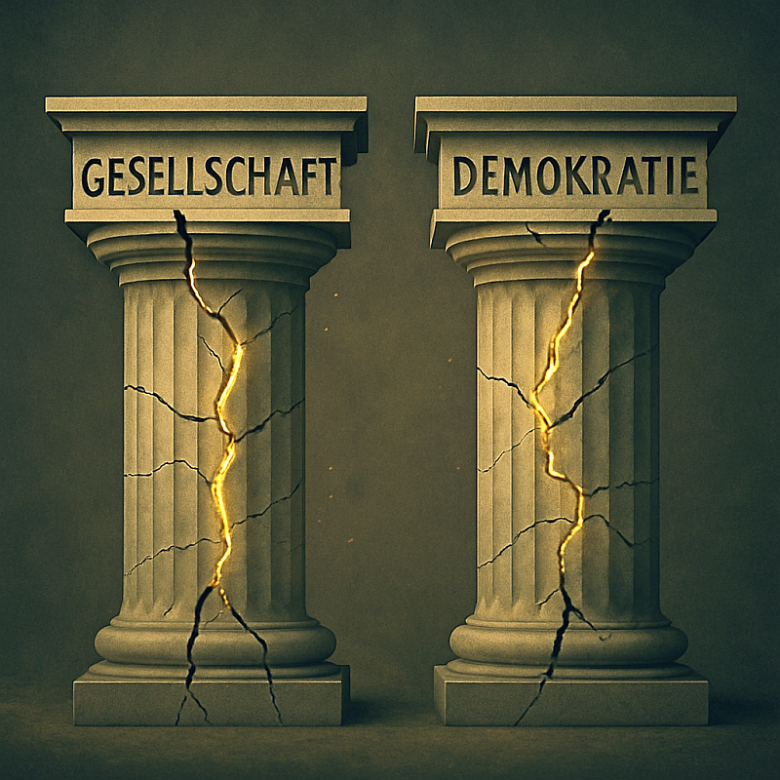
Public debate in Britain and Germany increasingly blames immigration for social and political strain. Yet most pressures—housing shortages, overstretched schools and hospitals, stagnant wages, declining neighbourhoods, and falling trust—began decades before recent migration waves. Immigration is not the cause of systemic weakness; it merely exposes it. This essay traces the deeper forces behind today’s instability: long-term underinvestment, the neoliberal shift since the 1980s, demographic ageing, bureaucratic rigidity, and the erosion of social cohesion. It also examines why parties like the AfD and Reform UK attract support—and why their rise reflects a democratic system struggling to correct itself.