
I recently came across a YouTube video with the suitably alarming title The Disturbing Theory That Consciousness Isn’t Human. It brought together John von Neumann, Roger Penrose, Gödel’s incompleteness theorem, quantum mechanics and the possibility that consciousness may somehow reach beyond the biological brain. I was intrigued, but not persuaded. We understand remarkably little about …
This inquiry began in an unlikely place. I was constructing a historical timeline for a Year 8 pupil. The intention was simply to give her some idea of the people, events and ideas that had shaped the world she had inherited. But deciding what belonged on the timeline raised a much larger question. What should …

The first striking feature is that the evidence does not consist merely of occasional statements that YHWH is “in heaven”. The associated phenomena are extraordinarily widespread. On our present classification, noise/thunder occurs clearly or possibly in 33/39 books (84.6%), fire in 32/39 (82.1%), geographical approach/movement in 31/39 (79.5%), brightness/flashes and shaking each in 26/39 (66.7%), …

The featured image reflects the renewed emphasis on religious observance in nineteenth-century education and its close association with discipline, obedience and the preparation of children for their expected place in the workforce. When I was teaching, a colleague once commented on my relationship with my pupils. “You do not suffer fools gladly,” she said. I …
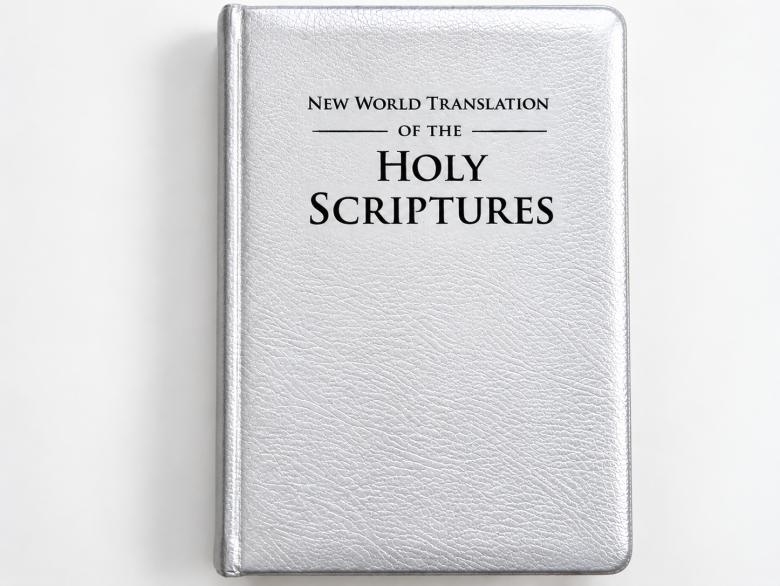
The New World Translation of the Holy Scriptures occupies a special place in the history of Jehovah’s Witnesses. The first part, the New World Translation of the Christian Greek Scriptures, appeared in 1950; the complete Bible followed in 1961. Its publication was received enthusiastically within the organisation. Watch Tower accounts describe convention audiences greeting the …
The three columns in the following table represent three different stages in our access to Psalm 19. The first gives the familiar English wording of the King James Version (1611), one of the most influential English translations of the Bible. The second gives the Latin text of the Roman Psalter, which belongs to a much …

Psalm 18 and 2 Samuel 22 are so close in wording, sequence and imagery that they are best treated as two textual versions of the same underlying composition rather than as independent witnesses. Both present YHWH through a dense cluster of recurring features: cloud, fire, smoke, thunder or violent noise, lightning or flashes, descent, aerial …
Human beings are meaning-seeking creatures. We look for order, relationship and pattern everywhere because the alternative—fragmentation, isolation and incoherence—is profoundly disturbing. Perception itself is selective: no mind can take in the whole. We extract what seems salient, arrange it, interpret it and thereby make experience intelligible. Art, history, religion and philosophy all perform this function …
How the graph is structured The graph places selected books of the Old Testament in their approximate chronological order of composition, rather than their order in the Bible. The dates beneath the books are necessarily approximate, since many biblical books contain material written or edited at different periods. The black continuous line is different from …
Reading the books of the Bible separately rather than as parts of a single theological system produces some interesting differences in their pictures of God and human life. In the Psalms, YHWH is everywhere. He protects, rescues, judges, punishes, defeats enemies and receives praise. Human experience is repeatedly understood through a relationship with YHWH. The …