“My yoke is easy, and my burden is light.” — Matthew 11:30 “If anyone would come after me, let him deny himself and take up his cross and follow me.” — Mark 8:34
These two sayings of Jesus are often quoted, but rarely together. At first glance, they seem to offer contrasting visions—one light and gentle, the other demanding and harsh. But when read in the spirit of Jesus’ broader message, they speak with a shared voice.
When Jesus says, “My yoke is easy,” he is not offering a new system of rules or religious demands. He is offering something far simpler and far deeper: an invitation to seek truth inwardly, rather than follow imposed structures. The burden is light because it requires no performance—only honesty.
And when he speaks of denying oneself and taking up the cross, he is not calling for suffering for its own sake, nor demanding that people suppress their humanity. What he’s asking is far more grounded: to let go of selfishness and egotism, to take a broader view, and to face life’s challenges honestly rather than avoid them. The “cross” is not some divine punishment or religious test—it is the reality of our personal struggles, carried with awareness and dignity.
Taken together, these sayings do not contradict one another. They reveal the same path: a life grounded in truth, stripped of religious fear, and carried with integrity.
The Religion He Rejected
Jesus’ harshest words were reserved not for “sinners,” but for the religious experts of his day:
“They tie up heavy burdens, hard to bear, and lay them on people’s shoulders…” — Matthew 23:4
The Pharisees—well-intentioned and learned—had developed an intricate web of oral laws that expanded upon the Torah. The result was a system of rules too heavy for ordinary people to bear, especially the rural poor who had little access to religious instruction.
Even rabbinic sources later recognised the danger of overcomplicating the path to God.
Jesus called it out: religion had become a system of exclusion. Burdened by detail, people lost sight of the divine altogether.
Jesus’ answer wasn’t rebellion. It was revelation.
Where Jesus Drew From
Jesus’ message was not completely innovative. It echoed—and reinterpreted—the Hebrew prophets:
“Comfort, comfort my people,” said Isaiah. (Isaiah 40:1. KJV)
“I desire mercy, not sacrifice,” declared Hosea. (Hosea 6:6 KJV)
He saw through hollow ritual to the deeper truth: God is not impressed by performance, but moved by compassion.
Jesus called God Abba—Father, in the most intimate sense—and spoke of lilies, seeds, bread, and children. His teachings grew from life itself, not from theological systems.
Jesus was not a political revolutionary in the conventional sense—he did not call for armed revolt, raise a militia, or seek to establish a new government. Yet his message was profoundly subversive. By proclaiming that the Kingdom of God was within, he offered people a form of personal freedom that no empire could touch. He stripped Rome of its ultimate claim: the power to define reality. In this sense, his teaching was a kind of spiritual insurrection. It challenged the illusion that external authority—whether imperial or religious—had final say over a person’s worth, destiny, or identity. By awakening people to their inner moral freedom, Jesus was dismantling the psychological foundations of oppression. It was not rebellion by force, but by clarity—and that made it even more dangerous.
The Harder Realisation: Two Gods
Many believe Jesus was refining Jewish tradition, but it’s possible he was challenging its very core. While YHWH is often portrayed as jealous, tribal, and violent, the God Jesus spoke of was something quite different—universal, inward, and grounded in love. When he said, “The Kingdom of God is within you” (Luke 17:21 KJV), it wasn’t poetic flourish—it was a radical shift. He wasn’t simply softening the old image of God; he was revealing another entirely—one who does not demand fear or sacrifice, but invites awakening, trust, and inner transformation.
Others Saw It Too
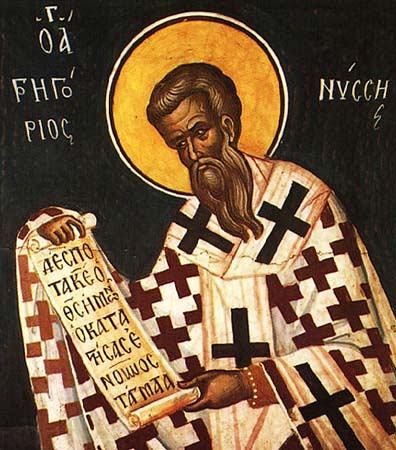
This bold idea didn’t end with Jesus. In the centuries that followed, others took it up in different ways. Marcion, in the second century, argued that the God of the Old Testament couldn’t possibly be the same as the God Jesus revealed. Some Gnostic thinkers spoke of a lower creator god—a “demiurge”—and a deeper, hidden God beyond him. Even Gregory of Nyssa, one of the most respected early Christian thinkers, argued that the violent images of God found in scripture reflected the fears and limitations of the human authors, rather than revealing the true nature of the divine. He did not reject YHWH, but he believed such portrayals were not the final word.
These weren’t just fringe views or rebellious heresies. They were serious efforts to express something unsettling but important: that not all gods are alike. And the one Jesus revealed had no need for fear.
Why This Still Matters
For Jesus, salvation wasn’t a distant reward in the afterlife—it was a present possibility, grounded in self-awareness and inner renewal. Centuries of religious teaching had portrayed God as angry, jealous, and punitive. People were taught to fear divine punishment, to obey without question, and to see themselves as unworthy. Over time, this bred deep guilt and self-rejection. Their natural sense of goodness—their ability to trust themselves, to feel joy, to love freely—was gradually suppressed. They were made to believe that they were broken from birth, and that only obedience or sacrifice could make them acceptable.
But Jesus offered a way back. He didn’t preach submission—he called people to remember who they were before fear took hold. He spoke to what had been beaten out of them by an overdemanding God: their innate capacity to love, to trust, to feel dignity in simply being alive. He pointed them not toward appeasement of a wrathful God, but toward the quiet rediscovery of their own wholeness.
He wasn’t calling people to become something else, but to return to what they already were—what religion had taught them to suppress, but what life itself had never stopped affirming. What Pullman calls Dust—that shimmering residue of awareness, desire, memory, and moral freedom—was not a flaw to be cleansed, but the very sign of being fully human.
It still matters because the same forces that once crushed the soul in the name of God now do so in the name of progress, productivity, and control.
People are still taught to distrust themselves: – to bury their instincts under rules, – to silence their doubts in favour of dogma, – to measure their worth by obedience, conformity, or output.
The message that Jesus carried—that truth is not imposed from above but discovered within—remains a threat to every system built on fear, guilt, and dependency.
It matters because people are still walking around feeling broken, unworthy, ashamed—waiting for permission to be whole.
And it matters because the rediscovery of what was beaten out of us—our capacity to love, to trust, to live with dignity—is the beginning of liberation.
This isn’t just theology. It’s a way of being that restores meaning where life has grown hollow.
For millennia, human societies have been shaped by what can only be called hate—systems of domination, conquest, exploitation, and indifference. But we didn’t just justify this behaviour in the name of gods like YHWH—we learned it from them. In scripture, YHWH demands obedience, commands genocide, rewards loyalty with land, and punishes doubt with death. This was the template: a god who ruled by fear and claimed ownership of human lives. And so we imitated him.
But as we once learned to live by that pattern, we can choose another. We can learn to love—and from that love, create a new society grounded not in fear or guilt, but in the quiet strength of awakened lives.
Final Thought
The earliest followers of Jesus didn’t speak of a new religion. They called it the Way—a path of inner transformation rooted in truth, freedom, and love. It was not about building temples or securing power, but about awakening something long buried within. The work Jesus began remains unfinished. And if we have the honesty and the will, it may now be ours to take up.