A Dark Teen Drama
Natural Selection (2016), written and directed by Chad Scheifele, presents itself as a teen drama about belonging, faith, and rebellion, but it unfolds as something darker: a study in how easily a vulnerable teenager can be manipulated toward destruction.
The story follows Tyler Evans (Mason Dye), a teenager who moves to a new town with his alcoholic mother. His family is fractured, and he desperately seeks belonging. At school, he encounters two very different influences: Paige (Katherine McNamara), a kind and empathetic classmate, and Indrid (Ryan Munzert), a rebellious outcast with a corrosive worldview.
Indrid: More Than an Outsider
Indrid quickly emerges as the film’s dark centre. Unlike the misunderstood “bad boy” archetype, he is written — and performed — as a manipulator with psychopathic tendencies. He exploits Tyler’s vulnerabilities, isolates him from Paige, and couches his nihilism in seductive rebellion.
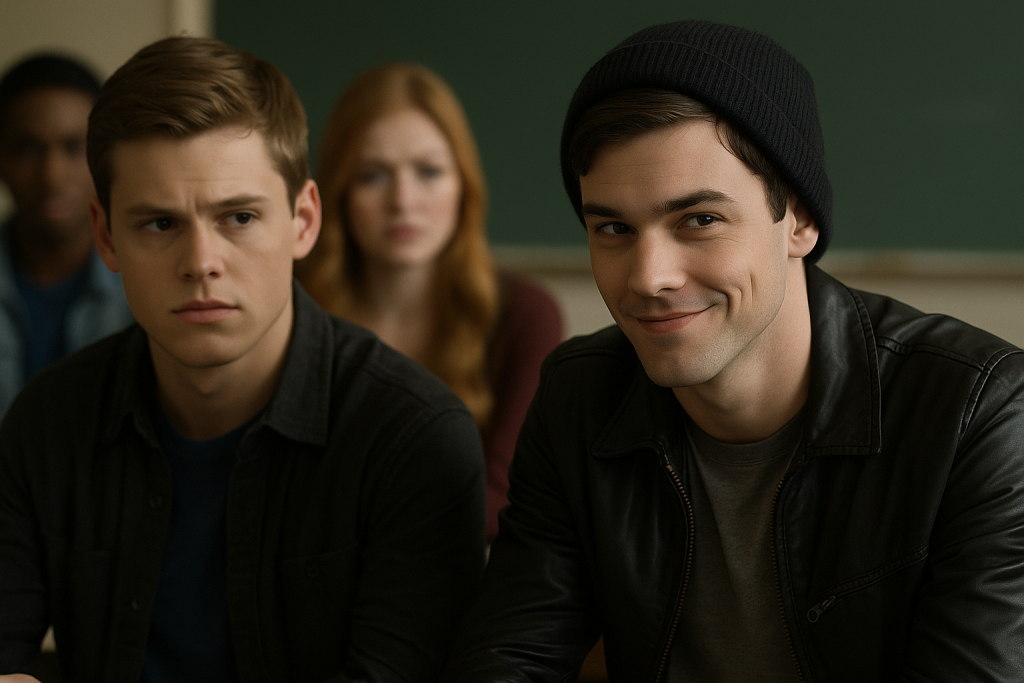
The film never explores the roots of Indrid’s psyche. His instability is simply presented as fact, heightening his menace. Only late in the film is his plan revealed: a violent school attack, foreshadowed but never clearly signalled until he is shown stuffing guns into a bag.
The sense of foreboding is relentless. From the ambiguous opening — hinting that Indrid may already have claimed a victim — to the tense finale, the viewer feels that Tyler is in danger of being corrupted, or even destroyed.
Flaws and Strengths
Critics were not kind. The Los Angeles Times called the film “stiffly heavy-handed” with awkward dialogue. The Young Folks labelled it “confused” and “contrived.” Film Threat argued that while the premise was powerful, the execution was bland.
These criticisms have weight. The classroom debates on evolution and God are underdeveloped, and the script often drifts toward melodrama. Yet the film has strengths: an oppressive atmosphere, effective suspense pacing, and compelling performances. For some viewers, it was “almost too painful to watch” until the relief of seeing Tyler resist Indrid’s manipulation.
Indrid’s Detachment in Action
One of the film’s clearest illustrations of Indrid’s psychopathy comes in his remarks to a classmate who races cars at reckless speed. Indrid points out the danger directly, but with contempt and cold detachment. He does not speak out of concern; instead, he frames the boy’s risk-taking as foolish and almost inevitable. When the boy is later killed in a crash, Indrid’s reaction is devoid of grief. For him, the tragedy is not a human loss but confirmation of his nihilistic worldview. This chilling ability to foresee dire consequences without empathy is another hallmark of psychopathy, and it deepens the credibility of his portrayal.
The Problem of the Title
The title Natural Selection is difficult to justify. While the film flirts with themes of evolution, survival, and morality, it never integrates them fully. Tyler’s “choice” between Paige and Indrid could be read as a metaphor for moral selection, but Indrid himself is not an anti-hero or a Darwinian challenger — simply a dangerous head case. The grandiosity of the title overshoots the narrative it labels.
Final Thoughts
Natural Selection was not a box-office success, and critics largely dismissed it. Yet for viewers attuned to its atmosphere and to the portrayal of Indrid, the film has real impact. Its suspense is palpable, and its depiction of manipulative psychopathy can feel uncomfortably close to lived experience.
Psychopathic relationships often begin with attraction rooted in envy: such personalities are drawn to those they secretly resent as superior, and then set out to humiliate or destroy them. What looks like friendship is really exploitation. This is Indrid’s role in Tyler’s life, and it is why his character feels disturbingly convincing.
Natural Selection (2016), directed by Chad Scheifele, may be flawed in craft, but in its chilling portrait of envy, detachment, and exploitation, it captures something disturbingly real.