
The Bible presents a progression of authority that shaped much of Western political thought. Power is first ascribed to God, then delegated to kings, to judges, and eventually to the people themselves. At each stage, prophets record the consequences of these shifts.
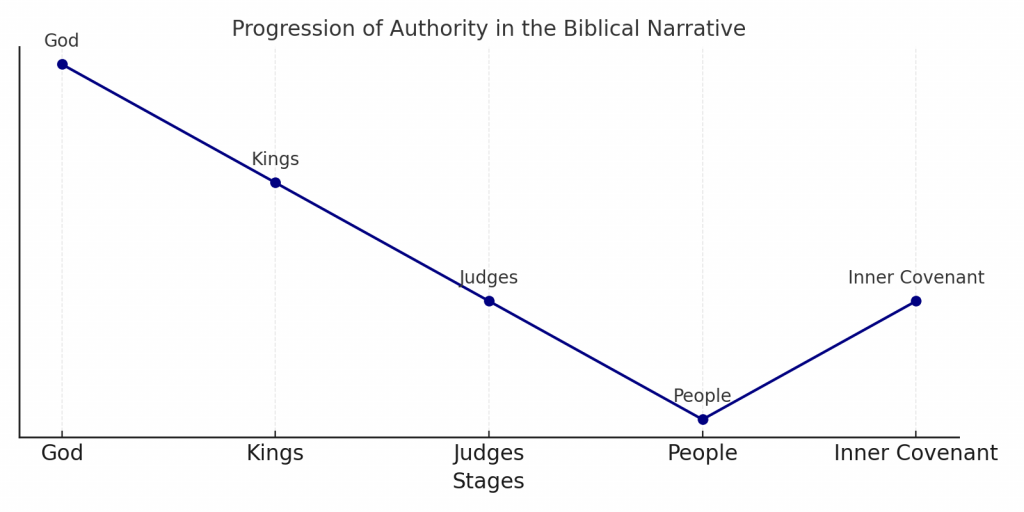
1. God and Kingship
When the people of Israel asked for a king, Samuel warned them of the cost.
This marks the moment when divine rule was replaced by human monarchy, with warnings of taxation, conscription, and loss of freedom.
2. Judges
Before kings, leadership came through judges.
Judges were temporary figures, raised in moments of crisis, not permanent rulers.
3. The People in Command
Prophets described what happened when established order broke down and the people themselves held sway.
These passages record instability and misplaced reliance on inadequate systems.
4. The Inner Covenant
Later prophecy introduced a different emphasis.
Here, the focus shifts from external rulers to an inward law or covenant.
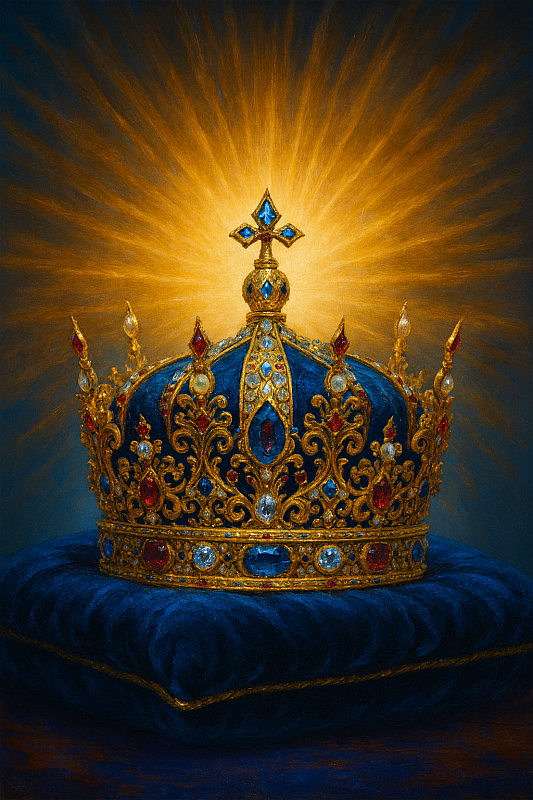
The final destination of this progression is not monarchy, law, or collective rule, but the discovery of an inner kingship. It is here that mankind finds its true authority: not delegated to external powers, but realised within. This is not achieved by preaching or imposed systems, but through metanoia — a change of mind and heart — and by the quiet force set by personal example.
5. Poetry and Music
The English poet George Herbert expressed this devotion in his poem Antiphon (I):
“Let all the world in ev’ry corner sing,
My God and King!”
Ralph Vaughan Williams set the words in his Five Mystical Songs (1911), where the refrain becomes a choral affirmation.
🎶 Listen to Vaughan Williams’ Antiphon on YouTube