Excerpt:
An in-depth reflection on language learning, from Chomsky’s theoretical model to Pinker’s biological instinct. Explores why the brain’s critical period fades, how aptitude and motivation shape success, and why honest, grammar-based teaching remains the only path to genuine fluency.
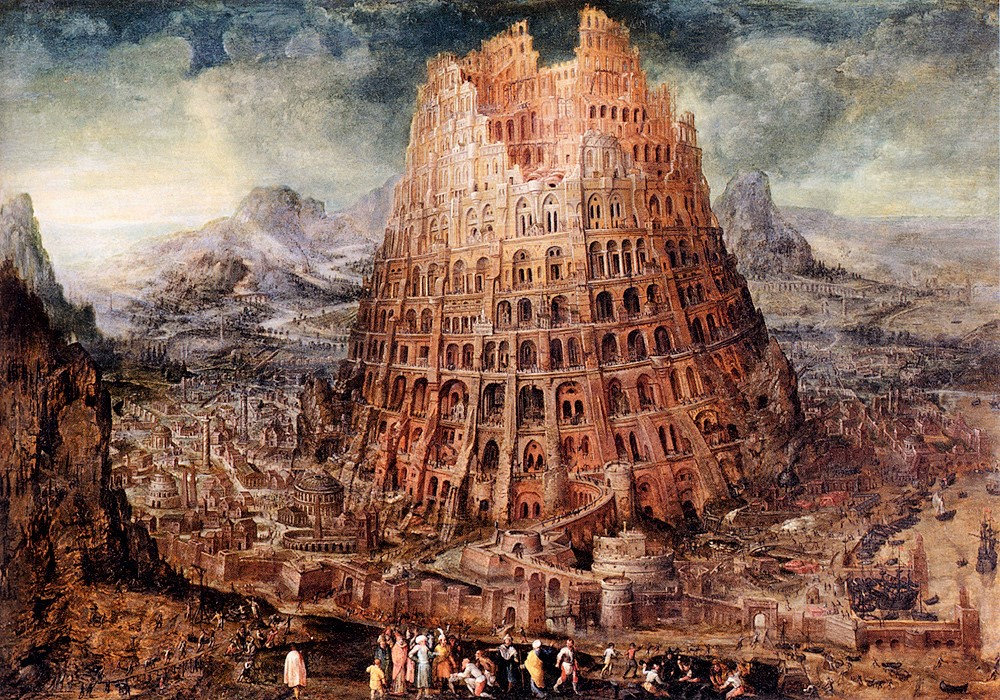
Flemish, c. 1550
Instinct, Aptitude, and the Illusion of Language Learning
1. The Two Theories: Chomsky and Pinker
In the twentieth century two thinkers transformed the study of language: Noam Chomsky and Steven Pinker.
They are often spoken of in the same breath, yet their aims were quite different.
Chomsky, writing from the 1950s onwards, was a theoretical linguist. He proposed that beneath all spoken languages lies a universal structure of rules — a Universal Grammar — common to every human being. His concern was not psychology but logic: to model the formal properties of language in the same way that mathematicians model numbers or equations. The “Language Acquisition Device” he posited was never intended as a literal organ of the brain but as a way of explaining how children can generate sentences they have never heard before.
Many English teachers and textbook writers misunderstood the point. Believing that Chomsky had spoken on the nature of language with godlike wisdom, they rushed to produce new teaching materials based on his model. Linguistics departments followed suit: the field shifted from art to science, from observation and meaning to formula and structure. His very complexity lent him the aura of a prophet. To question him was almost heretical. Having completed my own linguistic studies in 1979, I felt that Chomsky had, for all his brilliance, thrown a spanner in the works. It was as though the profession had fallen under a spell — crowds hailing the Emperor’s new grammar, dazzled by its apparent perfection, blind to its nakedness.
It was not until the emergence of artificial intelligence—and the work of Geoffrey Hinton and others on neural networks—that we began to see how the brain might actually learn: not through fixed rules but through patterns of adaptation.
The paradox is striking. Chomsky’s algorithmic vision mechanised linguistics, yet it is the machines — the very offspring of that vision — which now show us that thought itself may be non-algorithmic.
And still, the outcome is ambiguous. Some believe we have created a Frankenstein’s monster: systems that simulate intelligence more convincingly than we can explain it. The lesson, perhaps, is the same one linguistics forgot — that understanding the structure of a thing is not the same as knowing its life.
2. Pinker and the Biology of Language
Pinker, half a century later, turned Chomsky’s abstraction into biology. In The Language Instinct (1994), he argued that language is not a cultural invention but a neurological adaptation. The brain, he wrote, comes equipped with a specialised system for detecting patterns of sound and meaning. This system is most active in early childhood, before the brain’s plasticity declines through pruning and lateralisation (the loss of unused neural links and the shift of language control to the left hemisphere).
Areas such as Broca’s and Wernicke’s regions show this sensitivity clearly: children learn grammar without being taught, whereas adults must rely on reasoning and memory. Pinker’s thesis gave Chomsky’s linguistic model a physiological foundation.
Chomsky described how language could exist; Pinker showed why it does — and why it declines with age.
Evidence from Feral Children
Pinker’s argument gains tragic confirmation from the study of feral or isolated children, whose deprivation reveals how language depends on early neural readiness.
Children who miss the critical window can learn many words but struggle to combine them into grammatically complete sentences.
The best-known case is Genie, discovered in California in 1970 after more than a decade of isolation. Despite learning hundreds of words, her speech remained fragmentary: “Applesauce buy store”, “Father hit arm”. She could label objects but not master tense or subordination. Pinker cites this as evidence that the grammar-building mechanism closes after puberty — the critical period first proposed by Eric Lenneberg in 1967.
Earlier examples show the same pattern. Victor of Aveyron (France, 1800) never progressed beyond rudimentary utterances despite years of patient teaching by Dr Jean-Marc Itard. Kaspar Hauser (Nuremberg, 1828) learnt many words but failed to organise them into proper sentences.
Such cases demonstrate that while vocabulary learning can occur at any age, the spontaneous formation of grammar depends on early neural plasticity — or, later, on exceptional verbal intelligence and analytic reasoning. Once the instinct fades, adults must reconstruct through intellect what children once acquired by nature.
3. The Myth of Early Success
Since the Second World War, educational policy has insisted that every pupil should “learn a foreign language”. The result has been a long experiment in wishful thinking. Limited exposure in primary schools — often an hour or two a week — is not immersion, and without immersion there can be no natural acquisition.
True bilingualism grows only in environments where both languages are used for real communication. International schools, where several languages are spoken and pupils switch fluidly between them, come closest to reproducing the natural setting. Jodie Foster’s fluent French is an example: it reflects not classroom study but living the language.
4. Why Grammar Still Matters
Once the instinctive mechanism fades, older learners must rely on conscious analysis — the grammar-translation method long derided as outdated. Yet this rule-based approach suits the mature mind: it engages memory, logic, and pattern recognition.
Tests such as the York Modern Language Aptitude Test (YMLAT) confirm that later success depends on these cognitive abilities rather than on any surviving “instinct”.
Teaching grammar explicitly is therefore not a retreat from communication but its most effective route: it provides the scaffold on which understanding and expression can grow.
5. Aptitude, Motivation, and Honesty
Not every child has a natural facility for phonetic coding, inductive reasoning, or grammatical sensitivity. Just as some excel in mathematics or music, others possess an ear for language. Pretending that everyone can reach the same level has produced decades of self-deception. Examination boards have lowered standards and inflated grades to disguise failure. After four or five years of “study”, many British pupils can barely form a sentence in their supposed target language.
Language learning, like music, demands both discipline and desire. Without motivation it becomes an empty ritual, and no curriculum reform can change that.
Accelerated Language Learning: When It Works
There is one important exception to the general rule that adults learn languages slowly: intensive, aptitude-based programmes.
During and after the Second World War, governments ran accelerated courses to train diplomats, cryptographers, and intelligence officers. Candidates were selected for high verbal intelligence and proven aptitude.
These programmes succeeded not because they bypassed the critical period but because they used the mature mind to its full advantage. Instruction was concentrated, systematic, and rooted in grammar-translation. Learners were immersed for long hours each day in vocabulary, syntax, and controlled oral practice with native speakers.
Within six to nine months, many reached operational fluency — proof that, with sufficient motivation, aptitude, and structure, adults can learn languages effectively. What they achieved was not instinctive acquisition but conscious mastery: a triumph of intellect and discipline over the lost ease of childhood learning.
6. The Limits of Fluency
A realistic target might be the B2 level on the CEFR scale — the threshold of confident communication. Achieving that requires sustained contact with native speakers, high-quality input, and enough time for the brain to internalise patterns. Anything less is educational pretence.
7. Conclusion
The tragedy of post-war language education is that it confused access with attainment. Everyone was invited to learn, so no one truly did.
The instinct for language may be universal, but its cultivation demands truthfulness: an honest recognition of how languages are acquired, who can acquire them, and what conditions make it possible.
Immersion, aptitude, motivation, and authentic teaching are the real foundations of multilingualism — not ideology or policy.