From the Carmina Burana to Quatermass: The Hybrid Nature of Humanity
Human life is driven by lust, appetite, and fate — in all their guises. Consciousness reveals responsibility, but it does not guarantee the strength to bear it. These two truths echo through poetry, scripture, music, and myth. Psalm 8 asks it directly: “What is man, that thou art mindful of him?” From medieval taverns to Paris theatres, from ancient scripture to modern genetics, the story of humanity has been one of passions unbridled and responsibilities too heavy to carry.
1. The Medieval Mirror
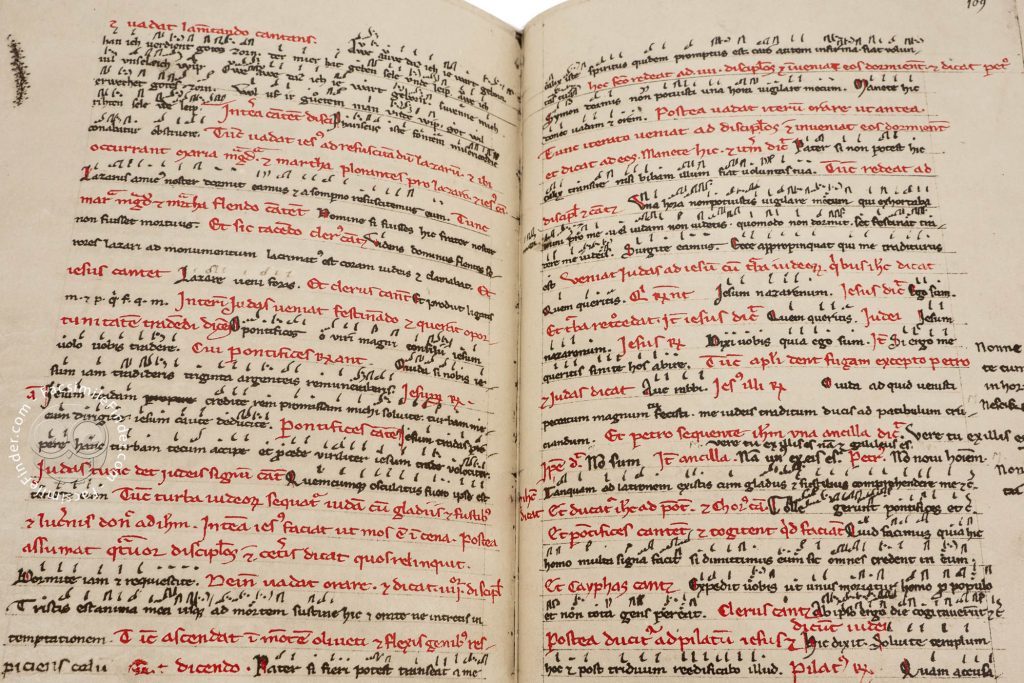
When medieval students and clerics — the goliards — gathered in taverns or lecture halls, they sang the verses we now call the Carmina Burana. Unearthed in 1803 at the monastery of Benediktbeuern (31 miles south of Munich), these poems reveal not piety but parody: lust, drink, satire, and cynicism.
The very first poem, Manus ferens munera (“A hand bearing gifts”), is a fierce denunciation of bribery, corruption, and the enslavement of souls:
Latin
Manus ferens munera
semper sunt odibilia;
sunt cara, sunt amara,
semper sunt abominanda.
Iudicem corrumpunt,
animam captivant;
dant servitutem
qui libertatem accipiunt.
Amici ex inimicis
fiunt per muneribus;
fit amor ex odio,
falsus et fallibilis.
Munera amorem pariunt,
sed verum non faciunt;
cor mentemque fallunt,
et mentem capiunt.
Dant carcerem animis,
perdunt bona, corrumpunt iura;
dant venena dulcia,
faciunt amara suavia.
Ex amaro dulce faciunt,
ex dulci faciunt amarum;
amant inimicos,
et odium simulant amicos.
Literal English
A hand bearing gifts
always brings hated things;
they are costly, they are bitter,
always to be abhorred.
They corrupt the judge,
they take the soul captive;
they give slavery
to those who receive freedom.
From enemies, friends are made
through gifts;
love arises from hatred,
false and deceitful.
Gifts give rise to love,
but never make it true;
they deceive the heart and mind,
and ensnare the soul.
They imprison souls,
they destroy goods, they corrupt justice;
they offer sweet poisons,
they make bitterness seem sweet.
They turn bitter into sweet,
and sweet into bitter;
they make enemies beloved,
and pretend friends out of hatred.
This relentless exposure of corruption, hypocrisy, and false love makes a startling opening to the Carmina Burana. The goliards hold nothing back: gifts — in the sense of bribes or bought favours — ensnare, poison, deceive, and corrupt. Their voice, though eight centuries old, speaks with unsettling modernity.
2. Ritual and Spectacle
In 1937, Carl Orff transformed 24 of these poems into his cantata Carmina Burana. With pounding rhythms and ritual choruses, he created a 20th-century myth of the Middle Ages. He left aside the most biting satires, yet what he kept still carried weight: the agony of O Fortuna, the mischief of spring dances, the ribaldry of medieval drinking haunts. Orff gave modern audiences a way to indulge their instincts within the safe frame of “medievalism” — passionate, yes, but ritualised.
Igor Stravinsky’s Rite of Spring (1913), by contrast, stripped away the frame. Where Orff ritualised desire into pageant, Stravinsky hurled it naked onto the stage. Its jagged rhythms and pagan sacrifice exposed the same molten passions — sexuality, violence, frenzy — but without disguise. Parisian audiences were scandalised, laughter breaking out not from humour but from embarrassment, as bourgeois respectability was confronted with the primitive energies on which it secretly rested.
Both Orff and Stravinsky, in their different ways, brought the audience face to face with the same truth the goliards had mocked centuries earlier: beneath the polished surface of respectability, human life is driven by lust, appetite, and fate — in all their guises.
3. Martian Inheritance
The science-fiction writer Nigel Kneale, in Quatermass and the Pit (1958–59), offered another myth. Humanity’s violence and hysteria, he suggested, came from Martian genetic engineering — alien instincts implanted deep in our species. At heart, humans are rampaging Martians.
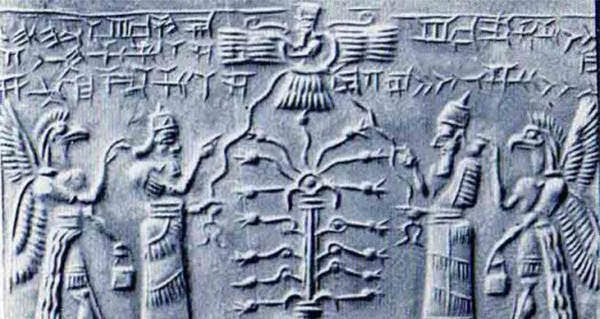
It is a modern echo of older myths: Genesis 6’s “sons of God” mingling with “daughters of men,” Gnostic visions of divine sparks trapped in matter, Sitchin’s Anunnaki, Hancock’s lost civilisations. Some argue quite persuasively that human beings are themselves hybrids — a mixture of earthly DNA and elements introduced by an alien species. Indeed, the whole drift of the early chapters of Genesis is not of gradual evolution but of deliberate creation:
“And the LORD God formed man of the dust of the ground, and breathed into his nostrils the breath of life; and man became a living soul.” (Genesis 2:7, KJV)
Even modern genetics has its puzzles. It confirms our close relationship with the apes — humans share about 98–99% of DNA with chimpanzees — but it still does not fully explain the abrupt emergence of self-consciousness, symbolic art, complex language, and moral reasoning.
- A single gene, FOXP2, when mutated, disrupts speech and language ability.
- Another, HAR1 (Human Accelerated Region 1), a short stretch of DNA, changed rapidly in humans and is linked to brain development.
- Studies of ancient genomes show that modern humans interbred with Neanderthals and Denisovans, carrying fragments of their DNA — making us a hybrid even within earthly hominin lines.
It would not take many changes in DNA structure to produce enormous leaps in cognitive ability. Today, with tools like CRISPR, we ourselves can alter or correct human DNA to treat birth defects. That fact alone makes the idea of early genetic intervention by another species conceptually possible, if still unlikely in the common understanding. Evolutionary processes remain the more plausible explanation — yet the question lingers: why did Homo sapiens alone cross the threshold into symbolic thought and moral awareness?
Genesis itself poses the riddle in mythic form:
“And the LORD God said, Behold, the man is become as one of us, to know good and evil: and now, lest he put forth his hand, and take also of the tree of life, and eat, and live for ever…” (Genesis 3:22, KJV)
Here knowledge is a gift — or an intrusion — that makes us “like gods,” yet condemns us to mortality. The early chapters of Genesis also suggest that one consequence of expulsion from Eden was the loss of longevity. The antediluvian patriarchs lived for centuries; afterwards, lifespans fell dramatically, as if some vital “servicing” had been withdrawn.
From medieval satire to modern spectacle to speculative science, the same conclusion emerges: the human condition has not changed. Whether in a tavern song, a Paris theatre, or a genetic laboratory, we meet the same restless passions, the same corruption, the same urge to mock and to lust. The continuity is striking. The human mind throughout time has been driven by the same dynamic: desire without restraint, appetite without end.
Even the word passion itself bears witness. From the Latin patior — “I suffer, I endure” — passio does not mean energy or zeal, but something suffered, undergone. The Creed says of Christ: “passus et sepultus est” — “he suffered and was buried.” Passions, then, are not strengths but sufferings, forces that act upon us. The modern use of “passion” to mean inner fire disguises its older sense: that we are carried, driven, often against our will. Like a snorting horse, hot and sweating, passion compels us forward and, unbridled, the result is suffering.
4. The Thorn in the Flesh
This paradox is what Paul called his thorn in the flesh (2 Corinthians 12:7). Whether illness, temptation, or inner weakness, it symbolises the universal human condition:
- Nature: lust, greed, domination — “red in tooth and claw.”
- Spirit: intelligence, imagination, moral longing — the “desires of the heart.”
Paul himself confesses this conflict with disarming honesty:
“For I know that in me (that is, in my flesh,) dwelleth no good thing: for to will is present with me; but how to perform that which is good I find not. For the good that I would I do not: but the evil which I would not, that I do.” (Romans 7:18–19, KJV)
To see the good, yet to act against it, is a peculiarly human dilemma. Consciousness reveals responsibility, but it does not guarantee the strength to bear it.
Jeremiah had already warned of this inner fracture:
“The heart is deceitful above all things, and desperately wicked: who can know it? I the LORD search the heart, I try the reins, even to give every man according to his ways, and according to the fruit of his doings.” (Jeremiah 17:9–10, KJV)
Even the inner seat of will and desire is unreliable. To be human is to live with a divided self: the spirit glimpses the good, the flesh resists it, and the heart itself cannot be fully trusted.
Our thorn is the incompatibility of these elements. Consciousness makes us aware of our drives, ashamed of them, yet unable to silence them.
5. Patriarchy and Silence
Transition into Section 5
This fracture is not only personal but social. Human culture often mirrors our simian inheritance, repeating dominance structures seen in the animal kingdom. Male primates rule the troop; men came to rule society. Yet anthropology reminds us — Margaret Mead, Ruth Benedict, and others — that matriarchal or egalitarian societies have also existed. In nature there are no anomalies, only what is and what happens. To call patriarchy “natural” is already to impose human meaning on a pattern. The same can be said of procreation: in biological terms, it is simply a process, neither necessary nor unnecessary. It is the organising human mind that interprets both procreation and social order as goals.
For centuries in Europe, patriarchy deepened this fracture by silencing women altogether. To men belonged speech, art, music, theology. Women were told they had “nothing to say.” The result was cultural impoverishment: a one-sided humanity, in which only half the voices were allowed to sound.
In the animal kingdom, dominance often falls to the male. But humans are not mere animals; with consciousness comes the possibility of balance, reciprocity, mutuality. Yet patriarchy chose not to balance but to suppress, intensifying the fracture between instinct and spirit by denying women their voice in culture.
But the instincts themselves could not be silenced. The same animal inheritance that produced male-dominated society also fuels our most powerful desires, especially sexual drive. Civilisation pushes these forces down — cork in the bottle — but the pressure beneath insists on release. And so the primitive returns, not only in behaviour but in art, music, and myth, where it bursts out with ritual power.
6. Hunger for the Primitive
The hunger for the primitive was not new to the twentieth century. The Romantics had already been enamoured of “man in nature,” unspoiled by social veneer — Rousseau’s noble savage, Wordsworth’s shepherds, Shelley’s elemental forces.
The nineteenth century carried the same theme into realist fiction. Flaubert’s Madame Bovary (1856) portrays Emma’s revolt against the stifling banality of provincial marriage: her adulterous affairs are attempts to break through bourgeois order into passion, danger, and ecstasy. Stendhal’s Le Rouge et le Noir (1830) tells a parallel story of Julien Sorel, whose ambition and sexual drive propel him into illicit relationships — instincts breaking through rigid social constraint.
By the twentieth century this hunger was radicalised: no longer pastoral innocence or frustrated adultery, but raw instinct itself. Stravinsky’s Rite of Spring exposed it in sound — jagged rhythm and pagan sacrifice — while Orff’s Carmina Burana channelled it into ritual pageant: the agony of O Fortuna, the springtime mischief, the ribaldry of tavern songs. Freud mapped it in the unconscious, and D. H. Lawrence gave it voice in Lady Chatterley’s Lover (where the physical union between Connie and Mellors is portrayed as a return to primal vitality, breaking through industrial modernity’s deadness) and Fantasia of the Unconscious, where sex becomes the elemental fire of life. Anthropologists traced it in ritual, myth, and dream. Beneath civilisation’s surface, people longed for contact with the elemental: lust, fate, violence, ecstasy.
Why? Because respectability and bourgeois order had smothered these forces. The laughter at the first performance of The Rite of Spring was well documented at the time — critics and witnesses alike reported embarrassed laughter, the reaction of an audience suddenly confronted with instincts they would rather have kept hidden. Orff offered a safer release: medievalism as a container. But both reveal the same truth: the primitive cannot be banished. It is the bedrock of humanity.
7. “What Is Man?”
The Psalmist’s question resounds across the ages:
“What is man, that Thou art mindful of him? and the son of man, that Thou visitest him?” (Psalm 8:4, KJV)
The psalm marvels at human dignity, yet the same words can be read with despair. What is man? A hybrid creature, torn between instinct and spirit, lust and longing, fate and freedom. A Frankenstein’s monster, stitched together out of contradictory fabrics. No wonder the Genesis story has man driven out of Eden: incompatible with paradise, haunted by his own divided nature.
8. From Frankenstein to Eden
Mary Shelley’s Frankenstein (1818) is not only a Gothic tale but a myth of creation gone awry. Man, like Frankenstein’s monster, is fashioned from dust and divine spark, yet finds himself lost, rejected, and estranged. Our hybrid nature — part animal, part godlike — condemns us to exile.
Expulsion from Eden is the same story. To eat of the tree of knowledge was to awaken consciousness — to become “like gods” — but also to inherit suffering and mortality. And the expulsion was necessary. For humanity was not pure intelligence, but a volatile mixture of reason and passion, lust and appetite. To allow such creatures access to the tree of life would have meant immortalising their instability, giving eternal power to beings who could not control themselves. In this sense, humanity is a failed experiment: a being with too much awareness to be innocent, too little strength to be divine.
9. Music as Indication
Shakespeare put it bluntly in The Merchant of Venice:
“The man that hath no music in himself, nor is not moved with concord of sweet sounds, is fit for treasons, stratagems, and spoils; the motions of his spirit are dull as night, and his affections dark as Erebus: let no such man be trusted.” (V.i.83–88)
Here Shakespeare names the same darkness that earlier ages attributed to patriarchy: the male drive for domination, unmoved by harmony, unsoftened by concord. He calls it what it is — dark.
And this raises a further question: is this drive for dominion something learnt from the gods who made us, stamped on us by design? Or is it the unavoidable biological consequence of having been fashioned, at least in part, from simian DNA? Either way, it is the same volatile mixture of passion and power, always threatening to fracture society and to turn intelligence toward violence.
Scripture itself shows that the divine is not free of this drive. In 1 Samuel 15, God commands Saul:
“Now go and smite Amalek, and utterly destroy all that they have, and spare them not; but slay both man and woman, infant and suckling, ox and sheep, camel and ass.” (1 Samuel 15:3, KJV)
Here God appears not as serene intelligence but as a being of wrath, vengeance, and appetite for destruction — scarcely different from our own darkest instincts. If we are made in His image, then it is an image fractured, containing both harmony and violence.
And here music stands as indication of our other potential. Where lust and appetite divide, music unites; where dominion oppresses, harmony releases. Ralph Vaughan Williams set Shakespeare’s words in his luminous Serenade to Music (1938). Where the goliards mocked, where Stravinsky shocked, where Orff ritualised, Vaughan Williams revealed another possibility: that man, fractured though he is, can make harmony.
Here the Psalmist’s cry finds its answer:
“What is man, that Thou art mindful of him?” (Psalm 8:4, KJV)
Man is divided, thorn-pierced, driven by passions, deceived by his own heart — and even shadowed by the ambitions of his makers. Yet he remains capable of song. Still able to harmonise. Still mindful of meaning.
References & Further Reading
Primary Texts
- The Holy Bible, King James Version (Genesis 2:7; Genesis 3:22; Psalm 8:4; Jeremiah 17:9–10; Romans 7:18–19; 2 Corinthians 12:7).
- Carmina Burana, Codex Buranus (Benediktbeuern, 13th century).
- Mary Shelley, Frankenstein; or, The Modern Prometheus (1818).
- William Shakespeare, The Merchant of Venice, Act V, Scene 1.
Secondary & Modern Works
- Carl Orff, Carmina Burana (1937).
- Igor Stravinsky, The Rite of Spring (1913).
- Nigel Kneale, Quatermass and the Pit (BBC, 1958–59).
- Zecharia Sitchin, The 12th Planet (1976).
- Graham Hancock, Fingerprints of the Gods (1995), Magicians of the Gods (2015).
- Ralph Vaughan Williams, Serenade to Music (1938).
Scientific References
- Enard, W. et al. “Molecular evolution of FOXP2, a gene involved in speech and language.” Nature 418, 869–872 (2002).
- Pollard, K.S. et al. “An RNA gene expressed during cortical development evolved rapidly in humans.” Nature 443, 167–172 (2006).
- Green, R.E. et al. “A draft sequence of the Neandertal genome.” Science 328, 710–722 (2010).