Across cultures and ages, human beings have told stories about death and renewal. At their core lies a simple pattern: an exceptional figure suffers betrayal or destruction, yet from that destruction comes renewal — whether in new life, legacy, or cosmic transformation. Carl Jung called this an archetype of the collective unconscious. It is not the property of any one religion. It is a recurring image of the human psyche.
The Archetype
The basic form is recognisable:
- Marked out: a figure is special, innocent, or different.
- Betrayal or downfall: they are rejected, tricked, or condemned.
- Suffering or death: they undergo humiliation, sacrifice, or violent loss.
- Renewal: something new emerges — a resurrection, a rebirth, or a legacy that outlives them.
This archetype answers our deepest fears and hopes: the fear that life ends in meaningless suffering, and the hope that renewal can come even out of destruction.
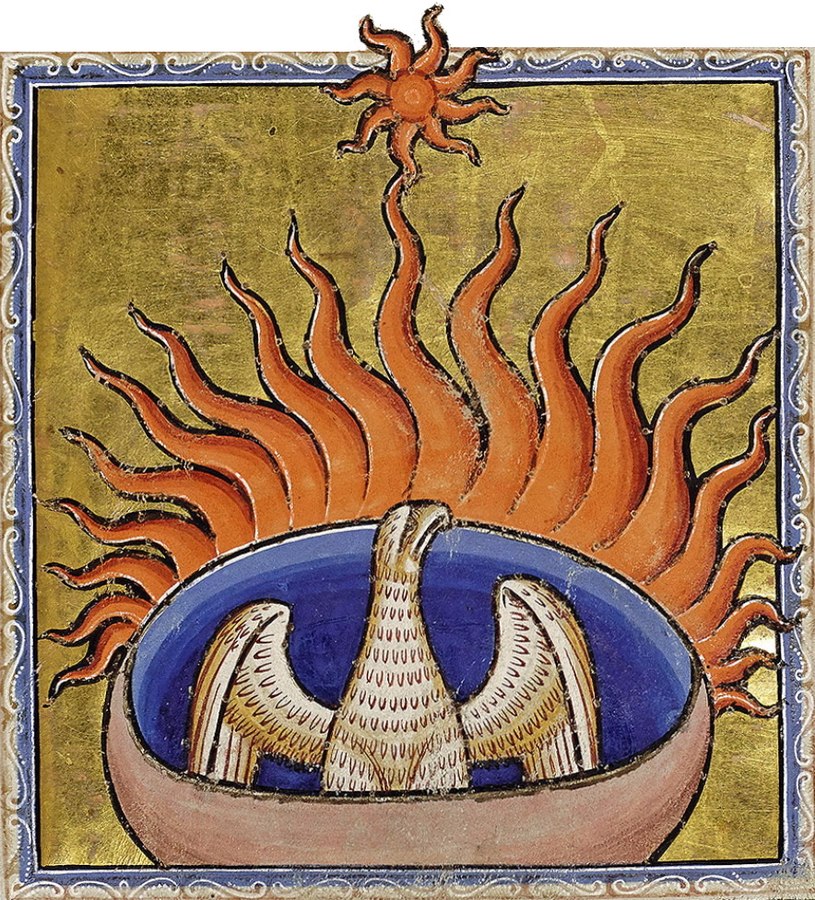
The phoenix turns to face the sun, beats its wings to fan the flames and is consumed.
Ancient Examples
Long before Christianity, this pattern was expressed in myth:
- Osiris in Egypt, murdered, cut apart, and restored as lord of the underworld.
- Inanna in Mesopotamia, descending into the underworld, stripped, killed, and raised again.
- Dionysus in Greece, torn apart and reborn as a god of ecstasy and renewal.
- Balder in Norse myth, the innocent god slain by trickery, destined to return after the world’s end.
Each expresses the same psychic truth in different cultural dress.
Jesus in Context
The story of Jesus fits the same structure:
- Marked out: teacher, healer, visionary.
- Betrayal: handed over by Judas.
- Trial and death: condemned by Pilate, crucified.
- Renewal: resurrection, symbol of hope and transformation.
Christianity’s innovation was to anchor the archetype in a historical figure. Instead of a mythic god, there was a man from Galilee, in a known time and place. This gave the pattern a new power. It was no longer only myth but claimed as history.
Modern Echoes
The same story continues to shape modern narratives. In films like Cool Hand Luke, The Green Mile, Redemption of the Ghost (2002) and The Matrix, we see the redeemer-figure betrayed, killed, and yet transformed or remembered as a liberating spirit. Audiences respond because the pattern is already within them.
This is not unusual. In fact, some version of the death–rebirth arc appears in well over half of mainstream films — perhaps 60–70%. It is woven into the very structure of modern screenwriting. Joseph Campbell’s Hero with a Thousand Faces (1949) and Christopher Vogler’s The Writer’s Journey (1992) have become standard references in Hollywood. Both stress that the “ordeal” — a symbolic death followed by renewal — is the emotional heart of a story.
The details vary:
- Epic and fantasy films almost always use it. Star Wars, The Matrix, The Lion King, and Harry Potter all hinge on the hero’s death or symbolic death before transformation.
- Drama and prison films employ it in grittier ways. In One Flew Over the Cuckoo’s Nest and Cool Hand Luke, the protagonist is destroyed, but his spirit lives on as inspiration.
- Science fiction often plays it literally. In The Terminator, The Fifth Element, and E.T., sacrifice and return mark the climax.
- Romantic comedies and family films use it symbolically: the death of a relationship or an old identity is followed by reconciliation or renewal.
Even when there is no literal resurrection, audiences still expect the “death of the old self” and emergence of the new. That expectation is why the death–rebirth archetype is so dominant — it has become the emotional grammar of modern cinema.
Why It Matters
To demystify Jesus is not to strip him of meaning. It is to recognise that his story is part of a larger human inheritance. The death–rebirth archetype speaks to something universal in the psyche. Christianity preserved and amplified one version of it, but the pattern runs deeper than any single religion. It is humanity’s way of saying that from loss can come renewal, and from death can come life.