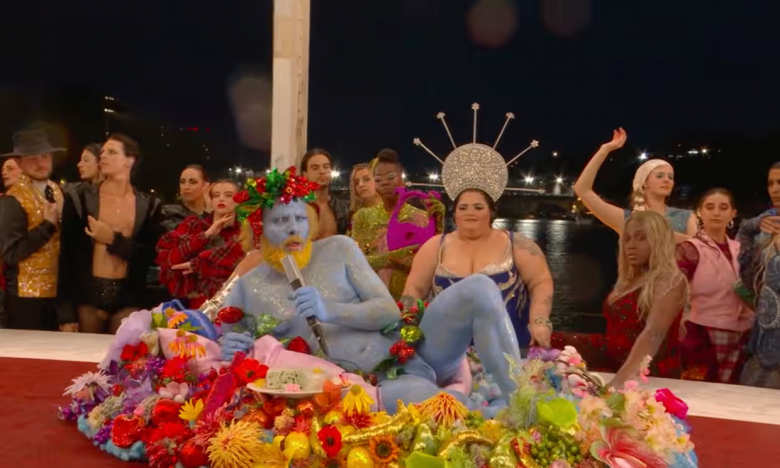
Across Europe—including well-known centres like Cologne, Venice, and Nice—and in countries such as Brazil, Argentina, and Trinidad, Carnival has long expressed a shared spirit of festivity and release, taking different forms wherever people sought a break from imposed order. It has served as a kind of sanctioned suspension of moral norms—a time when excess, transgression, and inversion are not only permitted but celebrated. In Cologne, for instance, Weiberfastnacht marks the Thursday before Ash Wednesday, when women symbolically seize power, cut off men’s ties, and overturn social hierarchies in a spirit of playful rebellion. Throughout history and across cultures, Carnival has often served as a sanctioned suspension of moral norms—a time when excess, transgression, and social inversion were not just permitted but celebrated.
Thousands of revellers celebrate the start of the carnival season in the streets of Cologne, Germany, Nov. 11, 2021, despite a surge in COVID-19 cases in the country.
What are we to make of this tradition, especially in a world where old boundaries between sacred and profane are already blurred?
🎭 Carnival as Ritualised Reversal
Carnival was never simply a modest celebration before Lent. From its earliest forms, it included elements of chaos, parody, and release—what some have called a ritualised explosion of everything repressed. In mediaeval Europe, festivals like the Feast of Fools or the Feast of the Ass featured mock liturgies, irreverent humour, and inverted roles. Peasants dressed as kings, clergy were parodied, and public order gave way to theatrical disorder. These events weren’t later distortions of a solemn tradition—they were part of the fabric from the beginning. Carnival gave expression to what official religion often suppressed: the body, laughter, protest, and the pleasure of reversal.
People knew from direct experience that the Church’s ideals were often unworkable. In many peasant communities, sexual relations before marriage were not unusual—sometimes even expected—as a way to ensure fertility and secure a working household. A couple needed to know they could produce children, who were essential for maintaining the land and supporting the family economy. Moral purity, as defined by the Church, often gave way to practical survival.
At the same time, marriage remained a public and highly policed institution. In some regions, it was customary to display the blood-stained bedsheets after the wedding night—both to prove that the marriage had been consummated and to confirm the bride’s virginity. It was a form of social control, presented as tradition, where the woman’s body was treated as proof—and the whole community felt entitled to judge her by it.
🔄 Why It Matters Today
So—is Carnival merely a harmless tradition, or does it reveal something more honest about human nature than the polished ideal the Church encouraged but could never fully enforce?
Does the very existence of Carnival suggest that our moral systems are unsustainable—if they require periodic escape valves to survive?
Or does it suggest something else—perhaps a need to recognise the body as part of what it means to be human and whole? Carnival was not a quiet protest but a loud, earthy refusal to accept that desire and pleasure were enemies of the soul. While the Church warned against “the world, the flesh, and the devil”, the people often laughed at human weakness, recognising it not as sin, but as part of life.
Chaucer makes the point in The Miller’s Tale—a bawdy story in which a vain suitor ends up kissing a man’s bare backside through a window, thinking it is the lips of the woman he desires—folly was met with laughter, not moral panic. The joke is crude, but the laughter is knowing. It reflects a more grounded and forgiving view of human weakness than the Church’s stern moral ideal.
Carnival makes it hard to tell where celebration ends and chaos begins—but that may be exactly why it still matters today. In a society increasingly stripped of meaning beyond wealth and acquisition, Carnival remains one of the few cultural spaces where people can reconnect with something physical, emotional, and shared.
As the Russian literary critic Mikhail Bakhtin observed, Carnival was never just chaos for its own sake. It was a cultural safety valve—a ritualised space where official seriousness was suspended, hierarchies were mocked, and laughter became a form of truth-telling. It allowed people to acknowledge what the Church often denied: that the body, with all its needs and absurdities, was part of the human condition. Carnival didn’t destroy order; it exposed its limits. And in doing so, it reminded people that real life—unruly, physical, and full of contradiction—could never be fully contained by doctrine.
🔥 From Carnival to Cathedral
Perhaps the real strength of Carnival was that it kept protest—if that’s what it was—within bounds. It gave people space to express humour, satire, and frustration without tearing the whole structure down. Even in its irreverence, Carnival retained a kind of shared understanding: that the sacred still mattered.
By contrast, recent attempts to mock or satirise the Church have often pushed the boundaries far beyond this older, earthier form of protest. Shows like Mrs Brown’s Boys or The Vicar of Dibley present the clergy as objects of ridicule—well-meaning, perhaps, but spiritually hollow. These portrayals, though comic on the surface, reflect a cultural mood that no longer takes the sacred seriously.
But the Canterbury Cathedral rave was a new departure. The “silent disco” hosted at Canterbury in February 2024 was anything but calm. More than 3,000 people danced across multiple sessions—singing into their headphones, drinking alcohol, cheering, and creating a jubilant, at times raucous, atmosphere. While cathedral officials described the event as respectful and appropriate, critics called it profane and alcohol-fuelled. Traditional carnivals took place in the streets—they never invaded the church itself. This, by contrast, brought revelry into the very heart of the sacred. It tested the boundaries of reverence, and for many, it did so uncomfortably.
Jesus did not teach people to repress their desires, but neither did he encourage reckless indulgence. He lived fully in the world—eating, drinking, and spending time with ordinary people (Luke 7:34)—yet he also warned against selfishness, lust, and moral complacency (Luke 12:15; Matthew 5:27–28). His message was not about denying the body, nor about giving it free rein. Instead, he called for integrity: to live with intention (Matthew 6:22), to love responsibly (John 13:34), and to treat both our desires and our actions with care. He showed compassion to those who had failed (John 8:3–11), but he also called them to change. In that sense, his teaching points to a third path—one that honours the body without being ruled by it (Matthew 26:41).
In that sense, his message was neither ascetic nor permissive. It was a call to live with integrity—to act with intention and to love in ways that are thoughtful and grounded.
The hollowing out of shared values in the post-war decades has left a deep vacuum at the heart of society. This is not merely a cultural shift—it is a moral one. The breakdown of families, the weakening of community ties, and the rise of self-interest all bear witness to a deeper erosion: the loss of meaning, purpose, and responsibility as guiding principles.
Into that vacuum rush distraction and spectacle—forms of public life that are louder, flashier, but emptier. Events like the Canterbury Cathedral disco don’t just test the boundaries of reverence; they expose our growing confusion about what we honour and why. When sacred spaces are repurposed for amusement, it’s not the dancing that’s in question, but the message it sends: that entertainment has displaced reflection and that depth no longer matters.
So the real question is: how do we restore a sense of the sacred?
We don’t need to reject the body or its pleasures—but we do need to find ways of honouring them without losing ourselves. Joy isn’t the problem. What matters is bringing awareness and depth back into it so that our pleasures connect us to life rather than distract us from it.
🌿 Closing Thought
Carnival has its place, and so does fasting. Each speaks to something true—the need to let go and the need to look inward. But between them lies a quieter freedom: not imposed by tradition or sold by the market, but discovered and chosen. It is the freedom of living with awareness, with care, and with a steady sense of what matters most—relationship, integrity, and presence.