Excerpt:
A reflection that begins with Jesuit Father Robert McTeigue, an American priest, philosopher, and host of The Catholic Current radio programme, whose plea for England’s return to Rome frames a meditation on tradition, illusion, and the enduring human need to make life worthwhile.
1 The Strength of Tradition
The modern Roman Catholic Church draws its strength from its obstinate adherence to tradition. Its very intransigence gives it an aura of permanence in an age of uncertainty. Yet the abolition of the Latin Mass after the Second Vatican Council (1962–65) — formally replaced by the vernacular liturgy in 1969 — marked the beginning of accommodation to modernity, perhaps even, symbolically, the first step toward a woman pope. Once the vessel changes, so too does the wine.
2 Waugh and the Chalice
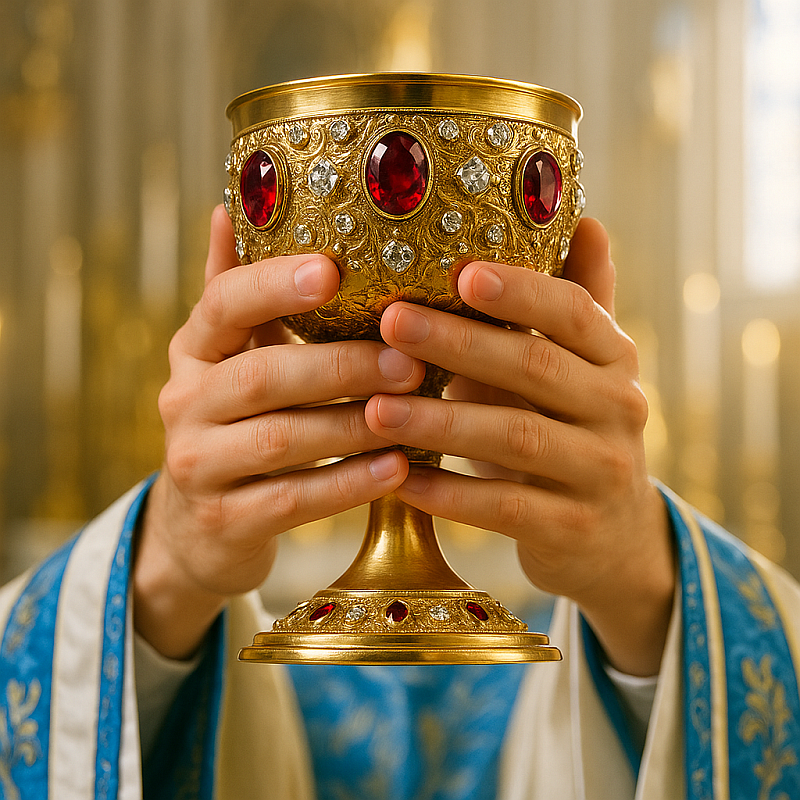
It was precisely this immovability that attracted Evelyn Waugh, whose sybaritic temperament needed something firm to resist. The Church’s formality — the chalice rather than the contents — gave him a structure of order and restraint. In a dissolving world, it was not the wine of faith but the vessel itself — the ritual, the hierarchy, the unchanging form — that became the sacred object.
3 McTague’s Longing
When Jesuit Father Robert McTeigue laments that few English Catholics now long for reunion with Rome, he is speaking in response to the recent audience between King Charles III and Queen Camilla and the Pope. He wonders aloud whether anyone spoke of conversion or of England’s return to the ancient faith. By “reunion” he means not individual belief but the nation itself—a restoration of the Anglican realm to its former obedience to Rome, in effect the undoing of Henry VIII’s sixteenth-century break with the papacy. His vision is wholly theological: faith as submission to divine authority, truth as an inheritance rather than a discovery.
4 Faith and Its Illusions
That, however, is the conception of religion one may rightly question. For most people, the value of religion lies not in doctrine but in its power to hold shape amid confusion. The Anglican Church, in its eagerness to adapt, has lost this solidity; recent data suggest that the Catholic Church in Britain and Europe is seeing renewed interest — among young adults and in areas of historic decline. For example, nearly 850 adult converts are expected in London dioceses at Easter 2024, and France recorded more than 10,000 adult baptisms at Easter 2025, an increase of about 45 percent over the previous year. These figures don’t tell us why people are converting, but they offer a concrete backdrop to the claim that traditions which ‘do not bend’ may hold a modern appeal.
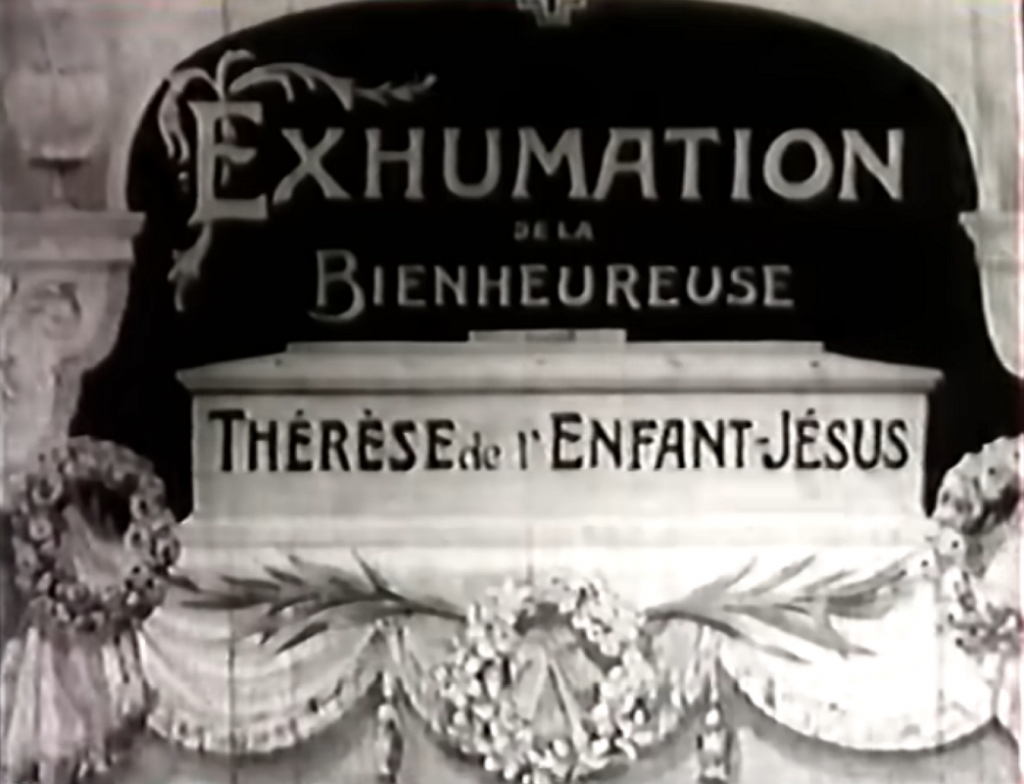
Yet the Roman Church can overreach — turning mystery into theatre and majesty into excess. The exhumation of St Thérèse de Lisieux in 1923, a display of bones and reliquaries, showed how the sacred can become grotesque.
5 The Transparency of Illusion
Thérèse herself was naïve, her piety embarrassingly sentimental. She lived within a dream so transparent that others could see through it while she could not. Yet her misconceptions were human ones — the same kind of necessary fictions by which all of us sustain meaning. We differ only in degree, not in kind.
6 The Search for Meaning
Our whole life, right or wrong, is a search for coherence. What looks like delusion from without may have been salvation from within. If Thérèse found comfort in her illusions, her living was still worthwhile.
7 The Final Note
It recalls the words of Alma Bazel Androzzo’s 1945 gospel song:
If I can help somebody as I pass along,
If I can cheer somebody with a word or song,
If I can show somebody he’s travelling wrong,
Then my living shall not be in vain.