The creation of a religion
Graham John, Aug 01, 2025
The Voice That Would Not Die
The New Testament Gospels are a magical blend of moral platitudes and fragmentary biography. They give us flashes of ethical brilliance, sayings polished by oral tradition, and a loosely constructed narrative arc—enough to hint at the life of Jesus, but never enough to define him. We do not know who wrote the Gospels, but they are a powerful distillation of moral premises upon which to base a positive and productive life. They are succinct, direct, and provide easy access to a different way of thinking—a way that invites clarity, humility, and ethical seriousness. In their compression and cadence, only Shakespeare produced anything quite as pithy. His verse explored the human soul; the Gospels challenge it. It is not biography, but myth woven with memory. One could imagine such a thing as a Church of Socrates or a following built around some other sage. But what captured the imagination in the case of Jesus was not just his teaching, but his death—a public execution, politically charged, and framed as the silencing of a mobiliser of the people. The image of a man crucified for challenging the powers of his day endured long enough after his death to be reinterpreted and ritualised, eventually forming the nucleus of what became a new religion: Christianity.
This incomplete portrait became the foundation of a global religion. Why? Because the Church took control of the story.
For centuries, the Church curated, shaped, and guarded the message. The Gospels, once shared in small communities, became part of an institution that soon aligned itself with empire. The teachings of Jesus—radical, inclusive, subversive—were absorbed into a system of power. The voice that called for inner change was now filtered through ritual and doctrine, cloaked in incense and chant, and delivered from pulpits by those who claimed to speak with divine authority.
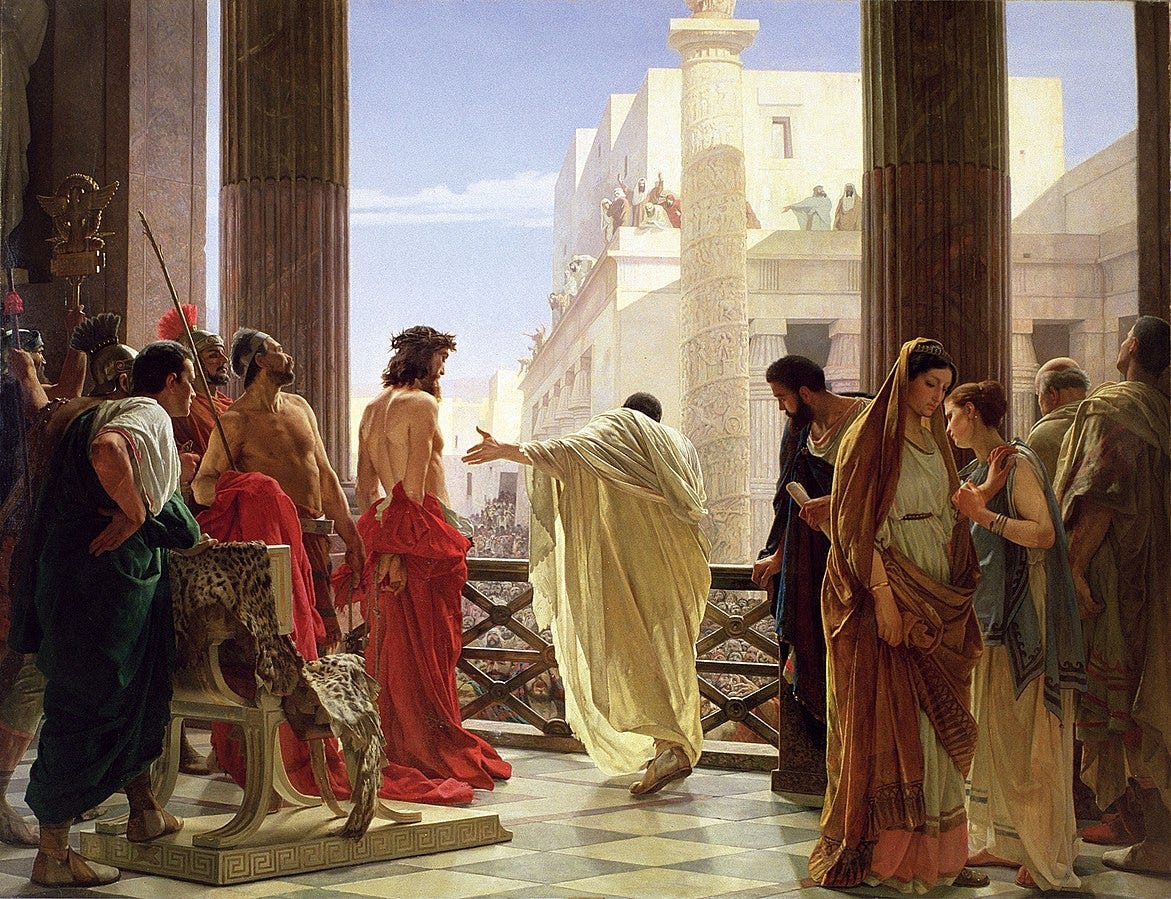
Scripture itself was closed to the people. In the Latin of the Vulgate, the Bible became the possession of priests and scholars. Ordinary believers could hear the words of Jesus, but only through the lens of official interpretation. To read the Gospels privately was, for most of history, both impossible and forbidden. The voice of Jesus was not silenced, but it was muffled—domesticated by ceremony and shaped to serve the needs of hierarchy.
The Reformation challenged the institution, but not the underlying structure. Crucially, it would have been impossible without the translation of the Bible into vernacular languages. Once people could read the scriptures for themselves—in German, English, French—a seismic shift occurred. The priest was no longer the sole interpreter. The text was in the hands of the people. The scriptures were translated, the priesthood partially dismantled, and new churches emerged. But the central message remained intact: human beings were sinful, broken, and in need of salvation—and only the Church, in some form, could offer it. Whether Catholic or Protestant, Anglican or Evangelical, the rhythm was the same: create a problem, offer the solution. You are guilty—here is grace. You are damned—here is the path to redemption.
This formula proved enduring because it worked psychologically: if you at least appeared to conform to the particular picture of goodness that the Church presented, you were acceptable. The Church offered an ideal of moral perfection—chastity, humility, obedience, piety—that, in all honesty, was beyond the capabilities of many, if not most, people. Yet this unattainable ideal served a purpose. It generated guilt, and guilt was the lever that made people seek conformity. It wasn’t just about being good; it was about being seen to strive toward the unreachable. The failure to meet the standard only deepened dependence on the institution that claimed to offer forgiveness. It soothed the conscience, framed suffering, and legitimised authority. It also reinforced the collusion of Church and State. Kings ruled by divine right; bishops sat in parliaments; the moral order of society was validated by religious truth. And beneath it all ran the narrative: humanity had fallen, and only the obedient would be saved.
But the voice of Jesus still survived, even if muffled—concealed in ritual, drowned in chant, and filtered through centuries of pulpit and power. What is striking is that the moral vision attributed to Jesus—compassion for the outcast, resistance to hypocrisy, a call to inner integrity—was not unique to him. Variants of this message can be found across cultures and centuries: in Stoic philosophy, in Buddhist ethics, in the wisdom literature of ancient civilizations. And yet, through the efforts of the Church and its alignment with the Establishment, this one thread of moral teaching was elevated to a position of singular authority, transformed into a special case. Some may point to Jesus’ words in Matthew 16:18—“Thou art Peter, and upon this rock I will build my church”—as evidence that he intended to found a formal institution. But this verse is far from clear. The Greek word translated as “church” is ekklesia, meaning an assembly or gathering, not necessarily a structured religious organisation. Interpretations vary: some see Peter himself as the ‘rock’; others say it was his confession of faith. And many scholars argue this line reflects the concerns of a later Church, inserted or emphasised to support institutional authority. There is little else in the Gospels to suggest that Jesus intended to create a new religion centred on himself. He opposed religious corruption, called for interior transformation, and spoke of the Kingdom of God as something near, within, and morally real—not something bureaucratic or dogmatic. It received prominence not necessarily because it was truer, but because it was institutionalised. What began as a call to inner change was not a new or unique insight. It is a matter of common sense, not deep philosophy. Many teachers across history have said exactly the same thing: that transformation must begin within, that the good life is lived from the inside out. Socrates spoke of the examined life. The Buddha taught that right intention precedes right action. Confucius emphasised self-cultivation and moral harmony. The Stoics taught inner discipline and detachment from externals. There is nothing startling about this idea, and yet the Church treated it as something exclusive, attaching it to the figure of Jesus and building a whole apparatus of doctrine around it. What began as a call to inner change became, over time, an instrument of order, obedience, and control. The Church clothed itself in authority, aligning with emperors and laws, blessing armies and enshrining creeds, while Jesus—the barefoot rabbi who forgave the broken and challenged the righteous—was turned into a figurehead for the very systems he had opposed.
And yet, the voice endured.
It flickered beneath the surface, like a candle not quite extinguished. It whispered in the hearts of mystics, reformers, doubters, and outcasts. It stirred the conscience wherever mercy triumphed over punishment, wherever love outpaced law. The Church preserved the name of Jesus—but not always his meaning. The figure of Jesus—his image, his story, his deified presence—was the necessary ingredient in the plot. He became the leader, the strong man we all look for to follow. A focus for loyalty, obedience, and reverence. In mythic terms, he became the hero archetype: the one who suffers, triumphs, and shows the way. But in this transformation, the ordinary was made extraordinary, the relatable made unreachable. The man who spoke in parables and walked with outcasts was cast in the role of cosmic judge and eternal king. The Church built itself on this figure—and through him, commanded allegiance. For that, each generation must begin again: not by rejecting faith, but by listening more deeply—beneath the organ swell, beneath the sermon, beneath the centuries—to the man who never asked to be worshipped, and perhaps not even to be followed in the sense of personal allegiance, but rather to have his example understood and imitated. There is little evidence that Jesus sought to be the figurehead of a movement. He pointed away from himself and toward a way of being—toward compassion, truthfulness, and integrity. If he invited people to follow, it was not into a cult of personality, but into a pattern of life.