The vision of Robert Prizeman
Robert Prizeman (1952–2021) was not a typical parish organist. Trained at the Royal College of Music, he served as choirmaster at St Philip’s, Norbury, where he gradually transformed a modest parish choir into what became Libera, a world-renowned boys’ vocal ensemble. His genius lay in combining traditional choral sound with modern arrangements, creating a style that crossed boundaries and reached audiences far beyond the church.
Prizeman’s boys were not chosen for their social background. Unlike cathedral foundations or private schools that drew from middle-class pools, Libera recruited from the streets of South London. Entry depended on musical ability and the willingness to work hard. The rewards were significant: recordings, tours, television appearances — experiences that most parish choirs could never dream of offering. This visibility made the commitment attractive, especially to boys in an age when singing was no longer “fashionable.”

The decline of parish boys’ choirs
A generation or two ago, many parish churches had boys’ choirs. They sang the psalms and canticles Sunday by Sunday, with adult men supporting the lower parts. Today, those choirs are rare. The typical parish choir is now made up of older women and a handful of men, carrying on faithfully but without children in the ranks.
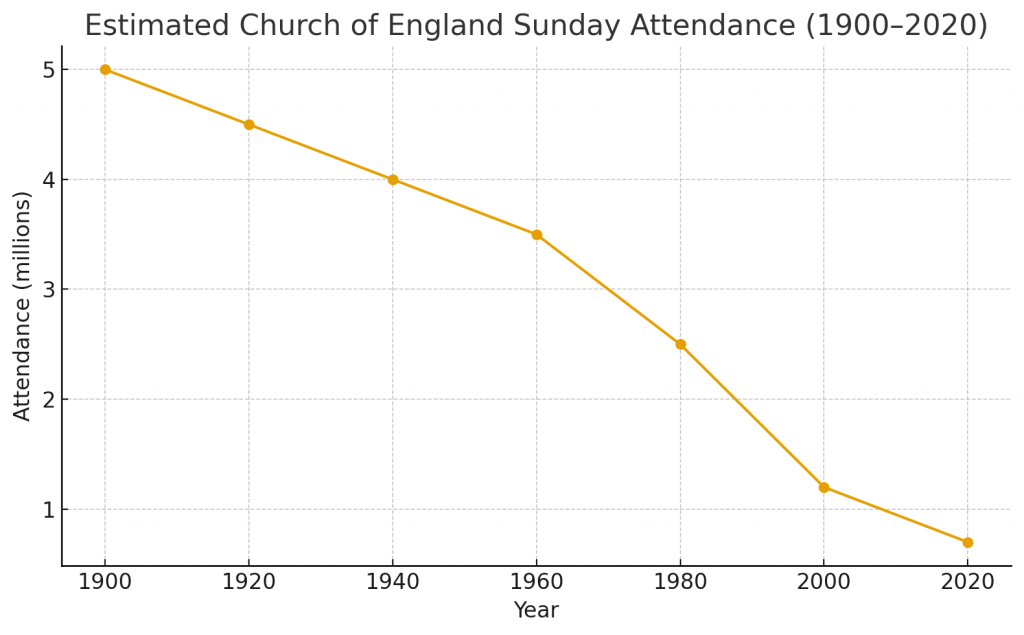
The reasons are not hard to trace. Declining church attendance has shrunk the pool of children. Competing weekend activities — football, homework, screens — crowd out the hours once devoted to choir practice. Maintaining a boys’ line requires structure, discipline, and resources, and very few parishes can sustain it. What was once an ordinary feature of parish life has become the preserve of a few cathedrals and specialist schools.
The result is sad: the disappearance of an environment where boys could learn music, discipline, teamwork, and confidence — all within the life of a local community.
Talent is equal; opportunity is not
Prizeman’s success with Libera demonstrates an important truth. Talent is equally distributed across society. It is not confined to the children of privilege. What differs is the opportunity to develop it. Middle-class families can often buy tuition, instruments, or school places that give their children a head start. But Prizeman showed that if you create the right conditions — skilled teaching, inspiring vision, and real chances to perform — talent will emerge from anywhere.
This is an argument not only about music but about education more broadly. If society is to be democratic in any serious sense, it must nurture the gifts of all its children, not just those with resources. Money can buy conformity — uniforms, examinations, safe mediocrity. But genuine talent requires patient cultivation and inspired leadership.
Prizeman gave that leadership. His legacy is not only the recordings of Libera but the example of how a parish choir, with imagination and care, can become a training ground for excellence. The wider challenge is whether schools and institutions today are willing to follow the same principle: to believe that talent is universal, and to build systems that bring it to light.
A final note: Libera, like the cathedral choirs it drew inspiration from, consisted only of boys. This was a matter of tradition rather than necessity. Musically, before puberty, there is little real difference in timbre between boys’ and girls’ voices. Many choirs have been enriched by admitting girls alongside boys, and others — such as the Cathedral Girls’ Choirs in Salisbury, Ely, and Durham — show that all-girls’ ensembles can achieve just as high a standard. The wider lesson of Robert Prizeman’s work therefore applies to both sexes: talent is widely shared, and the responsibility of schools and communities is to nurture it wherever it appears.