The Fool
Patrick Pearse, 1915
The wise have pitied the fool that hath striven to give a life,
And the world hath pitied the fool that hath striven to give a name,
And the fool that hath striven to give a laughter or a song,
And the fool that hath striven to give a sorrow or a flame.
All the wise have said their say,
And all the dead have had their day:
The world hath conquered, the wind hath scattered like dust
Alexander, Caesar, and all that shared their sway:
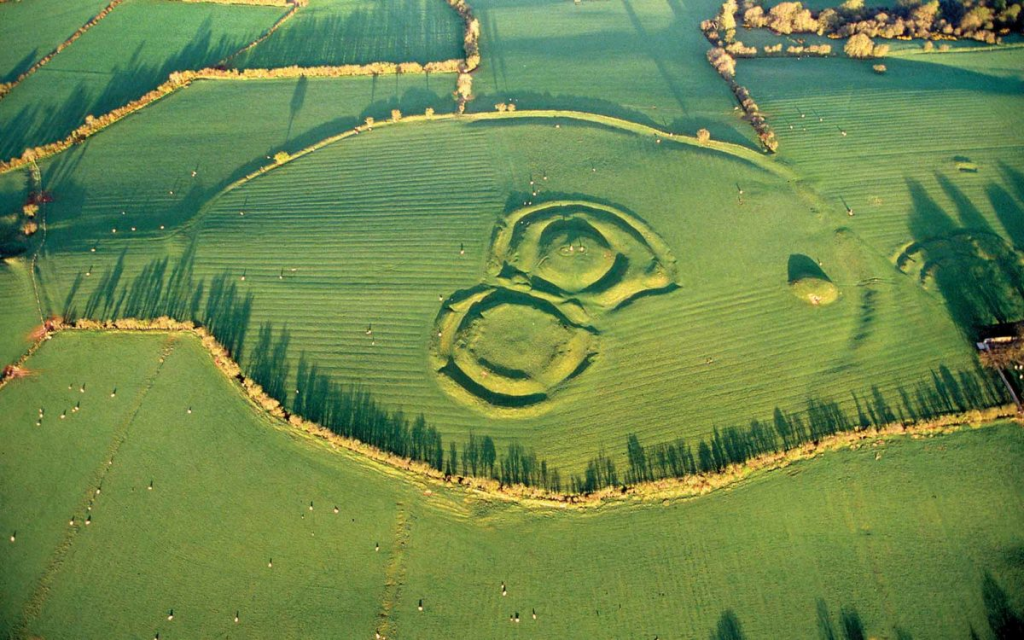
Tara is grass, and behold how Troy lieth low—
And even the English, perchance their hour will come!
I have turned my face to the road before my feet,
I have turned my face to the road behind my feet;
For the winds are crying in the hollow of my heart,
And the winds are crying in the hollow of the world.
Why have I bent my life to the road of the swords?
Because of the sorrow of the world, because of the folly of the wise,
Because of the blindness of the strong,
Because of the words of the weak.
I have left my dreams because I heard a voice,
Saying: “Leave thy dreams and play,
For the world is thy field of play.”
Hast thou heard the laughter of men that are mad?
Yea, I have heard the laughter of men that are mad;
And I have seen their eyes like the burning of the stars:
And I have been afraid of their laughter,
And I have been afraid of their eyes.
But I shall be mad,
I shall go mad,
For the winds of the world are blowing through my heart,
And the winds of the world are blowing through the world.
Context:
Written in 1915, The Fool expresses Pearse’s belief that true vision is often judged as madness. Within a year, he would lead the Easter Rising (1916) and be executed by firing squad — fulfilling the self-prophecy of the poem. His “madness” became Ireland’s awakening, and the winds that blew through his heart became the winds of history.
Patrick (Pádraig) Pearse was one of the most fascinating and complex figures in modern Irish history — both a poet and revolutionary, a teacher and martyr, and in many ways the spiritual architect of modern Ireland.
Who he was
Pádraig Pearse (1879–1916) was born in Dublin into a bilingual, middle-class family. His father, James Pearse, was an English sculptor; his mother, Margaret Brady, was Irish and strongly nationalistic. From a young age, Pearse was drawn to the idea of Ireland as a spiritual nation, distinct from the British Empire, with its own language, mythology, and moral destiny.
He trained in law but soon turned to education and literature, founding St Enda’s School (Scoil Éanna) in 1908 — a revolutionary school that taught boys through the Irish language, combining classical and Christian education with Celtic myth and moral idealism. He believed the soul of a people lived in its language and stories.
Politically, he became a leading member of the Irish Volunteers and by 1916 was one of the principal organisers of the Easter Rising, the armed insurrection against British rule in Dublin. He read the Proclamation of the Irish Republic from the steps of the General Post Office on Easter Monday, 24 April 1916. After the rebellion failed, Pearse was executed by firing squad — aged only 36.
What language he spoke
Pearse was fluent in both English and Irish (Gaeilge).
- He wrote poetry and essays in both languages and helped pioneer the modern revival of Irish as a living literary tongue.
- Many of his political speeches and letters were in English, to reach a wider audience.
- But his heart lay with Irish: he translated Irish legends, wrote plays for St Enda’s, and used the Irish form of his name — Pádraig Mac Piarais.
To Pearse, reclaiming the language was not a cultural hobby but a sacred duty — the rebirth of Ireland’s soul.
Though born of revolution, Pearse’s vision was not merely political but moral and educational, placing him in the same lineage as Tolstoy, Gandhi, and later Ernst Bloch—thinkers who saw the renewal of humanity as beginning in the soul, not the state. Like Tolstoy’s Yasnaya Polyana or Gandhi’s ashram schools, Pearse’s St Enda’s sought to form whole persons—imaginative, disciplined, and spiritually awake. His bilingual teaching, blending Irish myth with Christian ethics, echoed Bloch’s later belief that every culture carries a “Not-Yet-Conscious” ideal — an unfinished hope striving toward fulfilment. In Pearse’s hands, education became both rebellion and redemption: the awakening of language, conscience, and destiny in a people long subdued by empire.
Patrick (Pádraig) Pearse’s literary output, though produced within a short life, was remarkably varied and symbolically rich. He wrote in both Irish and English, and his work spanned poetry, short stories, essays, plays, and orations. Everything he wrote was charged with his dual passion — for spiritual renewal and national rebirth.
1. Poetry
Pearse’s verse ranges from mystical introspection to fiery prophecy. Key poems include:
- “The Fool” (1915) – his self-portrait as the visionary “madman” who sacrifices himself for Ireland.
- “The Mother” – a haunting monologue in which an Irish mother blesses her sons who die for freedom.
- “The Wayfarer” – a brief, sorrowful reflection on mortality and destiny, written shortly before his execution.
- “The Rebel,” “Renunciation,” “A Song for the New Age,” “Christmas, 1915.”
In Irish he wrote lyric and devotional pieces such as “Fornocht do chonac thú” (“Naked I saw thee”) — a mystical love poem whose tone recalls both early Gaelic poetry and Christian mysticism.
2. Short stories
His short fiction, written mainly in Irish, drew on folklore, rural life, and childhood innocence. Collected in volumes like Íosagán agus Scéalta Eile (“Little Jesus and Other Stories,” 1907) and An Mháthair agus Scéalta Eile (“The Mother and Other Stories,” 1916), these tales combine folk realism with moral parable. The best known, Íosagán, portrays a Christ-child wandering among the poor — an allegory of divine compassion in ordinary life.
3. Plays
Pearse wrote several Irish-language plays for performance at his school St Enda’s:
- “The King” (An Rí) – an allegory of leadership and sacrifice.
- “The Singer” (An File) – about the artist’s role in a nation’s awakening.
- “The Master” (An Maighistir) – blending education and prophecy.
- “The Story of a Harp” and “Eoine.”
These plays were intended as both moral instruction and patriotic ritual — part of his educational mission to form heroic character through art.
4. Essays and orations
Pearse was also a powerful prose stylist and polemicist. His essays, such as The Murder Machine (1912) and The Spiritual Nation, criticised British schooling as soulless and mechanistic, advocating instead an education rooted in moral imagination and cultural identity.
His political addresses, including The Coming Revolution and The Separatist Idea, merge sermon, prophecy, and manifesto — prose as oratory.
5. Overall character
Pearse’s literary work forms a unity of vision:
- Poetry gives the emotion of sacrifice;
- Stories embody Irish innocence and piety;
- Plays dramatise moral ideals;
- Essays articulate the philosophy behind them all.
Together they reveal a man who saw art, education, and revolution as one spiritual act — the creation of a free and inwardly awakened people.
1. The Gaelic Revival (late 19th – early 20th century)
Pearse was both a product and a prophet of the Irish Literary Revival, which sought to restore the Irish language and reawaken national identity through art.
- Alongside W.B. Yeats, Lady Gregory, and Douglas Hyde, he helped reclaim Irish myth, folklore, and moral imagination from colonial neglect.
- Unlike Yeats, however, who wrote mainly in English and drew on Celtic legend for symbolic power, Pearse lived the revival as a moral and linguistic mission. He wrote original prose, poetry, and plays in Irish, not merely about it.
- His bilingualism made him a bridge between the Gaelic past and the modern revolutionary future.
Where Yeats dreamt of an Ireland “terrible and beautiful,” Pearse embodied it.
2. The tradition of prophetic nationalism
Irish literature has a long line of poet-prophets — figures who fuse art and moral destiny:
- Aisling poets of the 17th–18th centuries, who personified Ireland as a woman awaiting liberation;
- Thomas Davis and the Young Ireland poets of the 1840s, who united romantic nationalism and moral idealism;
- Pearse, who brought that tradition to its consummation in martyrdom.
In The Fool, The Rebel, and The Mother, he stands in direct continuity with the bardic and prophetic voice of Ireland — a voice at once lamenting and visionary.
3. Between Yeats and Joyce
Pearse represents the moral conscience of the Revival, where Yeats symbolised its imagination and Joyce its disillusionment.
- Yeats turned rebellion into myth.
- Pearse turned myth into rebellion.
- Joyce, soon after, turned rebellion inward, seeing language and consciousness as the true battleground.
Thus Pearse occupies the middle ground between mystic idealism and modern irony — the last Romantic before the coming of Modernism.
4. The moral pattern
Irish literature often moves in a cycle of vision, betrayal, and renewal — a rhythm from hope to sacrifice to reflection.
Pearse belongs to the sacrificial phase: he is the one who dies for the dream.
After him, writers like Yeats, Sean O’Casey, and Beckett reflect on that sacrifice — its cost, its meaning, its futility, and its grace.
In summary
Pearse fits into Irish literature as:
- The moral voice of the Gaelic Revival;
- The inheritor of the bardic-prophetic tradition;
- The hinge between Romantic nationalism and modern disillusionment;
- And, in a deeper sense, as the poet who became his own symbol — Ireland’s last bard and first martyr of modern times.
Simon Webb is here using Patrick Pearse’s lines — “The world hath conquered, the wind hath scattered like dust…” — not as Pearse intended (a prophecy of imperial fall and spiritual renewal), but as a lament for the possible decline of Western civilisation.
Here’s a carefully balanced concluding paragraph that could follow your WordPress section on The Fool and the Sinéad O’Connor link, acknowledging Webb’s reflection without endorsing its tone:
Coda: “Tara is Grass” and the Fate of Civilisations
When Simon Webb recently quoted Pearse’s lines — “Tara is grass, and behold how Troy lieth low…” — he did so to mourn what he sees as the slow decay of Western culture. In that sense, Pearse’s poem has proved truly prophetic, for its vision reaches far beyond Ireland: it speaks to the mortality of all empires and the melancholy knowledge that no civilisation, however noble, endures forever. Yet where Webb sees decline, Pearse discerned renewal — the passing of one order making way for another. His “fool” is not the cynic who despairs, but the dreamer who dares to hope that through loss something sacred may still be born.
🎧 Listen: Sinéad O’Connor – “The Foggy Dew”
Afterword: The Talk of Fear
The rhetoric of decline, whether about immigration or the “end of the West,” is almost always the rhetoric of fear — fear of others, fear of history, fear of transformation. Pearse’s prophecy was not a defence of empire but a reminder of impermanence: that no culture holds eternal privilege, and that vitality passes to those who still believe in spirit, truth, and renewal. Civilisation does not die when borders open, but when hearts close.
What truly ends a civilisation is the loss of moral imagination — when it forgets what made it worth preserving in the first place.