Excerpt:
When the Church abandoned the language of eternity for the language of everyday speech, it lost more than words. The fading of Latin marked a deeper rupture — the disappearance of mystery. Yet, in the end, the contents of the chalice matter more than the metal from which it is made.
1 The Vanishing Language of the Sacred
The Latin Mass once joined worshippers across centuries and continents. It was not meant to be understood word for word but to be felt — a sonic bridge to the divine, the steady pulse of a faith older than memory. When the Second Vatican Council replaced Latin with the vernacular in 1969, the Church hoped to make worship more accessible. Instead, it unintentionally stripped it of its aura. The familiar replaced the transcendent; the everyday supplanted the eternal.
2 The Consequence of Comprehensibility
With the incursion of the vernacular, the Mass ceased to feel like an encounter with mystery and began to resemble a civic gathering. Once worship spoke the language of heaven; now it spoke the language of the street. The faithful who had found meaning in ritual silence and incomprehension—in being lifted out of time—found themselves returned to earth.
But church attendance did not decline simply because Latin was abolished. The recurrent hydra of child sex abuse, compounded by the rule of priestly celibacy, destroyed the climate of trust on which faith depends. Parents no longer knew which priest they could entrust their children to, and what had once seemed sacred authority came to look like institutional hypocrisy. Not every priest was guilty, of course, but the system itself had made concealment possible.
3 The Anglican Parallel
The Church of England, following its own course toward modern idiom and informal worship, suffered a similar fate. The Book of Common Prayer and the cadences of Cranmer gave way to phrasebook English and improvised sermons. What had been sublime became serviceable. Congregations dwindled not because belief vanished overnight, but because the sense of holiness as otherness – the feeling that one was in the presence of something not of this world – could no longer be found.
4 Form and Essence
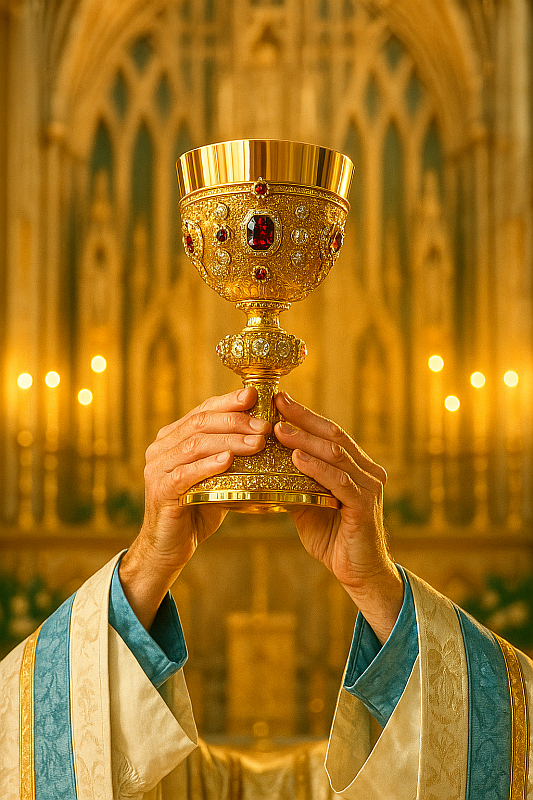
Yet form is not everything. If the chalice gleams but the wine is stale, beauty becomes deceit. The Church’s renewal, if it comes, will depend not on reviving Latin as an ornament but on recovering the spirit that once animated it — humility, awe, and inner transformation. The Mass in any language can only live if it conveys that truth.