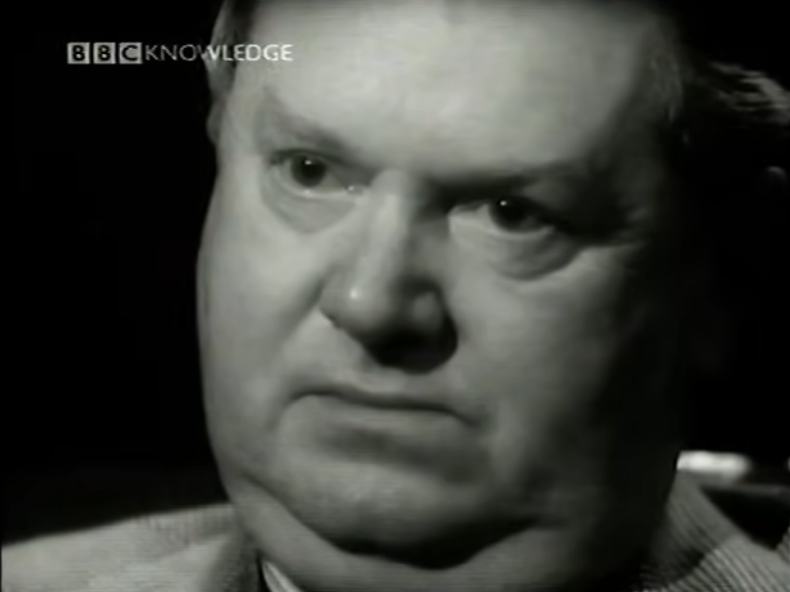
Evelyn Waugh was born in 1903 into a cultivated and comfortable household in Hampstead, the younger son of Arthur Waugh, a literary critic and managing director of Chapman & Hall. Yet from the start there was estrangement. Arthur’s devotion to the arts was sentimental and vaguely Victorian; Evelyn’s was sharp-edged, ironic, and unillusioned. Father and son spoke the same language but inhabited different worlds. Evelyn saw through the self-satisfied pieties of Edwardian England and felt no loyalty to its moral optimism. His alienation from family, faith, and class was not just personal but symptomatic of a wider dislocation.
By the time Waugh reached Oxford in 1922, the Great War (1914–1918) had already shattered the assumptions of his father’s generation. The old codes of duty, religion, and deference were hollowed out. Young men like Waugh inherited the shell of privilege without its moral substance.
The popular television series Downton Abbey (set between 1912 and 1926) dramatises this transformation with poignant clarity: the great houses still stand, but their servants leave for the cities, their heirs fall in battle, and the certainty of rank gives way to the anxiety of modern life. One episode turns on a dispute about the new railway — the young engineer, full of modern enthusiasm, eager to connect the estate to the future, and the older generation, unmoved and sceptical, clinging to a vanishing world. It is a perfect emblem of the cultural rift between progress and preservation, faith in change and faith in continuity.
Waugh’s early novels — Decline and Fall (1928) and Vile Bodies (1930) — captured this moral exhaustion in biting comedy. His characters dance, drink, and despair amid the ruins of meaning. Yet beneath the satire lies mourning. He knew that civilisation without belief becomes parody: form without substance, ritual without faith.
The change after 1918 was not merely political but psychological. The upper and upper-middle classes began to doubt their own legitimacy; irony replaced conviction. But this crisis had not yet reached the working class. The proletariat of the 1930s still lived within older frameworks of family, labour, and religion. Only later — from the 1960s onward — did the masses begin to experience the same loss of moral direction that had afflicted the elite half a century before.
With the Beatles in the 1960s and the mass gatherings of Woodstock in 1969 came a new form of collective rebellion — secular, self-expressive, and euphoric. It promised freedom but dissolved continuity. In the 1980s, Margaret Thatcher in Britain and Ronald Reagan in the United States opened the gates of commerce, allowing ambitious outsiders to buy their way into the system and transforming wealth into a badge of status. Meanwhile, writers like George Orwell in The Road to Wigan Pier (1937) and Alan Sillitoe in Saturday Night and Sunday Morning (1958) gave voice to the working-class man — proud, angry, but uncertain what he was fighting for.
The trouble was that by then there was no shared language of belief left to guide him. The Church, once the conscience of the nation, had become irrelevant to most. The moral and spiritual estrangement that Waugh had diagnosed among his own class spread to the whole of society. Today it finds expression in resentment, scapegoating, and a pervasive sense of meaninglessness. The anger once directed at the old aristocracy now targets the immigrant, the bureaucrat, or the faceless “other.”
What Waugh glimpsed in the 1930s — the decay of inner conviction beneath the surface of civilisation — has become the defining feature of modern Britain. Having lost its faith, its class structure, and its sense of mission, the West drifts toward the future not with confidence but with a weary shrug.
Coda: The Search for Lost Grace
Waugh’s later work, above all Brideshead Revisited (1945), turned from satire to elegy. The war years, far from restoring order, completed its dissolution. Brideshead is not merely a lament for the aristocracy but for a spiritual civilisation whose rituals, manners, and faith once gave life coherence. The great house itself stands as a symbol of the human soul — proud, beautiful, and in ruins.
Through Charles Ryder’s conversion to faith, Waugh sought a form of reconciliation, but it is a hesitant and melancholy one. He does not proclaim belief so much as yearn for it. Behind the Catholic imagery lies a universal human ache: the longing for something permanent in a world that has forgotten permanence.
The collapse of external structures — class, Church, Empire — forced modern man to confront the emptiness within. In that sense Waugh was prophetic. He understood that once irony replaces conviction and consumption replaces faith, civilisation begins to hollow out from the inside.
The same hunger still drives our age: a restless search for meaning in pleasure, wealth, or protest. Yet the answer, Waugh hints, lies not in nostalgia but in recovering the moral imagination — the capacity to see life as a calling, not a competition.
In the final years of his life, Waugh became increasingly reclusive at his home in Combe Florey, Somerset. Friends recalled his dependence on strong drink and sedatives, and the tone of his letters grew sombre and defensive. He died suddenly on Easter Sunday, 10 April 1966, after attending Mass, aged sixty-two. His passing was widely reported as peaceful, though his biographers agree that he had long suffered from exhaustion and ill health.
Until conviction and faith return, our civilisation will remain, like Brideshead, magnificent but deserted — a monument to the lost grace that once held it together.
Sources:
- Martin Stannard, Evelyn Waugh: The Later Years 1939–1966 (1992) — notes his reclusiveness, heavy use of alcohol and bromide, and death after attending Mass on Easter Sunday.
- Selina Hastings, Evelyn Waugh: A Biography (1994) — corroborates his isolation, insomnia, and failing health.