Society exists to establish order, not fulfilment. Social constraint makes collective life possible, but it does not recognise the autonomy or particularity of the individual. This essay explores the tension between survival instinct and human meaning, arguing that conflict arises not from moral failure but from scarcity, fear, and the limits of social design. Between raw survival and moral idealism lies the harder task of living truthfully within constraint, without illusions of purity, rebellion, or final harmony.
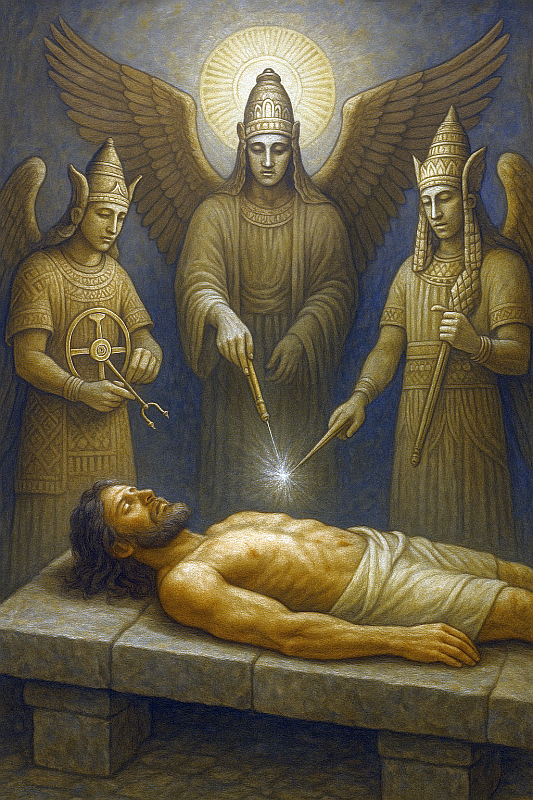
A demythologised reading of Genesis and the Gospels reveals a single thread running through human history: we are conflicted, powerful, unstable creatures trying to understand ourselves. Eden describes why we are dangerous; Jesus offers a path to inner transformation. Later doctrine turned this into metaphysics, but the original insight was psychological. This article explores Adam, Meister Eckhart, the Synoptics, and the Sumerian myths as early attempts to explain the divided human self — and what redemption really meant.

A reflective exploration of why humans are both aggressive and endlessly self-questioning. Drawing on evolutionary inheritance, mythic imagination, and the possibility of ancient genetic engineering, this piece asks what it means to be a species that not only acts, but wonders why it acts.
Are humans naturally exploitative, or do we learn domination from culture? This essay traces the roots of exploitation from evolution to empire and argues that individual virtue must be joined to collective