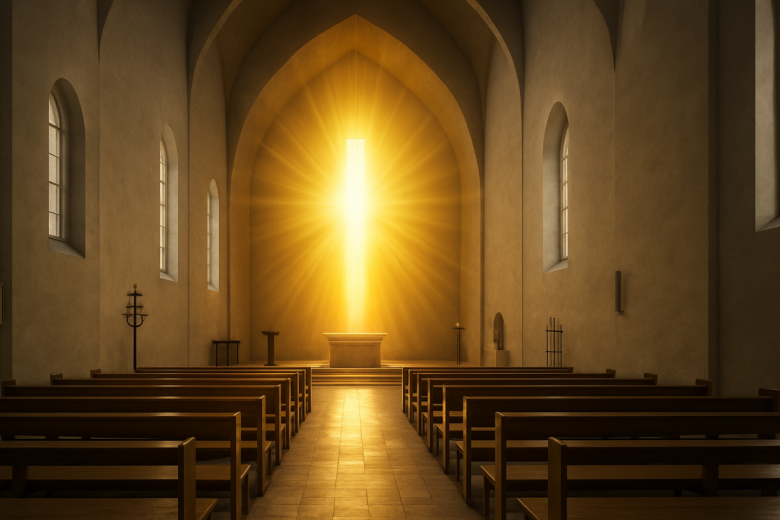
If the Christian age is drawing to a close, it is not leaving behind a moral vacuum. What follows Christendom is not disbelief, but a transformed moral consciousness — one that has lost its theological centre yet retains its habits of judgement, concern, and aspiration. This essay explores what comes after moral empire, and whether understanding can replace authority as the animating spirit of the post-Christian world.
The outcry over Canterbury Cathedral’s graffiti-style installation reveals more than a clash of taste. It points to a deeper anxiety about how ancient sacred spaces can speak to the modern world. The real issue is not art but meaning — whether the Church still trusts the Gospel itself to renew hearts without resorting to novelty.
For two thousand years, Western civilisation has lived within a sacred story — one that promised meaning, redemption, and divine justice. Yet as history and reason awaken us from this dream, we begin to see how religion, though born from human longing, became a tool of control as much as a source of hope. To wake is not to despise faith, but to see it clearly — and to begin the moral work of conscious responsibility.
For two millennia, Christianity offered Western civilisation a moral framework that gave meaning to suffering—but also served to stabilise power. From Constantine to empire, sacred symbols were used to sanctify authority, even as reformers tried to reclaim the gospel’s moral core. The ruins of Santa María en Cameros, where a priest once ruled from his hilltop church, stand as a parable of conscience outlasting control. To awaken from the dream is not to reject faith, but to see through it—to recover compassion, justice, and inner truth without the myths that once bound them to power.
For two thousand years, the West has lived inside a sacred dream — the story of divine redemption. Yet the man who inspired it, Jesus of Nazareth, spoke not of metaphysical rescue but of inner change. This essay distinguishes between Jesus the teacher and the Christ of theology, tracing how faith became power and how its original insight can still guide a new awakening.
Resurrection can be read not only as a past event but as a symbol of awakening. The risen Christ becomes the image of consciousness itself — light overcoming darkness, fear giving way to awareness, union with the life already present within and around us.