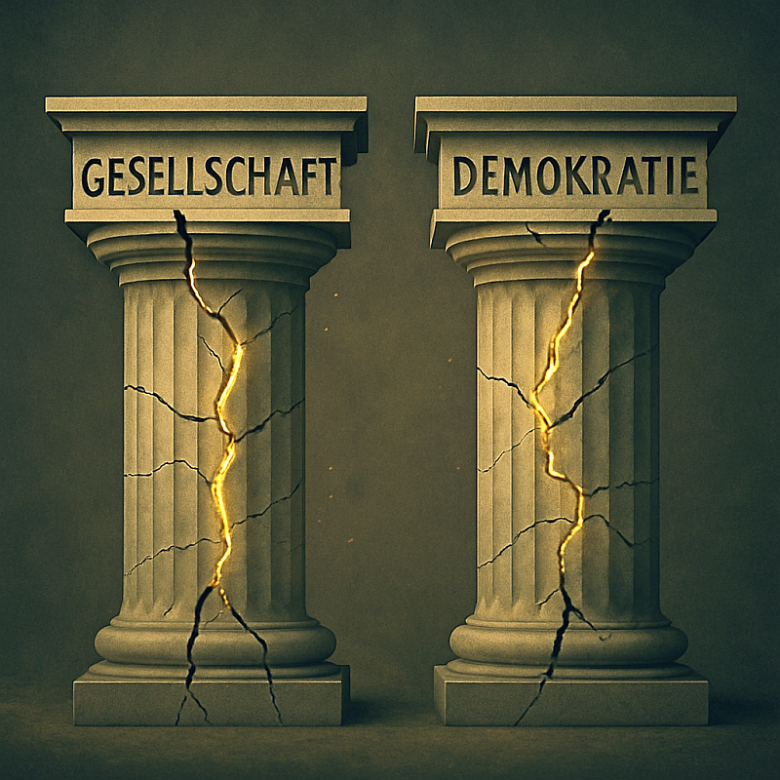
Public debate in Britain and Germany increasingly blames immigration for social and political strain. Yet most pressures—housing shortages, overstretched schools and hospitals, stagnant wages, declining neighbourhoods, and falling trust—began decades before recent migration waves. Immigration is not the cause of systemic weakness; it merely exposes it. This essay traces the deeper forces behind today’s instability: long-term underinvestment, the neoliberal shift since the 1980s, demographic ageing, bureaucratic rigidity, and the erosion of social cohesion. It also examines why parties like the AfD and Reform UK attract support—and why their rise reflects a democratic system struggling to correct itself.

A reflection on how debate in Britain has become the preserve of the few, leaving most pupils trained to perform rather than to think. Drawing on personal experience, it argues for a new educational humanism grounded in moral, civic and intellectual formation.
A reflection on how satire and self-expression have evolved from the court jester to the YouTube commentator. In an age when anyone can speak with the authority of a king, emotion often replaces argument, and outrage becomes its own form of power.
A reflective essay responding to President Steinmeier’s 9 November 2025 speech on “defensive democracy,” arguing that moral exclusion by the political establishment now threatens democratic trust as surely as populist extremism.
In the same week that Zohran Mamdani claimed victory as socialist mayor of New York and Alice Weidel denounced Germany’s government from the nationalist Right, both spoke with the same moral urgency about power, alienation, and decline. Beneath their opposing banners runs a shared frustration with elites and a longing for renewal. The tragedy of modern politics is that left and right are too busy defending their labels to work together on the changes both demand.
Alice Weidel’s Bundestag speech accusing the German government of fiscal and moral decay echoes far beyond Berlin. Many of her criticisms — debt, industrial decline, migration pressures, and the erosion of trust in political institutions — could be voiced just as easily in Westminster. This essay compares Germany and Britain in 2025, examining economic data and broader cultural parallels to show how both nations face a crisis of confidence born from deindustrialisation, bureaucratic expansion, and public alienation. The decline she described in Berlin, as echoed by voices like Richard Tice and Nigel Farage in the UK, reflects a shared European malaise.
Across Europe, the act of knowing the citizen has become a test of power.
These three essays trace how identity moved from the census to the classroom, from the passport to the algorithm. Germany counts precisely; Britain hesitates to count at all. Yet both reveal the same unease — that the more the state tries to know its people, the more it risks losing their trust. Counting Strangers, The British Fear of Being Known, and From Card to Code follow that uneasy journey from bureaucratic record to digital surveillance, asking what remains of freedom when knowledge itself becomes a form of control.
An exploration of the moral and ecological misjudgements that have shaped modern Britain — from misplaced compassion and guilt to the exhaustion of land and wildlife — and a call to recover stewardship and restraint before it is too late.
Modern schooling does little to help children discover what moves them or what they might live for. The timetable is full, the spirit empty. Passion, curiosity, and imagination — those inner resources that make learning joyful — are treated as optional extras. Since the 1990s, legislation and professional fear have drained warmth from classrooms; teachers now perform roles rather than form relationships. The result is an education system that functions but no longer inspires — a wall between intellect and soul.
A study of France and Britain as mirrors of Western decline — from post-war faith in welfare to today’s procedural governance, fiat money, and managed control. The end of the post-war promise is not collapse but sedation.