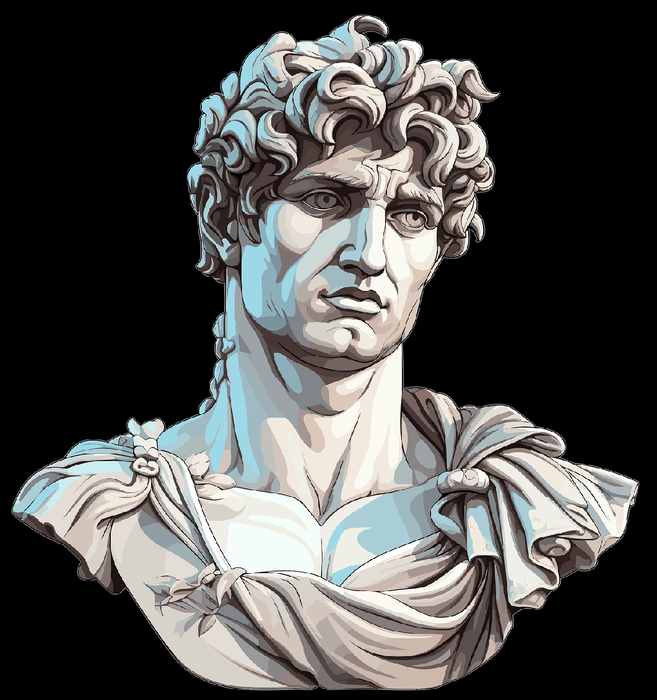
Europe tells itself that Rome fell in 476 CE, but the structures of the empire never disappeared. They migrated into the Church, into medieval kingship, into the nation-state, and finally into the European Union. Law, hierarchy, bureaucracy, and moral order — the governing mind of Rome — still shape the continent. Europe is not post-Roman; it is Rome in modern dress.

Christianity reshaped Europe not by replacing Rome’s legions but by moving moral discipline inward. When the Western Empire collapsed, the Church stepped into the vacuum with a new kind of authority — one rooted in conscience, guilt, and self-surveillance. The West has lived inside this psychological framework ever since, from medieval confession to modern moral panics.
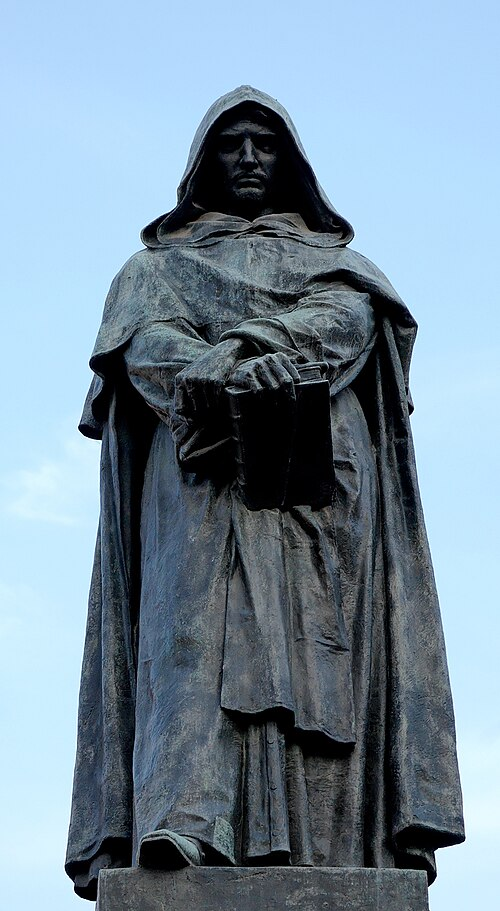
Giordano Bruno saw, more than 500 years ago, that human beings project their inner life onto the cosmos. His “infinite universe” was not astronomy but a vision of the human psyche speaking through myth — a truth that echoes across my own work. In an age that has lost its spiritual depth, Bruno’s voice returns with renewed urgency.
From Chomsky’s early search for rules to today’s learning machines, this essay traces how linguistics tried — and failed — to explain meaning through structure. The story leads from semantic markers to Large Language Models, showing how the statistical approach once dismissed as mechanical has achieved a sophistication that mirrors the very act of writing itself.
From William Lily’s Rudimenta Grammatices to Geoffrey Hinton’s neural networks, this essay traces five centuries of inquiry into language — from moral discipline to scientific method to artificial intelligence — and asks why linguistics, the study of language itself, never solved the question that machines finally answered.