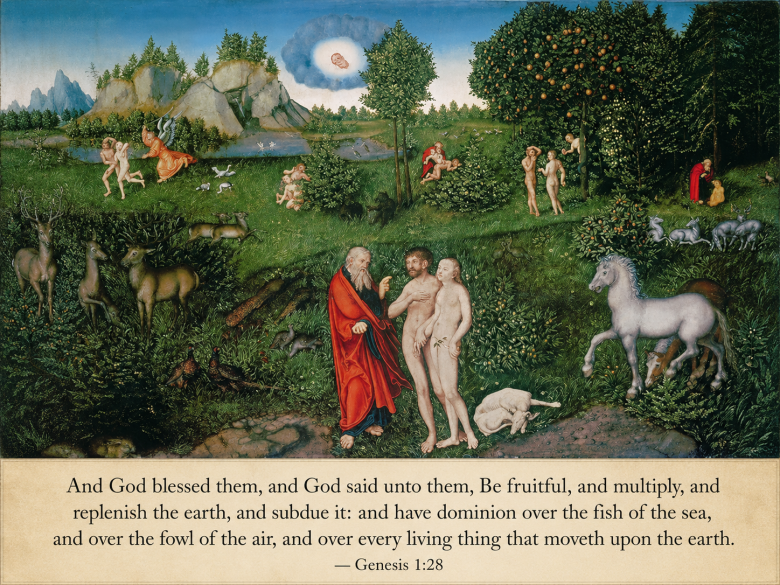
Political renewal begins with metanoia: a change in what individuals desire, value and understand by prosperity. A just nation should express that inner transformation through responsible care for food, land, energy, transport, waste and the common home.

Freedom is never absolute. Body, age, history, temperament and society impose limits we cannot simply remove. Yet St Paul’s language of metanoia and the “renewing of the mind” suggests another kind of freedom: consciousness can enlarge the space within necessity.
Descartes’ famous “I think, therefore I am” opens onto a deeper human problem: we know that we are alive, and therefore we know that we shall die. Religion, resurrection, reincarnation, and judgement are all attempts to answer the wound of self-conscious mortality. But perhaps the most honest conclusion is that the self is unfinished — and that we may only come this way once.

A short reflection on the present moment as the place where life is actually lived. Drawing on the phrase “I am Alpha and Omega” and the recovery saying “Yesterday is history, tomorrow is mystery — just for today,” this piece considers God not as a remote idea, but as the living depth of now: the point at which memory, hope, responsibility, and freedom meet.
Christianity, as history has handed it down, is not identical with its original impulse. What may once have been a small Jewish movement, centred on inner change and moral re-alignment, was gradually overlaid by cosmic theology, mythological symbolism, sacramental structure, and institutional dogma. Paul universalized the movement; later centuries elaborated it; orthodoxy organized and defended it. Yet the stripping away of those later accretions need not end in mere negation. Beneath them, the original summons may still be heard: a call to metanoia, to a reawakening of the moral centre, to the recovery of that inbuilt orientation towards the good which the world so easily obscures. If so, the real significance of Christianity lies less in dogma than in the possibility that, beneath all its historical layers, it still preserves a call to become inwardly true.

Prayer is often understood as asking for things, but in the Gospels it appears as something quite different. It is not a means of control, but a moment of release — a stepping back from the self and a return to what is real. In prayer, one lets go, sees more clearly, and, however briefly, is set in the right direction.

The Bible recognises that societies organised around wealth and power easily drift toward injustice. Yet it offers no political blueprint for a perfect society. Instead, it proposes a moral framework built on prophetic criticism of injustice, limits on the accumulation of wealth, and—most radically—an inner transformation of the human heart. The teaching of Jesus challenges not only unjust systems but the human desire for possession and status that sustains them.
Rousseau’s Émile confronts an uncomfortable truth: human beings are shaped long before they are capable of judgement or resistance. Social constraint precedes understanding, and autonomy arrives late, already burdened by what has gone before. This essay examines Rousseau’s attempt to manage that problem through education, its paradoxes and limits, and why return and revision are possible — but reset is not.

Meditation is not an escape from life, nor a technique for manufacturing insight, but a way of learning when consciousness can safely let go. Human beings live through rhythms of attention, rest, and drift, and change unfolds over time rather than through heroic effort. What sustains a life is not constant awareness, but the capacity to return—again and again—to meaning, structure, and relation as life moves on.

The Christianity that entered the Roman Empire was not the disruptive message Jesus taught in Galilee, but a reshaped faith the empire could use. The raw Synoptic ethic — reversal of status, rejection of hierarchy, inner transformation over obedience — was incompatible with imperial power. What survived was what could be adapted: creeds, offices, authority, and a cosmic Christ who stabilised the social order. Yet beneath these layers, the original voice still whispers through the Gospels, offering a vision of freedom no empire has ever been able to absorb.