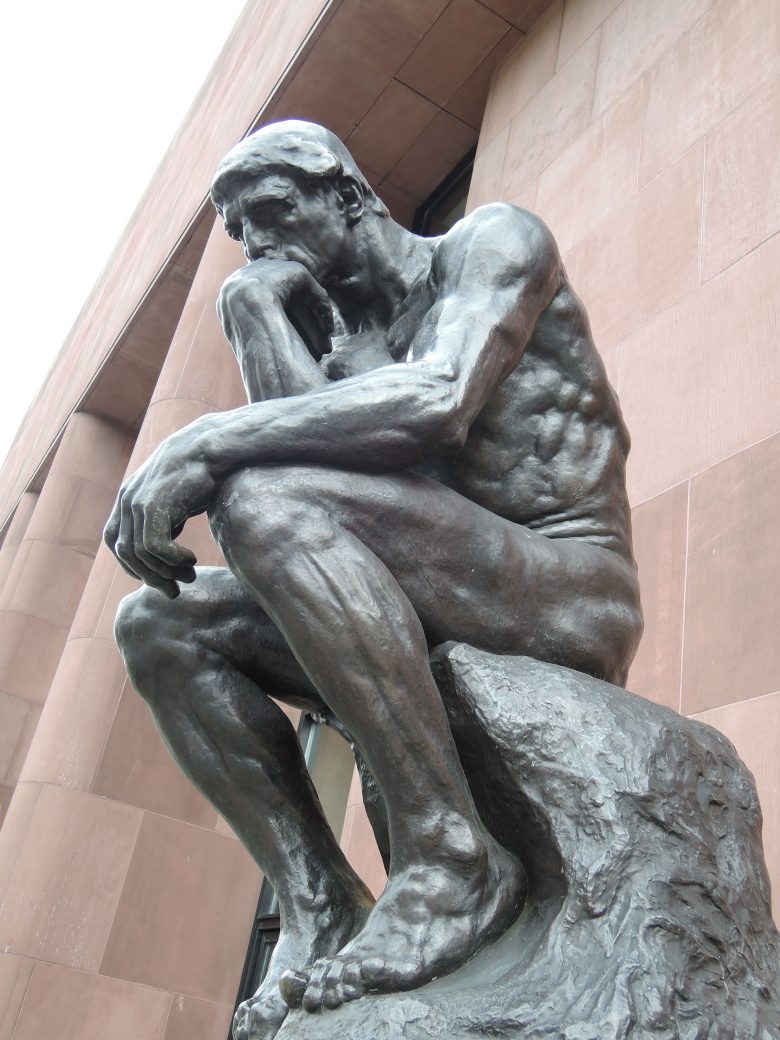
Religion can be understood not as literal cosmology but as a symbolic language through which humanity reflects on its own existence. From Feuerbach and Durkheim to modern psychology, religious ideas reveal how rational animals attempt to interpret consciousness, morality, and the mystery of being human. Seen this way, the emergence of reflective awareness is not a tragedy but one of the great gifts of evolution.
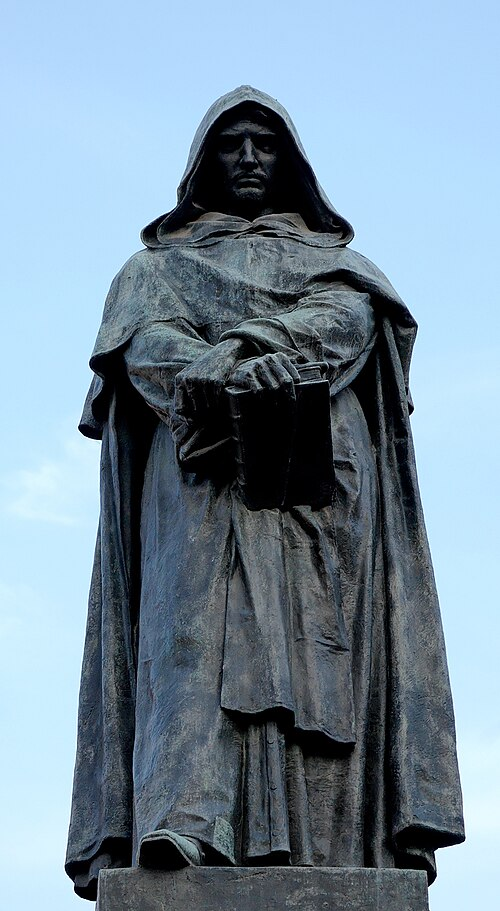
Giordano Bruno saw, more than 500 years ago, that human beings project their inner life onto the cosmos. His “infinite universe” was not astronomy but a vision of the human psyche speaking through myth — a truth that echoes across my own work. In an age that has lost its spiritual depth, Bruno’s voice returns with renewed urgency.

A reflection on the real meaning of enlightenment — not as mystical experience, but as the quiet reconciliation between our deeper vital dynamics and the surface structure of everyday life. The heart, the conscience, and the unconscious guide us long before reason recognises their pattern.
Religion and metaphysics are not revelations from beyond but the stories we tell ourselves to soften the facts of mortality and failure. The diversity of human behaviour arises from the shifting interplay between genes and experience — a balance science can describe but not yet measure. Even in an age of reason, we continue to weave meaning into suffering because we cannot bear the thought that there may be none.
All great religions begin in fire and end in form. A living experience becomes a creed; a vision becomes a law; awakening hardens into obligation. This is not unique to Christianity but a recurring pattern in the spiritual history of humankind.
For two thousand years, Western civilisation has lived within a sacred story — one that promised meaning, redemption, and divine justice. Yet as history and reason awaken us from this dream, we begin to see how religion, though born from human longing, became a tool of control as much as a source of hope. To wake is not to despise faith, but to see it clearly — and to begin the moral work of conscious responsibility.
For three centuries France and Britain have rebelled against religious authority, from Voltaire’s écrasez l’infâme to Nietzsche’s death of God and the modern satire of Private Eye and Le Canard enchaîné. Yet rebellion, once a weapon of liberation, has hardened into reflex. The challenge today is not to keep mocking but to recover conviction—before the state learns to silence even our laughter.
For two millennia, Christianity offered Western civilisation a moral framework that gave meaning to suffering—but also served to stabilise power. From Constantine to empire, sacred symbols were used to sanctify authority, even as reformers tried to reclaim the gospel’s moral core. The ruins of Santa María en Cameros, where a priest once ruled from his hilltop church, stand as a parable of conscience outlasting control. To awaken from the dream is not to reject faith, but to see through it—to recover compassion, justice, and inner truth without the myths that once bound them to power.
For two thousand years, the West has lived inside a sacred dream — the story of divine redemption. Yet the man who inspired it, Jesus of Nazareth, spoke not of metaphysical rescue but of inner change. This essay distinguishes between Jesus the teacher and the Christ of theology, tracing how faith became power and how its original insight can still guide a new awakening.
Apocalyptic thinking is not a Christian novelty but a universal human archetype. From Mesopotamian floods to Hindu yugas, Aztec suns, and modern fears of climate collapse or nuclear war, humanity has always wrestled with visions of the end. Like children confronting the fear of death through rituals, societies create apocalyptic narratives to impose meaning on chaos. Evangelical warnings that “the end is nigh” are therefore not unique—they echo the same deep anxiety found across cultures and ages.