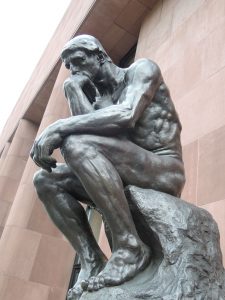
We humans are strange creatures. We act, and then we analyse our actions. We feel impulses that rise out of some ancient biological furnace — and then we sit down and ask why we felt them. No other creature seems to live this double life. A wolf defends its territory without wondering whether the behaviour is ethical. A chimpanzee asserts dominance without reflecting on the psychology of power. Only humans combine animal energies with abstract intelligence.
This is our double inheritance.
And it shapes everything about us—including our aggression.
The Old Brain: Why Aggression Comes Naturally
Long before civilisation, law, or organised states, our ancestors survived by fighting for food, territory, mates, and safety. These behaviours were not chosen; they were built into the nervous system because they worked. That ancient structure still lives in us.
We defend our identities as our ancestors defended watering holes.
We react to threats as if the threats were physical.
We form alliances, tribes, and nations — updated versions of primate hierarchies.
In this sense, aggression is neither mysterious nor abnormal. It is an inheritance: the residue of millions of years in which the only moral law was survival.
But something happened in us that did not happen in other primates.
The New Mind: Why We Wonder What We Are
We do not merely feel. We interpret.
We do not merely act. We evaluate our actions.
It is as if human life is lived twice:
- once in the moment of experience,
- once again in the act of reflection.
This reflexive consciousness — the capacity to look inward and question our own instincts — is extraordinary. It is what makes us moral and philosophical beings. It is the foundation of politics, art, religion, and science. It is what allows us to ask questions that stretch far beyond survival, including the most unsettling question of all:
How did a creature with such a primitive emotional inheritance suddenly become self-aware?
For decades the answer was simple: evolution.
But some features of human consciousness still raise deeper questions. The leap from primate cognition to symbolic thought — language, art, mathematics, abstract reasoning — was astonishingly fast in evolutionary terms.
This has led some researchers, philosophers, and speculative thinkers to ask whether natural selection alone explains our development. It may well do. But refusing the question is foolish. Without questions, there is no science, no discovery, no progress.
Were We Engineered? A Speculative but Honest Possibility
It is not irrational to ask whether something accelerated human development — a genetic bottleneck, environmental shock, forgotten ancient civilisation, or even deliberate intervention by an intelligence beyond our current understanding. These ideas may be uncomfortable for some, but discomfort is not an argument.
The important point is not the hypothesis itself, but the psychological fact beneath it:
Humans alone ask where they came from.
Humans alone question their own nature.
No other species stands between two worlds — the world of instinct and the world of reflection — trying to understand both at once.
To Be Human Is to Be Torn — and to Question That Tornness
It is our lot not only to feel aggression, fear, desire, envy, love, and hope, but to ask ceaselessly why we feel these things. The whole spectrum of human emotion and compulsion is accompanied by an urge to interpret itself. This reflexivity is our great burden and our great gift.
We fight — then write philosophy about why we fight.
We fear — then construct religions about the meanings of fear.
We love — then study the psychology of love.
We harm — then write laws to restrain harming.
questions orNo other creature turns its instincts into questions, or its questions into culture.
The Hope Hidden in the Paradox
If aggression is part of our ancient inheritance, the capacity to reflect is part of our modern one. This means something hopeful:
We are not prisoners of our impulses.
We can understand them, and therefore we can rise above them.
Our animal heritage explains the existence of conflict.
Our reflective mind makes peace possible.
This tension — between the old brain and the new mind — is the story of civilisation.