European society has never been short of power. What has changed, again and again, is where that power resides.
At different points, authority has been lodged with:
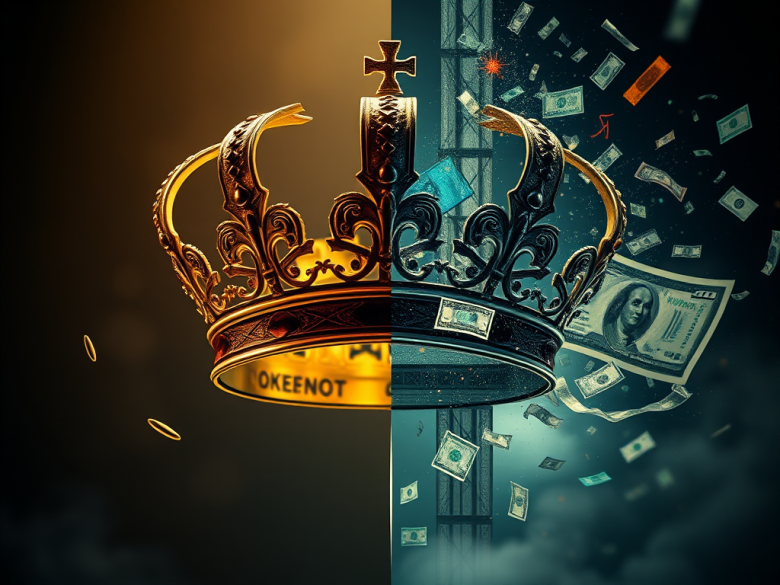
- the sacred — church and crown;
- the dynastic — land, blood, inheritance;
- the popular — parliaments, franchise, mass politics;
- and now, increasingly, the abstract — finance, corporations, systems.
Each transfer has been narrated as progress. Each has also created a new elite, a new priesthood, and a widening distance between those who decide and those who must live with the consequences.
From command to compliance
Earlier forms of power ruled openly. They commanded, punished, and coerced. Their authority was personal and visible, even when it was brutal.
Modern power no longer relies on overt command. It operates through incentives, obligations, and thresholds that are felt most keenly not in moments of crisis, but in the ordinary rhythms of life.
Even our shared festivals are no longer exempt. What once functioned as a moral and communal pause has been quietly absorbed into the logic of consumption and compliance.
It is a bitter irony that, under the present moral legislature, Christmas has become little more than a stealth tax, even as its central symbols are quietly withdrawn — nativity plays cancelled, traditions diluted — not by popular demand, but by managerial caution and moral signalling.
You are no longer ordered to behave in a certain way. You are simply rendered legible or illegible. If your life aligns with institutional expectations, you pass unnoticed. If it does not, friction appears — delays, denials, questions, exclusions.
This is not tyranny in the old sense. It is procedural control.
Democracy inside a fenced estate
Democracy formally survives. We vote. Governments fall. Parties compete.
But its reach has narrowed. Markets react faster than electorates. Corporations plan decades ahead, while governments think in electoral cycles. Financial systems can veto policy without ever standing for election.
Elections change managers. They rarely alter the infrastructure of power.
Democracy increasingly resembles a fenced estate: citizens may rearrange the furniture, but the land itself is owned elsewhere.
The people as resource
In earlier centuries, the many were exploited for muscle: labour, soldiers, physical endurance.
Today, extraction is more refined. What is taken is attention, compliance, debt-bearing capacity, and risk. Losses are socialised; profits remain private. This is not chiefly the product of malice, but of systems designed to prioritise stability and growth over justice or participation.
The common people remain the resource — no longer ruled by decree, but managed through incentives, obligations, and invisible thresholds.
Legibility replaces morality
One of the defining features of modern power is its indifference to moral character. The system does not ask whether you are good or bad. It asks whether you are documented, explainable, and reconcilable.
Earlier societies policed behaviour. Ours polices records.
What cannot be seen cannot be governed. That is why attempts to step outside the system are treated not as minor deviations, but as existential threats.
When power drifts too far
History suggests a recurring pattern. When power becomes too abstract, too remote, and too insulated from lived experience, legitimacy begins to erode.
Compliance may continue for a time. Rules may even be internalised. But eventually the gap between decision and consequence becomes too wide to sustain.
At that point, power migrates again — sometimes peacefully, sometimes violently, rarely neatly.
This is not a prediction. It is an observation drawn from history.
The question facing modern Europe is not whether it still calls itself a democracy, but whether democracy can survive when sovereignty has quietly shifted from citizens to systems.