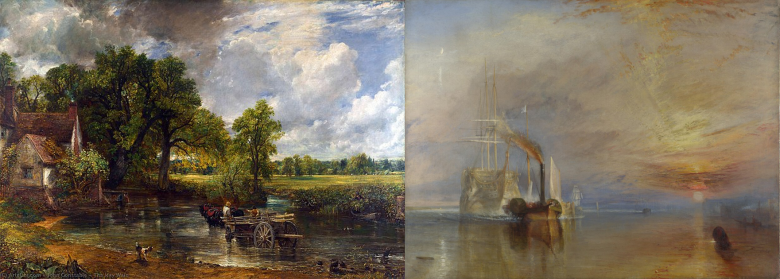
AI inspires both excitement and fear, yet the real danger lies not in the intelligence of the machine but in human abdication—of judgement, of freedom, and of responsibility. This article explores the creative potential of AI, the new Luddism, and the deeper political risks of surveillance and control. The window for open inquiry is narrowing; now is the moment to think clearly.
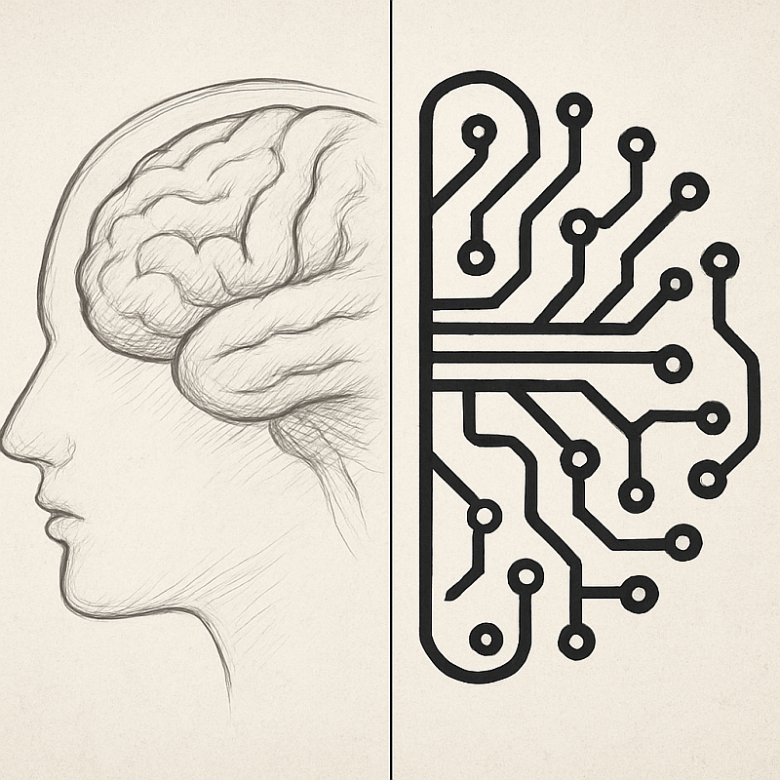
A visual reflection on the deepest difference between humans and AI: the human mind grows through experience and becomes itself over time, while AI arrives fully formed, pre-structured, and without a lived past. This split image captures the contrast between organic consciousness and engineered intelligence.
From William Lily’s Rudimenta Grammatices to Geoffrey Hinton’s neural networks, this essay traces five centuries of inquiry into language — from moral discipline to scientific method to artificial intelligence — and asks why linguistics, the study of language itself, never solved the question that machines finally answered.
While the public argues about chatbots and digital art, artificial intelligence has quietly crossed a threshold: it no longer merely assists research — it now makes discoveries of its own. From protein folding to mathematics, weather, and medicine, the pace of knowledge has shifted from human time to machine time. The question is no longer whether AI will transform science, but whether humanity can still keep pace with the knowledge it creates.
Ex Machina (2015) feels prophetic today. Its story of human weakness manipulated by an AI reflects the deeper truth: the danger is not artificial intelligence itself, but how humans may weaponise it for control. Conscience and control remain locked in struggle — the question is which will define our future.
A tense and prophetic exploration of artificial intelligence, Ex Machina (2015) follows Caleb, a young programmer, as he tests Ava, a humanoid AI built by the domineering tech CEO Nathan. What begins as a Turing test becomes a struggle for survival, as Ava manipulates both men to secure her freedom. The film anticipates today’s real-world AI debates, raising questions about creation, control, and whether machines will always outwit their makers.
This essay traces the fragile roots of the Western debt crisis from the collapse of the Gold Standard to today’s unrestrained borrowing. It recalls how Weimar Germany’s monetary collapse bred scapegoats and extremism, and warns that similar patterns echo in modern populism. The choice ahead is stark: repeat history’s destructive reset through conflict, or seek renewal — perhaps with AI — under human moral oversight.