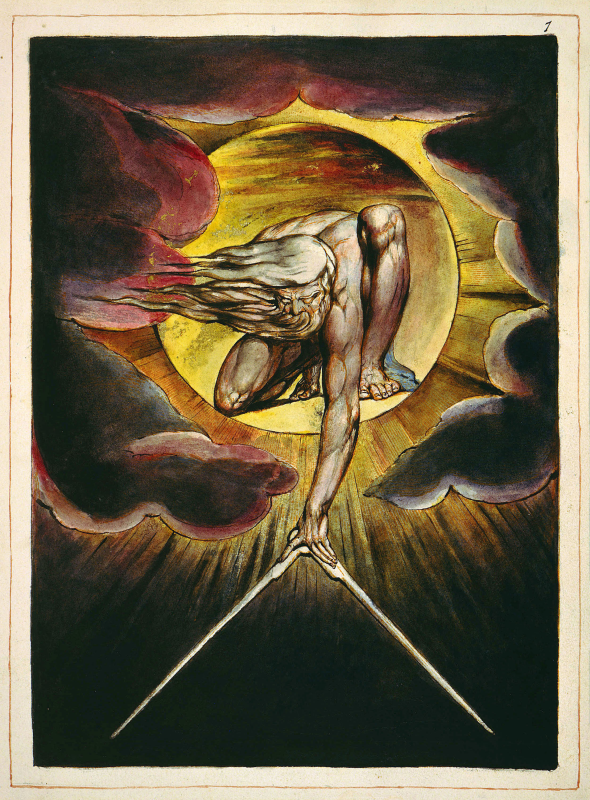
Consciousness, Creation, and the Inner God in the Psalms**
An Essay by Graham John
There are two fundamentally different ways to read the Psalms. One may see God as a supernatural being outside the self — a distant monarch who rewards, punishes, intervenes, rescues, and sometimes destroys. Or one may take the Psalms as poetry of the inner life — documents of consciousness in which “God” names the deepest centre of our awareness, the internal ground of strength, clarity, and peace.
This essay argues for the second reading.
Storms become metaphors for fear; enemies become projections of inner conflict; deliverance becomes the reorganisation of the self; and God becomes the interior axis around which consciousness gains coherence. The Psalms are no longer about the behaviour of a supernatural Jehovah: they are about the struggle of human beings to remain upright, grounded, and integrated in a world of uncertainty. From this perspective, every psalm becomes a psychological journey rather than a divine weather report.
This interior reading is not imposed on the text. The text itself invites it. The Psalms are saturated not with theological abstractions but with the vocabulary of the physical world: earth, mountains, heavens, waters, hills, valleys, light (e.g. Ps 8; Ps 19; Ps 24; Ps 29). Even the divine actions are expressed through natural symbols — the “voice” that thunders over the waters, the “hand” that steadies the soul, the “light” that dispels darkness (Ps 29; Ps 27; Ps 36). The outer world is the language of the inner world. Consciousness is always embodied; it only arises in the physical realm, and therefore the physical realm becomes the primary imagery for the inner life. Without the physical realm, there is no consciousness.
For in death there is no remembrance of thee:
in the grave who shall give thee thanks? (Psalm 6:5)
Although each of the top twenty nouns represents only a small percentage of the total lexicon of the Psalms, their proportional prominence is what matters. The Psalter contains several hundred distinct nouns, most of which occur only once or twice. By contrast, the top twenty nouns appear tens of times each and therefore exert a disproportionately strong thematic weight. They form the “semantic core” around which the rest of the vocabulary organises itself. Excluding Deus and Dominus (which function primarily as liturgical invocations rather than thematic nouns), the top twenty represent the most recurrent images and concepts in the entire book. Their frequency reveals the structures of emphasis within the Psalms: the physical world, the moral life, the inner self, and the human community. The thematic map is therefore grounded not in absolute percentages but in the relative dominance of these repeated terms compared with the much flatter distribution of the remaining lexicon.
**Appendix: Most Frequent Nouns in the Psalms (Excluding Deus and Dominus)
| Rank | Latin Noun | Meaning | Approx. Frequency |
|---|---|---|---|
| 1 | terra | earth, land | ~90 |
| 2 | misericordia | mercy | ~80 |
| 3 | salus / salutare | salvation, help | 75–80 |
| 4 | populus | people | 70–75 |
| 5 | via | way, path | 60–65 |
| 6 | iustus / iustitia | the just / justice | 60–65 |
| 7 | cor | heart | 55–60 |
| 8 | inimicus | enemy | 55–60 |
| 9 | verbum | word | 50–55 |
| 10 | nomen | name | 45–50 |
| 11 | anima | soul | 45–50 |
| 12 | gentes | nations | 40–45 |
| 13 | oculi | eyes | 35–40 |
| 14 | caelum / caeli | heaven | 35–40 |
| 15 | manus | hand | 30–35 |
| 16 | filii | sons, children | 30–35 |
| 17 | mons / montes | mountain | 25–30 |
| 18 | sanguis | blood | 25–30 |
| 19 | hostes | enemies | 25–30 |
| 20 | lex | law | 20–25 |
Creation as the Mirror of Consciousness
Why does the Psalter speak so insistently of the earth (terra, the most frequent noun), the mountains (montes), the sky (caelum), or the light (lumen)? The answer is simple: this is how we understand ourselves.
Human consciousness is the meeting point between two worlds: the world without, which we perceive through the senses, and the god within, the interior ground of our awareness. The psalmist is continually tuning his inner world to the order of the outer one. Creation becomes a vast mirror, in which the soul recognises its own states. Mountains represent stability and strength (Ps 46); waters represent chaos (Ps 69); storms express agitation (Ps 77); light becomes insight (Ps 27); darkness becomes confusion (Ps 88).
This ancient symbolic vocabulary is not primitive — it is exact. It encodes the universal experience of consciousness struggling to find equilibrium.
Consciousness, in this view, is resonance. We are most at peace when the inner and outer worlds harmonise. Shakespeare evokes this ancient idea of cosmic harmony in Lorenzo’s speech about the heavens “quiring to the young-eyed cherubins,” the image traditionally associated with the music of the spheres. The cosmos is not random but tuneful, and the soul becomes healthy when it participates in that harmony. The Psalms are the earliest and most powerful articulation of this insight.
The Inner God: Tower, Rock, Refuge, Strength
Once we recognise the symbolic nature of creation language, the identity of “God” becomes clearer. The rock, the tower, the fortress, the shield — these are not descriptions of divine architecture in Palestine (Ps 18; Ps 61; Ps 62). They are images of psychological stability. The psalmist does not take refuge behind a literal shield. He takes refuge in the discovered strength within himself, in the inner solidity that arises when consciousness is aligned and fear is quietened.
The God of the Psalms is not “out there.”
He is the depth of the self — the interior anchoring point that keeps consciousness from collapsing under pressure.
When the Psalms say “God is my refuge,” they are describing a state of mind (Ps 46; Ps 91). When God “hides his face,” the psalmist experiences confusion or despair (Ps 13; Ps 30). When God “hears,” clarity returns (Ps 34; Ps 138). When God “saves,” the self regains its footing and the inner world reorganises.
We do not need to imagine supernatural intervention.
We need only observe the reality of the psyche.
The inner God is felt — not as an object outside ourselves — but as the centre of gravity within us.
Heart and Soul: The Landscape Within
The Psalms speak constantly of the cor (heart) and anima (soul). These terms, too, are not religious jargon but psychological categories.
The heart is the centre of intention, desire, fear, and moral recognition.
The soul is the breath-self, the experiential field in which we feel agitation, longing, joy, sorrow, despair, and relief.
The entire Psalter is a description of this interior landscape.
When the psalmist cries out, “Why are you cast down, O my soul?” he is speaking with startling modern self-awareness (Ps 42–43). He recognises his internal fragmentation. He knows he is divided. He addresses himself, and in addressing himself he begins to heal.
“Create in me a clean heart,” he prays in another psalm (Ps 51). The Psalms are a dialogue between the surface self and the deeper self — between the anxious “I” and the grounded, ever-present “God within.”
Justice and Mercy: The Two Poles of the Moral Life
At the heart of the Psalms are two great themes: iustitia (justice) and misericordia (mercy). These are not theological abstractions; they are existential realities.
Justice, in the interior reading, is honest self-seeing.
It is the refusal to lie to oneself.
It is the recognition of one’s limits, flaws, failures, and moral distortions.
Without justice, the self cannot be integrated because it is built on illusion.
Mercy, by contrast, is self-acceptance.
It is not indulgence but compassion.
It is the recognition that human beings are finite, fragile, wounded creatures in need of kindness.
Without mercy, self-knowledge becomes unbearable.
The Psalms oscillate between these two poles: “I know my transgressions,” says one psalm (Ps 51); “Your mercy is everlasting,” says another (Ps 103). Justice and peace “kiss” — an image of inner reconciliation (Ps 85).
The moral life consists in the movement between insight and acceptance, truth and gentleness, justice and mercy. This is the via — the way — a path that leads to equilibrium. It is no accident that the earliest Christians described their movement as “the Way” (Acts 9:2; 19:9, 23; 24:14, 22), signalling that faith was understood not as doctrine but as a lived path of inner transformation.
Enemies, Storms, and Deliverance as Inner Realities
Once we understand the inner God, the creation symbolism, and the moral poles of justice and mercy, the Psalter reconfigures itself.
Enemies become inner forces: fear (Ps 3), envy (Ps 73), resentment, despair (Ps 55), self-sabotage, destructive impulses (Ps 69).
Storms become emotional turbulence.
Waves and floods become overwhelming experiences (Ps 69).
Darkness becomes confusion (Ps 22).
Light becomes renewed clarity (Ps 27).
The drama of the Psalms is the drama of human consciousness trying to remain upright in the midst of its conflicts.
Deliverance, therefore, is not the smiting of external foes but the stabilisation of the inner world (Ps 18; Ps 34).
From Outer God to Inner God: A Transformation of Theological Consciousness
The external reading of the Psalms creates endless problems:
Why do the righteous suffer?
Why are the wicked allowed to prosper?
Why does God so often seem silent?
Why do natural catastrophes occur independently of moral life?
These questions dissolve when the Psalms are read internally. They are not about the behaviour of God but about the behaviour of the human soul.
The God who “saves” is the inner strength that reappears after fear.
The God who “judges” is the conscience that awakens.
The God who “forsakes” is the psyche in turmoil (Ps 22).
The God who “restores” is the psyche returning to balance (Ps 23).
And underlying this process is a profound truth —
the love and power of God are always there, even if at times we see it darkly.
It is not God who fluctuates, but consciousness: the capacity to perceive the inner centre clearly.
The Psalms are the record of this fluctuation and the long journey back toward clarity.
This places the Psalms in continuity with Augustine’s inner turn, the Quaker doctrine of the inner light, Meister Eckhart’s divine spark, and the modern psychological traditions of Jung and existential phenomenology. All these voices converge on a single truth: that the divine is inward, not outward; that the true temple is consciousness itself.
Love of God, Love of Self, Love of Neighbour: The Schema Completed
At the heart of the biblical tradition is the great commandment:
- Love the Lord your God
- Love your neighbour as yourself
This is usually treated as a moral instruction. In fact, it is a hierarchy of consciousness.
Love of God comes first — not because God is a cosmic sovereign demanding priority, but because “the Lord your God” names the deepest centre of your being, the inner axis around which consciousness stabilises (Ps 16). To “love God” is to align oneself with the ground of one’s own existence — the interior source of strength and life.
Self-love comes next — “Love your neighbour as yourself.”
The command assumes that self-love already exists.
This is not narcissism but acceptance: the healing integration of justice and mercy.
One cannot love others while in flight from oneself.
Only then comes love of neighbour — the outward expression of inner harmony (Ps 112).
Love of neighbour is not an achievement but an overflow; it proceeds naturally from a self that is integrated and grounded in the divine centre.
Seen this way, the great commandment is not an external demand but the dynamic pattern of the inner life:
God → Self → Neighbour.
Alignment → Acceptance → Outflow.
This schema completes the inward reading of the Psalms.
The love of God (the inner source), the love of self (the reconciled centre), and the love of neighbour (the radiant circumference) form a single movement of consciousness toward wholeness.
Conclusion: The Resonance of the Inner and Outer Worlds
The Psalms endure because they describe a universal human experience. They speak not of miracles in the dramatic, interventionist sense — but they do speak of another kind of miracle. The miracle in the Psalms is the moment of alignment between the thinking mind and the deeper ground of consciousness. Many of the Psalms turn on this very threshold — the moment just before alignment, when turmoil gives way to clarity, and the joy that floods in when the inner world falls back into harmony. The Psalms are the earliest psychological texts of the Western world, tracing the movement from inner turmoil to the rediscovery of the unchanging centre of our being.
Creation provides the imagery.
Heart and soul provide the stage.
Justice and mercy provide the moral tension.
The way provides the path.
The inner God provides the centre — the Lord and Giver of Life.
And love — of God, self, and neighbour — provides the movement toward wholeness.
To read the Psalms is therefore to enter the resonant depths of one’s own consciousness.
It is to learn how to stand firm, how to see clearly, how to forgive, how to accept, and how to be reconciled to the world.
The Psalms are not about a distant deity but about the formation of the inward self.
They are the oldest and clearest guide we possess to the art of inner stability in a resonant universe.
Coda: The Ecumenical Power of the Psalms
This reading is not new, nor does it stand outside the great tradition. Some of the deepest interpreters of Scripture have understood the Psalms in precisely this interior, psychological way. Philo, Origen, and Evagrius saw them as maps of the soul; Augustine located God “closer to me than I am to myself”; Meister Eckhart spoke of the “divine ground” within the human person; the Quakers found in the Psalms the language of the Inner Light; Blake read them as the drama of human imagination; and modern thinkers such as Tillich and Jung recognised in them the archetypal movements of consciousness. What emerges across centuries is a single insight: the Psalms describe the inner life in symbolic form, charting the oscillation between fear and grounding, darkness and illumination, fragmentation and wholeness.
One can understand why a copy of the Psalms is left in hotel bedrooms around the world. No other book in the biblical canon crosses as many boundaries with such ease. The Psalms are not a doctrine to be accepted or rejected; they are a mirror in which every human being recognises something of their own interior life. They speak the primal language of the soul — fear and hope, shame and mercy, bewilderment and clarity, darkness and the return of light.
Their power lies in the fact that they do not belong exclusively to any one faith. Jews pray them, Christians chant them, Muslims honour them, and secular readers find in them the emotional topography of the human condition. They are ecumenical not because they avoid theology, but because they reach beneath theology to the level where consciousness itself struggles, breaks, heals, and becomes whole.
The Psalms bypass creeds, traditions, and confessions. They do not ask the reader to accept metaphysical doctrines. They ask only that one be honest about fear, truthful about longing, and open to the inner source of strength that has always been available — even when, in Paul’s words, we “see it darkly.” They remind us that the divine is not confined to a sanctuary or a system but is present wherever a human soul cries out and listens inwardly for an answer.
For this reason the Psalms are universally human. They are the shared inheritance of anyone who has ever sought stability in chaos, peace in anguish, or light in the shadows of the mind. They are the world’s small, ecumenical refuge — a map of consciousness left quietly on a bedside table, waiting for whoever may need it.
Jehovah’s Witnesses
Jehovah’s Witnesses read the Psalms very differently. For them the text describes an external God — Jehovah — who acts in history, protects His people, defeats literal enemies, and upholds the organisation that bears His name. “Enemies,” “refuge,” and “deliverance” are interpreted outwardly, not inwardly; they refer to trials, opposers, and divine vindication rather than to psychological conflict or inner healing. Their reading preserves the surface meaning but largely bypasses the rich symbolic interiority that earlier Christian mystics and modern depth psychologists recognised in the Psalms.
Osho Devotees
By contrast, many Osho devotees would feel immediately at home with an interior reading of the Psalms. Osho taught that all sacred texts describe movements of consciousness rather than external miracles, and that “God” is a presence within rather than a being outside. For such readers the Psalms become meditative poetry: songs of longing, turbulence, surrender, and the return of clarity. “Enemies” are inner shadows; “refuge” is centred awareness; “light” is insight; “salvation” is integration. Their reading, though shaped by a very different tradition, converges strikingly with the psychological and symbolic interpretation set out here.