
This article grew out of watching YouTube videos from Britain and the United States that set out to show how “ignorant” members of Generation Z are. Entertaining though such clips may be, they have little statistical validity: a handful of silly answers, chosen for effect, cannot stand for a whole generation. Still, they raise a question worth asking, and it is the same one I pose in the next paragraph. The first table shows that a blanket dismissal of educational attainment among British youth is unjustified. Yet the PISA results also led me to reflect on my own experience — first abroad, later in the UK — where I saw striking differences in how classrooms worked. What follows, then, is not a comprehensive analysis but a personal snapshot of a complex situation: food for thought, perhaps, rather than the last word on the subject.
It is a paradox that in Britain, after thirteen years of compulsory schooling, around one in three young people still leave without a secure grasp of both English and mathematics, even though average PISA scores remain above OECD norms, while at the same time official figures tell us that one in five schoolchildren suffers from a “probable mental disorder.” Adults fare little better: rates of anxiety, depression, and mixed emotional disorders are climbing steadily, particularly in the working class.
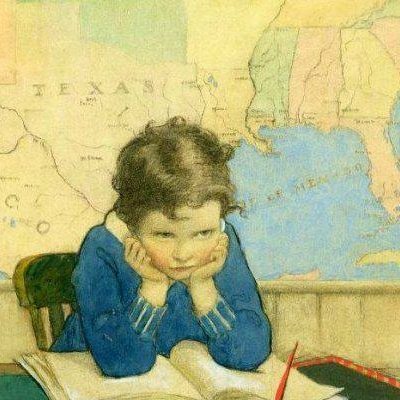
The educational roots of decline
A turning point can be traced to the 1960s, when Britain embraced what it believed to be progressive educational reform. The Newsom Report of 1963 (Half Our Future) and the Plowden Report of 1967 (Children and their Primary Schools) argued for “child-centred” teaching, discovery learning, and the relegation of grammar, arithmetic drills, and systematic knowledge to the background. These ideas — noble in intention but naive in execution — caught on quickly in Britain. The outcome was predictable: patchy literacy, diluted numeracy, and classrooms where discipline became a constant struggle.
On the continent the same fashions arrived later and were met with greater caution. France, with its rigidly centralised curriculum, and Germany, with its strong tradition of Bildung and differentiated secondary schools, absorbed only fragments of Plowden and Newsom. Where Britain dismantled its grammar schools and stripped back the teaching of language, France and Germany kept their state examinations and their respect for academic rigour.
What I am implying is that in Britain there has been a drift away from Bildung toward control. Insistence on “standards” — whether in dress or demeanour — has become a provocation that pupils naturally resist. I recall visiting a friend in a prestigious state school, where over lunch he seemed to spend more time ordering boys to tuck in their shirts than speaking to me. Antagonism of this sort festers in the corridors of British schools and seeps into the classroom, with greater or lesser vehemence depending on the subject taught and the personal authority of the teacher. The school uniform, far from instilling respect and discipline, infantilises adolescents, trapping them in daily resentment rather than fostering responsibility.
Yet the most recent international comparisons complicate this picture. The OECD’s PISA 2022 report shows that Britain (England) still performs slightly better in mathematics, reading, and science than France and Germany, though it lags far behind the East Asian front-runners.
| Country | Maths | Reading | Science | Average |
|---|---|---|---|---|
| Singapore | 575 | 543 | 561 | 560 |
| Japan | 536 | 516 | 547 | 533 |
| South Korea | 536 | 515 | 528 | 526 |
| UK (England) | 489 | 496 | 500 | 495 |
| Finland | 484 | 490 | 511 | 495 |
| New Zealand | 479 | 501 | 499 | 493 |
| Germany | 475 | 480 | 492 | 482 |
| France | 474 | 474 | 487 | 478 |
| USA | 465 | 504 | 499 | 489 |
| OECD Average | 472 | 476 | 485 | 478 |
Beyond the Tables: What PISA Misses
- The “long tail” and private education
Britain’s respectable average is buoyed by its top quarter — disproportionately from selective schools and the private sector. This creates a “two nations” education: a polished elite who can pull up the international average, and a long tail of under-performers. PISA, by reporting a mean score, hides this inequality. - Teaching vs practising
There is in Great Britain what I consider to be a misconception – that teaching is everything. But problem-solving isn’t really taught, it is practised. Endless exposure to word problems, comprehension tasks, and situational puzzles gradually trains pupils to make the leap from mechanics to application. This depends, of course, on the cooperation of the pupil. - The “teachable” pupil and the culture of learning
German and French pupils, in my experience, were respectful, diligent, and willing to learn — in stark contrast to some English pupils. This has a lot to do in my view with the status of children in British society where obedience to authority has always been the higher rule. A classroom where pupils see themselves as partners in learning — not as children to be managed — is vastly more productive. - The bitterness of comparison
On a school exchange, a German pupil, with a look of puzzlement on his face, came to me at the end of a lesson and made a point of saying: “You are not like they said you were.” The gulf was clear: German pupils could imagine their teacher as a partner, while many English pupils treated their teacher as an enemy. In Britain it had been crowd control, crowd control, crowd control — never education, education, education. The barbarity of the English classroom was a shock to me when I returned to Britain, and I felt that it was only abroad (and in a language school in Britain) that I discovered what it felt like to teach. - What PISA cannot capture
The test measures competence at applied tasks, but not teachability, respect, or the social maturity of classrooms. Those ‘softer’ qualities are arguably more decisive for long-term education than any 15-year-old’s test score. In England, I mastered the examination boards and drove the pass rate in French and German to 100% at my last school. The statistics proved my worth, but it was the memory of genuine teaching abroad that sustained my confidence in the profession.
Britain’s education system has been shaped by the creeping commodification of schooling, much of it imported from the USA. Pupils are treated as units of output; schools are run like businesses; league tables, inspections, and statistics define “success.”
Mental health as a mirror of society
Britain’s children and adolescents show strikingly high rates of anxiety, depression, and behavioural disorders; adults, too, report common mental disorders in alarming numbers. This is not merely the product of more efficient statistical gathering but a genuine increase in distress, particularly among the poor. Mental illness follows the social gradient: the lower the income, the higher the incidence.
| Country | Adults – % with diagnosis / emotional distress / common disorder | Children & Young People – % with probable mental disorder |
|---|---|---|
| UK | 16–20% ever diagnosed with depression/anxiety; ~22% with common mental health condition (2024). | ~20–21% of 8–16 year-olds (2023); up from ~10% in 2017. |
| USA | ~23% ever diagnosed; ~26% report emotional distress in past 2 years. | ~20% prevalence of any disorder among adolescents. |
| Germany | <10% diagnosed; ~7% recent emotional distress. | ~12–13% of adolescents with a disorder. |
| France | <10% diagnosed; ~12% emotional distress. | ~12–15% of adolescents with a disorder. |
| New Zealand | ~20–25% report distress in surveys. | ~15–20% of adolescents, depending on measure. |
The Anglo-American world consistently reports the highest incidence. Germany and France show lower rates, not because their people are free from suffering, but because their cultural and institutional frameworks have resisted the wholesale import of Anglo-American therapeutic jargon and the medicalisation of ordinary distress.
But Britain is a special case. More than any other European country, and a forerunner of the Industrial Revolution, it learnt to hold its working class in contempt — just as it held the inhabitants of its colonies in contempt. Anyone not a member of the “club” was automatically treated as collateral, a means to an end rather than an end in themselves.
A ruling class has always existed in Britain, but its habits hardened after the mid-18th century, when the East India Company transformed itself from a trading venture into a territorial power in Bengal. That institution taught its administrators all the tricks of suppression and control, lessons later applied at home as well as abroad. The disdain it embodied seeps through the corridors of our elitist public schools and into the universities. Oxford and Cambridge produced some of the greatest minds in the world, yet they also served as finishing schools for a certain kind of elite, where discipline and emotional repression were prized as much as intellectual brilliance. The result was a system capable of generating both genius and arrogance. From an early age, boys were taught that tears were weakness, that compassion was unmanly, that the only virtues were endurance and obedience. “Boys never cry” became not just a playground taunt but a national creed, producing generations of men trained to suppress empathy and to pursue objectives with little regard for the human cost.
The ethos of the British public school was almost tailor-made for the needs of empire. The East India Company — and later the Raj — required men who could enforce hierarchy, endure hardship, suppress empathy, and command loyalty. The schools produced exactly that type: young men hardened by bullying, conditioned to obedience, and convinced of their destiny to rule. What began as training for the playing fields of Eton found its truest expression in the administration of empire, and was exported as a model to colonies far beyond.
Yet the schools were more than a training ground; they were also a parking lot for the children of empire. Families posted to India or Africa often preferred to leave their sons in England, safe from disease and far from colonial distractions. Boarded out for years at a stretch, boys learned detachment as much as discipline. Emotional separation became routine, and what began as practical convenience hardened into tradition: children trained to endure absence grew into adults who would perpetuate the same cycle in service of the empire that had shaped them.
That same ethos lingers today. Its outward forms may have softened, but the habits of emotional repression, contempt for the outsider, and entitlement to rule still echo in Britain’s corridors of power — legacies of a schooling system that taught its leaders not to feel, but to command with an arrogance born of elitism.
The “special relationship”
Since Churchill coined the phrase “special relationship” in 1946, Britain has played the role of junior partner to the United States. The dependency was rooted in necessity: post-war Britain was bankrupt, while the U.S. controlled the Marshall Plan, the dollar, and the nuclear umbrella. Over the decades the relationship has hardened into habit. Britain has followed the U.S. into war after war — Iraq, Afghanistan, Libya — while importing its economic model of deregulation and privatisation and its cultural fashions in education and therapy.
Germany and France, although bound to NATO, have maintained more independence: de Gaulle’s withdrawal from NATO’s integrated command, Germany’s insistence on social partnership and vocational training, France’s jealous guarding of its cultural sovereignty. Britain, by contrast, has often seemed to volunteer itself as America’s first satellite, persuading itself that this gives it global relevance while in fact it merely drifts in another’s wake.
The wider pattern: interventions abroad
What is happening domestically mirrors what the U.S. has pursued abroad since 1945. The official language is always the same — defence of freedom, humanitarian rescue, containment of communism or terrorism — but the underlying pattern is equally predictable: military entry is followed by economic penetration, and economic penetration by cultural Americanisation. Korea, Vietnam, Iran, Chile, Iraq, Afghanistan, the Balkans: in each case the U.S. footprint brought not only soldiers but also corporations, financial contracts, and a stream of NGOs, media, and universities exporting Anglo-American norms.
Britain was once an empire itself, and its interventions in India and Africa were driven less by benevolence than by the needs of commerce — spices, cotton, gold, diamonds. The United States has refined the same logic for the late twentieth and twenty-first centuries. The difference is that the extraction is now global, and it is packaged in the language of liberty.
Collateral damage
The victims of this system are many. At home, British children spend long years in schools where the ethos of control often overshadows the purpose of education. Despite this, most teachers genuinely strive to educate their pupils, even as one in five grows up with a mental disorder. Abroad, societies are destabilised by interventions that open markets for the few and leave wreckage for the many. All of this is collateral damage, tolerated easily enough by the global one per cent who profit from the system. For them, the “sick society” is not a problem but a convenience: anxious, fragmented populations are easier to manage, and failing schools still produce a supply of compliant workers. Yet even this is only part of the picture. Youth unemployment remains stubbornly high, while mental illness is so widespread that many cases go untreated. For those deemed “unable” to work, Personal Independence Payment has become the default answer — less a remedy than a symptom of a system that manages decline rather than confronting its causes.
Homelessness is perhaps the most visible symptom of that sickness. In both Britain and the United States it has reached shocking levels, driven not by lack of shelter but by the commodification of housing itself. Home ownership has been turned into an investment vehicle, pushing prices beyond reach and forcing many into precarious rentals at extortionate rates — or onto the streets. A society that treats homes as assets before seeing them as dwellings has already lost sight of its own moral compass.
Conclusion
Why, then, after thirteen years of schooling, do so many British pupils still leave without confidence in grammar or arithmetic? The answer lies less in the pupils than in a system bent out of shape by inequality, commodification, and misplaced priorities. PISA may flatter Britain with above-average scores, but it conceals the long tail of underachievement, the culture of infantilisation, and the adversarial tone of too many classrooms. Until these structural flaws are faced, the paradox will persist: long years of schooling, but too little secure learning.
Clarity often comes only after experience. For me, that was the English classroom, where education too often collapsed into crowd control. The majority of pupils were biddable, but the aggression of a sizeable minority was enough to dominate the atmosphere. What sustained me were, first, the memories of Germany, where I had once known what it felt like to teach — pupils respectful, cooperative, and genuinely engaged. Later, it was my continual contact with EFL schools in Britain, where I taught learners who wanted to learn. At first this was alongside full-time work in English secondary schools during the holidays; later it continued in retirement from full-time education. Much of my understanding of children’s learning — especially the painful transition from mechanics to problem-solving — comes from one-to-one work as a private 11-plus tutor. In that setting, individual difficulties can be recognised and addressed directly. But what struck me most was that the aggression so common in English classrooms was entirely absent from the German and French pupils I taught — and I wondered why.
That question — why German and French pupils seemed so much more teachable — led me to look beyond the classroom itself. It pointed toward deeper cultural differences in how societies imagine education: in Britain, a drift from Bildung toward control, where “standards” provoke resistance rather than growth; in Germany, a tradition of education as self-formation; in France, a culture of respect for learning as part of civic maturity. It also brought into focus the peculiar inheritance of the British system, shaped by empire and by schools designed less to foster curiosity than to produce obedience. These wider forces, rather than the aptitude of individual pupils, may explain why the classroom atmosphere differs so starkly from one country to another.