
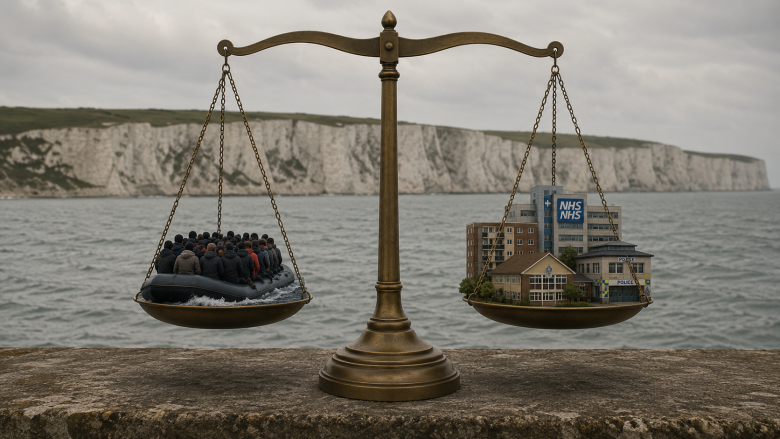
Britain’s immigration debate is often framed in terms of compassion, race and national identity. This article asks a more practical question: how many people can the country house, employ, support and integrate without weakening public services, increasing resentment or exceeding the limits of public consent?

A reflection on Brexit, sovereignty, and the failure to turn self-government into national renewal. The article argues that leaving the European Union only matters if sovereignty is used responsibly: to rebuild food security, water, energy, housing, industry, education, environmental protection, and public welfare. It also warns that sovereignty can become dangerous if power simply passes from Brussels to Westminster, Whitehall, surveillance systems, and digital identity schemes.

The plight of the young is not simply that they pay more. It is that what they pay becomes somebody else’s income. High rents, student debt, expensive housing, insecure work, and weak pensions are mechanisms of transfer. Since the Thatcher-Reagan turn, Britain has moved from a post-war social contract towards a market order in which housing became wealth, security became private, and the young were left to buy their way into a world their elders acquired much more cheaply.
A reflection on Britain’s long structural decline since the 2008 financial crisis, arguing that the country’s problems cannot be solved simply by replacing one leader or party. The article considers weak productivity, debt, austerity, Brexit, political fragmentation, and the wider European malaise facing France and Germany, before asking whether public patience can survive continued drift.
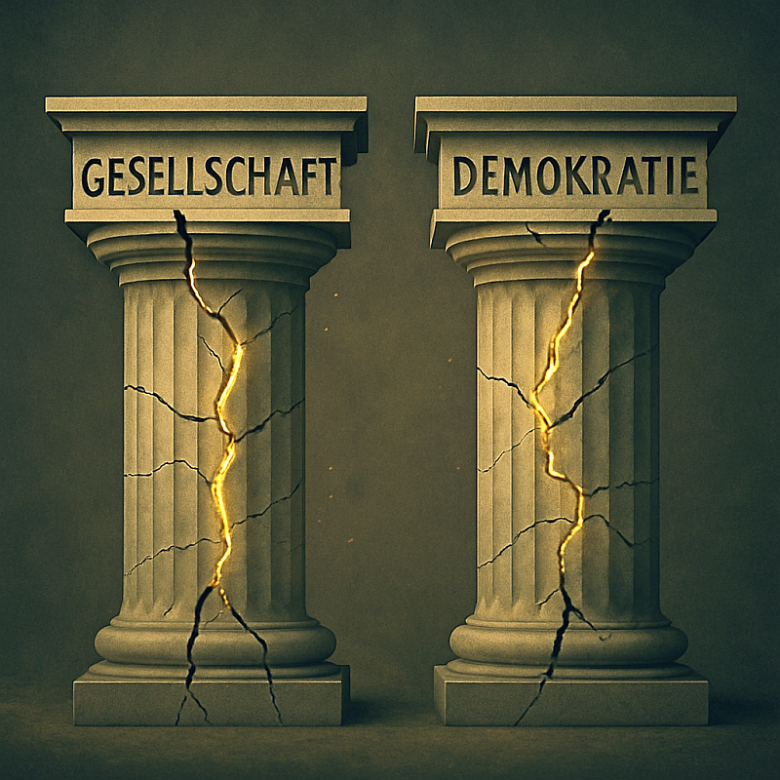
Public debate in Britain and Germany increasingly blames immigration for social and political strain. Yet most pressures—housing shortages, overstretched schools and hospitals, stagnant wages, declining neighbourhoods, and falling trust—began decades before recent migration waves. Immigration is not the cause of systemic weakness; it merely exposes it. This essay traces the deeper forces behind today’s instability: long-term underinvestment, the neoliberal shift since the 1980s, demographic ageing, bureaucratic rigidity, and the erosion of social cohesion. It also examines why parties like the AfD and Reform UK attract support—and why their rise reflects a democratic system struggling to correct itself.

A reflection on how debate in Britain has become the preserve of the few, leaving most pupils trained to perform rather than to think. Drawing on personal experience, it argues for a new educational humanism grounded in moral, civic and intellectual formation.
A reflection on how satire and self-expression have evolved from the court jester to the YouTube commentator. In an age when anyone can speak with the authority of a king, emotion often replaces argument, and outrage becomes its own form of power.
A reflective essay responding to President Steinmeier’s 9 November 2025 speech on “defensive democracy,” arguing that moral exclusion by the political establishment now threatens democratic trust as surely as populist extremism.
In the same week that Zohran Mamdani claimed victory as socialist mayor of New York and Alice Weidel denounced Germany’s government from the nationalist Right, both spoke with the same moral urgency about power, alienation, and decline. Beneath their opposing banners runs a shared frustration with elites and a longing for renewal. The tragedy of modern politics is that left and right are too busy defending their labels to work together on the changes both demand.
Alice Weidel’s Bundestag speech accusing the German government of fiscal and moral decay echoes far beyond Berlin. Many of her criticisms — debt, industrial decline, migration pressures, and the erosion of trust in political institutions — could be voiced just as easily in Westminster. This essay compares Germany and Britain in 2025, examining economic data and broader cultural parallels to show how both nations face a crisis of confidence born from deindustrialisation, bureaucratic expansion, and public alienation. The decline she described in Berlin, as echoed by voices like Richard Tice and Nigel Farage in the UK, reflects a shared European malaise.