By Graham John
When modern readers imagine the world of Jesus, they often picture an idyllic landscape of fishermen, villages, synagogues, and dusty paths through Galilee. This is because the spiritual landscape has been allowed to dominate our imagination for centuries: hymns, paintings, liturgy, and devotional storytelling have sanctified the scene, softening the harsh political and economic conditions under which Jesus actually lived. We inherit not the world he knew, but the world later Christianity preferred to remember — a world cleansed of Roman taxation, military checkpoints, humiliation, and fear.
The political reality was far harsher. Jesus lived and taught under the shadow of one of the most intrusive, extractive, and administratively sophisticated empires in history. Rome was not merely a backdrop; it shaped the society into which he was born, the anxieties of the community he addressed, and the fate he ultimately suffered.
And few things illustrate this power more clearly than the census described in the Gospel of Luke.
1. The Census: Rome Counting Its Subjects
Luke writes:
“A decree went out from Caesar Augustus that all the world should be taxed.” (Luke 2:1)
Whether or not Luke’s chronology perfectly aligns with Roman records, the story preserves a deeper historical memory: Rome counted everyone it ruled — a fact we know from surviving papyri, inscriptions, Roman historians, and Josephus himself, all of which show that regular censuses were essential to the Empire’s system of taxation and control. A census was never a neutral bureaucratic exercise. It was the empire’s way of asserting authority over identity, property, and labour, binding each household into a system of tribute. To be counted was to be claimed.
A Roman census demanded:
- names,
- age and household composition,
- property and land ownership,
- taxable wealth.
It transformed individuals into entries on an imperial ledger — the ancient equivalent of a compulsory identity registration system.
Thus, the quiet nativity scene in Luke carries a political undertone: Jesus is born into a world where even the movements of poor families are governed by imperial decree.
2. What the Census Reveals About Roman Rule
The census exposes the character of Roman occupation in Judea and Galilee:
a. Administrative reach
Rome knew who lived where. Bureaucracy became a tool of conquest.
b. Economic extraction
Taxation was the empire’s lifeblood. Judea paid tribute whether it wished to or not.
c. Surveillance through paperwork
By registering families and estates, Rome mapped the social landscape of its subjects.
d. Political humiliation
To be counted by a foreign power was to be reminded daily that one’s freedom had been lost.
3. Roman Presence in the Daily World of Jesus
Rome appears in the Gospels not through political treatises but in the subtle structures of power that shaped everyday life.
The coin with Caesar’s image
“Render unto Caesar” (Mark 12:17) is a political question disguised as a theological one. The coin Jesus held was not a neutral object of commerce but a piece of imperial propaganda — stamped with the image of Tiberius and the inscription divi filius, “son of the divine.” To use the coin was already to participate in Rome’s claim over Judea. In this sense, currency itself becomes a tool of power: it standardises exchange, embeds political messages in everyday life, and binds diverse peoples into a single economic logic.
This dynamic has modern parallels. The introduction of the Euro in the European Union was not enforced by military conquest, yet it profoundly reshaped political identity and economic allegiance. Force is not the only method of control. Integration — especially when embraced in the hopeful aftermath of catastrophe — can achieve what armies once did: it can harmonise economies, align loyalties, and make participation in a wider system appear not only rational but inevitable. Rome understood this principle long before Brussels. Power works most effectively not when it is imposed, but when it is quietly normalised through the objects people touch every day.
Centurions in Galilee
A Roman military officer in Capernaum is evidence of strategic occupation. Galilee was rebellious, economically strained, and heavily monitored.
Crucifixion as a political sentence
Crucifixion was the punishment for rebels, slaves, and those who threatened Roman order. Jesus died the death Rome reserved for political dissidents.
Client kings
Herod the Great and his sons ruled only with Roman approval. Their authority was derivative and often brutal.
Pilate’s role
Pontius Pilate appears in the Gospels because Rome reserved the right to execute. Only imperial authority could crucify.
4. Did Jesus Resent Roman Rule?
The Gospels do not depict Jesus giving political speeches. But his world was unmistakably political, and many of his contemporaries — Pharisees, Zealots, Essenes, Galilean villagers — deeply resented Roman rule.
It is historically reasonable to conclude that Jesus, like nearly all Jews of his time, lived with:
- humiliation under foreign domination,
- punitive taxation,
- military oversight,
- and the constant memory of lost sovereignty.
His message of the “kingdom of God” was therefore never purely spiritual in the modern sense. It carried an unmistakable political resonance:
God’s rule will replace unjust rule.
What is wrong will be set right.
Darkness will give way to light.
This aligns with the worldview reflected in the Dead Sea Scrolls:
a belief that the present age — ruled by Herodians and Rome — was ending.
When Jesus proclaimed that the kingdom of God was “at hand,”
his listeners heard more than a metaphor.
They heard hope.
5. Parallels Between Jesus’ World and Our Own – And Why His Message Still Matters
When we step back from the devotional haze that often surrounds the Gospels, the parallels between Jesus’ world and ours become strikingly clear. His society was shaped by foreign occupation, economic extraction, political manipulation, surveillance, and the quiet terror of an all-seeing empire. Rome governed not only by force but by construct — a system of meaning imposed upon the population, designed to make domination appear natural, inevitable, even sacred.
Our modern world is no different.
The mechanisms have changed — they are financial, bureaucratic, digital — but the underlying dynamic is the same. Institutions, markets, and political superstructures generate a construct that defines who we are, what we may say, what we may hope for, and how we must live. The result is a subtle yet pervasive captivity: a world in which the self is shaped more by external pressures than by inner truth.
This is precisely the world Jesus addressed.
Which is why his message remains urgent.
Jesus taught that if you understand the construct — if you “see through” the world’s seductive systems of power, wealth, status, and fear — you begin to recognise them for what they are: illusions that claim authority they do not possess. Once we recognise this, we become inwardly free. And inward freedom is the first step toward outer clarity and courage.
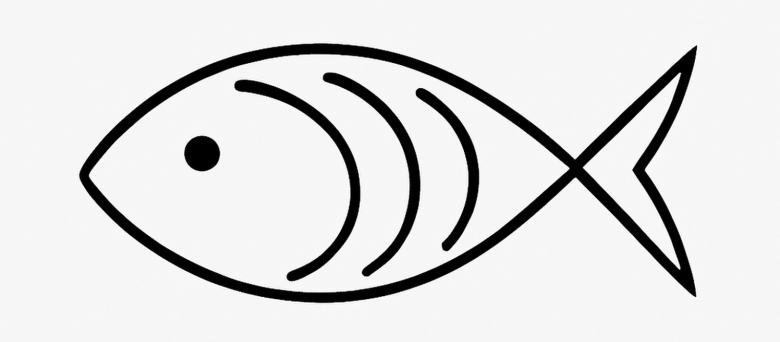
We become “slippery fish” that escape the nets of the world.
Is that symbol accidental? Almost certainly not.
Early Christians used the fish as a sign of identity, but the motif goes deeper:
- fish move silently beneath the surface
- they slip through nets
- they are creatures of depth, not surface
- they belong to a realm that the empire could not police
To become a “slippery fish” is to become ungraspable by the powers that rely on fear, conformity, and illusion. It is to inhabit the world without being possessed by it.
This was Jesus’ message in its psychological essence:
step outside the world’s construct and discover the deeper, ungovernable centre within yourself.
From that centre, the empire — whether Roman or modern — loses its spell.
This is why his teaching still matters.
Not because it builds new dogmas, but because it dismantles the old ones.
Not because it offers metaphysical escape, but because it teaches inner liberation.
Not because it removes us from the present age, but because it reveals how to live truthfully within it.