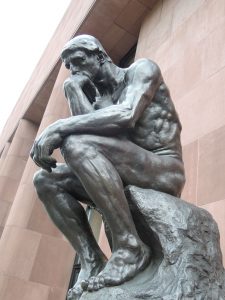
“The public is an experiment, constantly interfered with to produce the illusion of change.”
Yet the governing elite does not experiment upon itself. Where continuity serves its advantage, it is fiercely protected. Thus grammar schools were abolished in the name of equality, while independent schools were left untouched — sustained by those who could pay for the stability others were denied. The public realm is remodelled endlessly to display progress; the private realm endures quietly, transmitting the same values, manners, and assumptions that preserve the order as a whole.
This article begins with the independent school as microcosm and expands outward to society as a whole, showing how both rely on subtle mechanisms of separation and self-reinforcement.
Independent schools are often praised for their polish and achievement, yet their real genius lies elsewhere: they create compatibility.
They bring together children whose parents share roughly the same outlook, manners, and expectations.
Within that closed circuit, pupils absorb from one another the unwritten code of belonging—how to speak without offence, to argue without confrontation, and to command without appearing to.
It is a finishing school in cultural confidence.
And, as in any confined environment, the inmates learn most from each other.
Your quip that it resembles a prison is apt: both institutions isolate their population from the wider world, impose internal hierarchies, and teach obedience to rules understood but rarely written down.
1. The Private Enclosure
At schools like Eton or Rugby, the code is academic and patrician; at Millfield it is athletic and worldly.
Each cultivates its own brand of excellence, but the function is the same—to reproduce a ruling style.
What graduates take into adult life is less knowledge than manner: a belief that the world is to be administered, not shared.
They form the seedbed of an administrative class that moves effortlessly through law, finance, civil service, and media—institutions that depend on tone as much as competence.
2. The Chain of Compartments
The independent school is only the beginning.
The same principle extends through the whole of society, a system of layered enclosures, each one teaching its members to value what keeps them where they are.
Education.
From nursery to university, filters operate by culture as much as by intellect.
Comprehensive schools reproduce local habit; grammar and selective schools offer narrow escape routes; independent schools prepare the next custodians.
By adulthood most people inhabit the level that mirrors their upbringing.

Licensed through http://www.canstockphoto.com in accordance with the End User License Agreement (http://www.canstockphoto.com/legal.php)
(c) Can Stock Photo Inc. / pressmaster
Work.
Employers talk of “fit,” meaning those who already share the firm’s dialect.
The City prizes aggression wrapped in charm; the civil service values polished neutrality; universities reward abstraction.
Each sphere celebrates its own virtue and calls it merit.
Media and culture.
Different classes consume different realities.
Tabloids feed grievance; broadsheets feed reassurance; online platforms fragment further still.
Every group believes its worldview is normal, the others misguided.
Politics.
Parties that once bridged class now mirror it.
Elections become referendums of identity; representation narrows to recognition.
Policy serves the group that votes, not the nation that endures.
3. Reinforcement, Not Conspiracy
This system requires no central plan.
It operates through instinct and imitation.
Children imitate parents; institutions recruit their own reflection; success is defined as conformity with precedent.
Each layer congratulates itself on its virtue—industry, decency, moderation—without seeing that those virtues function as locks on the door.
4. The Moral Cost
Compartmentalisation preserves order but dissolves empathy.
The upper classes cannot imagine insecurity; the poor cannot imagine influence; the middle live in permanent anxiety.
When people no longer share experiences, they stop sharing values.
Society becomes polite but uncomprehending—a mosaic of enclosed worlds.
The genius of the independent school, then, is also the genius of Britain itself: to make hierarchy seem natural, even benevolent; to teach everyone, by praise and habit, to stay in their place.
1830–1870: The Victorian Settlement
Industrial wealth fuses with aristocratic culture. Public schools such as Eton, Rugby, and Harrow train the sons of new industrial families to adopt the manners of the old gentry. “Character” and leadership outweigh intellect — the making of the gentleman as moral overseer of Empire.
1870–1914: Empire and Service
The administrative class expands through the civil service and colonial bureaucracy. Ex-public-school men staff the Empire, the railways, and the banks, governing by confidence and convention. School and service form one continuous apprenticeship in command.
1918–1945: Democratisation and Disruption
Two world wars blur class distinctions but reinforce hierarchy through shared sacrifice. Education Acts widen access, yet the ruling style endures. The grammar-school boy enters the system, but speaks in the old idiom.
1945–1979: The Welfare Interlude
Post-war reconstruction promises meritocracy. The civil service and professions open to talent; universities expand. For a generation, ability seems to matter more than background. Yet public schools recover quickly, adapting to new economic elites.
1980–2008: Financialisation and Globalisation
Thatcherism merges privilege with market ideology. The old patrician ethos gives way to managerial ambition. The club refits itself for the age of the spreadsheet. Independent schools thrive as parents buy cultural fluency for the global economy.
2008–Present: The Managerial Hierarchy
The governing class is now technocratic: politicians, consultants, civil servants, and financiers share one language — data, targets, delivery. Accents may have softened, but tone and confidence remain the entry keys. The public-school ideal survives, reborn as professional polish. The gentleman has become the manager; the Empire, a corporation.
Epilogue: The Illusion of Uniqueness
Independent schools are praised for their “quality,” but what they really possess is continuity.
Small classes, stable staff, and calm surroundings create confidence and curiosity—conditions that could exist anywhere, given will and investment.
Their mystique rests on scarcity, not magic.
Excellence seems rare only because it is rationed.
These schools turn ordinary virtues into privileges by being allowed to preserve them.
They refine what others must keep rebuilding.
Their advantage lies not in what they do, but in the fact that they are free to keep doing it, while the public sector is forced to start again each decade under new rules and slogans.
Political cycles demand novelty; every government must prove reform.
Systems that need time to mature are dismantled before they can acquire memory.
Thus continuity, the precondition of culture, becomes the private preserve of the few.
The qualities these schools cultivate—discipline, composure, self-belief—are human, not hereditary.
Their enduring aura comes from uninterrupted practice, not secret genius.
Coda: Seeing Through the Construct
In the end, salvation lies in seeing the construct for what it is — a human arrangement mistaken for truth.
The class system, the school, the name, the rank: all are performances that endure only through belief.
To fall in love with them is to mistake stability for meaning, privilege for virtue.
The wise response is not resentment but clarity — to live within the illusion without being possessed by it.
It is foolishness to fall in love with an illusion, yet wisdom to see it clearly and remain free.