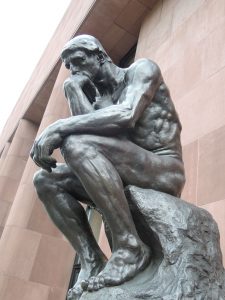
Few nations have wrestled so long or so publicly with religion as France. From the salons of the Enlightenment to the ceremonies of the 2024 Olympic Games, French culture has been marked by a recurring struggle between faith and reason, the sacred and the secular. What began as a battle for intellectual freedom in the eighteenth century has become something more complex in our own time—a habitual scepticism toward any form of authority, especially religious authority.
France’s periodic acts of cultural defiance—the revolutionary desecration of churches, the secularisation of education, the modern appetite for satire—are not just expressions of irreverence. They reveal a deeper anxiety: once the sacred has been stripped of its power, what can replace it? How does a nation once defined by faith construct meaning without transcendence?
The Enlightenment and the Fall of the Sacred
The Enlightenment philosophers—Voltaire, Diderot, and Rousseau—saw the Catholic Church not merely as corrupt but as intellectually oppressive. Voltaire’s call to “écrasez l’infâme” (“crush the infamous thing”) captured a desire to liberate human thought from dogma and fear. The Church represented everything the philosophers wished to transcend: superstition, hierarchy, and the claim to possess absolute truth.
For these thinkers, reason became the new light of the world. Observation, experiment, and critical inquiry were the means by which humanity would at last mature. The Revolution turned this philosophy into action. Churches were defaced, priests executed, and Notre Dame Cathedral was rededicated as the “Temple of Reason.” What had begun as a campaign for enlightenment became a crusade against faith itself.
The victory was intellectual but the loss was spiritual. In dismantling the Church’s authority, the Revolution also dismantled the framework of shared moral meaning that had long bound society together. The result was both liberation and a void—a tension that has haunted France ever since.
Pascal and the First Modern Anxiety
Even before the Enlightenment, Blaise Pascal had sensed that reason alone could not satisfy the human heart. His Pensées—a collection of fragmentary reflections on belief, doubt, and the human condition—anticipated the crisis that would follow.
In his famous Wager, Pascal proposed that belief in God was a rational gamble: if God exists, faith brings infinite reward; if not, the believer loses nothing. But beneath this pragmatic logic lies a deeper unease. Faith, Pascal recognised, is not certainty but choice—a decision made in the face of ignorance.
Pascal’s reflections often turn on humanity’s smallness in the face of cosmic immensity. The most haunting of them all appears in Pensée 206 (Brunschvicg numbering):
« Le silence éternel de ces espaces infinis m’effraie. »
“The eternal silence of these infinite spaces terrifies me.”
He continues:
« Quand je considère la petite durée de ma vie absorbée dans l’éternité précédente et suivante, le petit espace que je remplis, et même que je vois abîmé dans l’infinie immensité des espaces que j’ignore et qui m’ignorent, je m’effraie, et m’étonne de me voir ici plutôt que là… Le silence éternel de ces espaces infinis m’effraie. »
“When I consider the brief span of my life swallowed up in the eternity before and after, the tiny space I occupy and even see engulfed in the infinite immensity of spaces I know nothing of and which know nothing of me, I am terrified… The eternal silence of these infinite spaces terrifies me.”
In these lines Pascal articulates the first modern encounter with the void—the feeling that reason, when it looks too far, discovers not certainty but silence. This is the birth of existential anxiety: the terror of awareness without meaning. Faith, for Pascal, is not an answer to this terror but a leap into it.
Nietzsche and the Collapse of the Old Order
Two centuries later, Friedrich Nietzsche would take that anxiety to its logical conclusion. When he wrote “God is dead” in The Gay Science (1882), he did not mean that God had once lived and now perished, but that belief in divine authority—the moral and metaphysical foundation of Western civilisation—had collapsed under the weight of human reason.
The Enlightenment had destroyed the old certainties but had not replaced them. Nietzsche’s “death of God” is therefore not a triumph but a catastrophe:
“God is dead. God remains dead. And we have killed him. Yet his shadow still looms. How shall we comfort ourselves, the murderers of all murderers?”
This is the cry of a prophet, not a cynic. Nietzsche foresaw the vacuum that would follow the fall of faith. Without a transcendent source of value, humanity risked drifting into nihilism—believing in nothing, revering nothing. His response was not despair but challenge: mankind must create new values, become its own lawgiver, and learn to affirm life without divine sanction.
He called this the Übermensch ideal: the human being who overcomes inherited morality to forge meaning from within. In this way Nietzsche became the true precursor of existentialism. He replaced the question “What must I believe?” with “What can I become?”—a shift that would shape the entire modern age.
Existentialism and the Death of Meaning
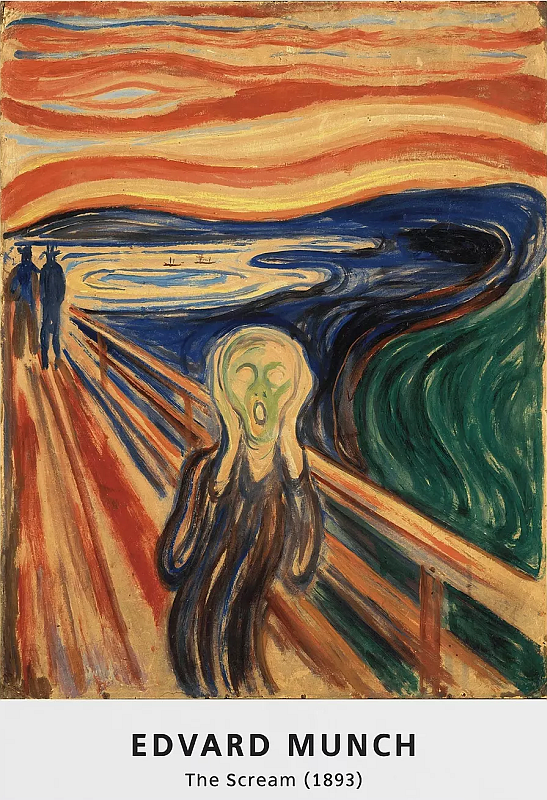
By the twentieth century, France’s quarrel with religion had taken a new form. Sartre, Camus, and Simone de Beauvoir inherited Nietzsche’s insight that, in the absence of God, human beings must make meaning for themselves. They lived in the shadow of two world wars and an intellectual tradition that had lost its metaphysical foundation.
Sartre saw humanity as “condemned to be free”—without God, we alone must invent our values and bear responsibility for them. Camus took a slightly different path. In The Myth of Sisyphus, he imagined a man condemned to push a boulder uphill forever, knowing it will roll back each time. That image of endless, purposeless effort became a metaphor for modern existence. Life, Camus concluded, is absurd—but that absurdity can itself be faced with dignity. To rebel against meaninglessness is to affirm one’s humanity.
For both Sartre and Camus, rebellion became a moral principle in its own right. To reject authority was not simply to deny God; it was to assert human consciousness as the final source of value. Yet this defiance, for all its courage, left a question unresolved: can rebellion alone provide meaning, or does it merely perpetuate the emptiness it seeks to overcome?
The Revolutionary Impulse Reborn
This restless energy has never disappeared. In contemporary France, the radical impulse of 1789 re-emerges in new guises—in cultural critique, identity politics, and what is loosely termed wokeism.
Philosopher Bernard Cardinale notes that the spirit of the Revolution—the desire to “remake the world from the ground up”—has been passed down through modern theories of deconstruction. Thinkers such as Foucault and Derrida challenged inherited systems of truth, exposing power and ideology beneath every form of knowledge.
Foucault argued that what societies call truth is never neutral: every discipline—medicine, psychiatry, criminology, education, even theology—creates its own “regime of truth,” a way of seeing that legitimises certain behaviours and excludes others. His studies of madness, punishment, and sexuality revealed how moral and religious authority had been replaced by subtler, bureaucratic forms of control. In this sense, Foucault carried the anti-clerical impulse of the Enlightenment into the modern state: he unmasked the new priesthoods of science and administration that had succeeded the old clergy—those who, in the spirit of the German adage “Was nicht sein soll, nicht sein darf” (“What ought not to be, cannot be”), define reality by suppressing whatever does not fit their paradigm. It was this same mentality that once allowed unmarried mothers to be robbed of their babies in the name of moral order: the nurses and officials who enforced such cruelty were certain of their righteousness, blind to the emotional devastation they inflicted.
Derrida, by contrast, turned his gaze on language itself. He argued that meaning is never fixed but always deferred—what he called différance. Every text contains hidden contradictions and suppressed assumptions; every system of thought rests on exclusions. His method of deconstruction sought not to destroy meaning but to reveal its instability, showing that even the Enlightenment’s faith in reason depends on unspoken hierarchies—mind over body, male over female, reason over faith.
Together, Foucault and Derrida represent the moment when France’s historic struggle against religious authority became a struggle against any authority that claimed to define truth. Where Voltaire had fought the Church and Nietzsche had slain God, these late-twentieth-century philosophers turned their critique against reason itself. Their legacy endures in today’s cultural movements, where exposing structures of power has become both an ethical project and, sometimes, a ritual performance of liberation.
Cardinale argues that the 2024 Olympic opening ceremony, with its parody of the Last Supper, belongs to this lineage. Like the revolutionaries who once replaced saints with heroes of the Republic, today’s cultural avant-garde seeks to desacralise what remains of the Christian past. Yet, as he observes, the irreverence is now selective: Christianity can be mocked, while other religions are approached with caution.
This unevenness hints at a change in the nature of rebellion. The Church no longer wields the power it once did; yet the act of defying it has become a habit—a symbolic gesture performed out of tradition rather than conviction.
The Modern Appetite for Satire
The French appetite for satire is not merely entertainment; it is almost a civic duty. From Voltaire’s pamphlets to the weekly Le Canard enchaîné, ridicule has served as a moral weapon—a way of exposing hypocrisy in Church and State alike. Founded in 1915, Le Canard has no advertising and no corporate owner; its wit is dry, republican, and serious beneath the laughter. It stands in the same lineage as the Enlightenment pamphleteers who believed that irony could cleanse public life.
In Britain, the closest counterpart is Private Eye, launched in 1961 during what became known as the satire boom—a wave of post-war irreverence led by young Oxford and Cambridge graduates who began openly mocking politicians, royalty, and public institutions. Television shows such as That Was the Week That Was (1962–63), stage revues like Beyond the Fringe, and the rise of Private Eye magazine marked a generational shift: authority was no longer treated with deference but with irony. The movement’s humour was sharper and more subversive than anything previously permitted on British screens or in newspapers, laying the foundation for the modern tradition of political satire.
Both rely on humour as a defence against authority, yet in different keys: France wields irony to reform the world, Britain uses it to survive it. The British tradition reached its sharpest collision with the sacred in Monty Python’s Life of Brian (1979), whose playful parody of messianic faith provoked fierce protests from churches while becoming a cultural landmark of religious satire. Together these traditions show how the old prophetic voice of religion—once denouncing vice and calling for repentance—has been replaced in modern Europe by the wry moralism of the press and the comic stage.
Conclusion
The confrontation with religion that once defined France has long since crossed the Channel. Britain, too, has learned the art of irreverence, perfecting its own style of mockery and disbelief. Both nations inherited the Enlightenment’s defiance and the modern appetite for satire; both have learned to challenge power through wit, irony, and exposure. Yet in both cases, rebellion has hardened into reflex. The old certainties are gone, but nothing enduring has replaced them.
In France and Britain alike, the challenge today is not to keep rebelling, but to rediscover purpose beyond rebellion—beyond satire, beyond disbelief. Yet one might fear that we have already drifted past that point. The erosion of shared meaning has left a vacuum into which any voice can rush—left or right, radical or reactionary—claiming to speak for the people. When conviction dissolves, passion alone decides our future.
This is the danger of societies that define themselves only by what they reject. They become vulnerable not to tyranny of the Church or the King, but to the new absolutisms of ideology, identity, and populism. The modern state, like a wounded snake, can still turn and strike the populace that mistrusts it. Having long tolerated laughter as a harmless vent, it now seeks to regulate the voices of dissent that mock its authority. What began as the liberation of speech risks ending in its control.
If the Enlightenment freed us from superstition, it also left us exposed to a new tyranny: not of priests and monarchs, but of bureaucrats, algorithms, and laws written in the name of safety. The task now is not merely to preserve satire, but to recover what satire once defended—the right to truth, conscience, and the moral imagination that makes rebellion meaningful. Without these, freedom itself becomes just another performance.
If the Enlightenment freed us from superstition, it also left us exposed to a new tyranny: not of priests and monarchs, but of bureaucrats, algorithms, and laws written in the name of safety. The task now is not merely to preserve satire, but to recover what satire once defended—the right to truth, conscience, and the moral imagination that makes rebellion meaningful. Without these, freedom itself becomes just another performance.
Meanwhile, like Nero fiddling while Rome burns, we distract ourselves with irony and spectacle, mistaking amusement for awareness. A culture amused to death may feel free, but it is only sleepwalking toward its own undoing. And beneath the laughter grows a realistic fear of the modern State—no longer our nanny, but a cold experimenter in social and psychological control. Having abandoned the body, it now seeks dominion over the mind. The struggle for freedom, it seems, has entered its most subtle and perilous phase.