When Christianity emerged, it did not immediately create a unified civilisation. Yet by the fourth and fifth centuries, something like a shared imaginative world existed across the Mediterranean. The early councils—especially Nicaea (325), Constantinople (381), Ephesus (431), and Chalcedon (451)—gave the Church a theological grammar that allowed Christians from Britain to Syria to speak a common language of faith.
But this unity never rested on purely spiritual foundations. It was tied to an empire, to geography, authority, and political stability. When these began to diverge—especially between Latin-speaking Rome and Greek-speaking Constantinople—the ground beneath the religious world began to split.
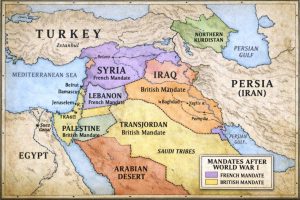
Christianity held together surprisingly well for several centuries, but pressures on the eastern regions increased dramatically. The East was wealthier, more urban, and more exposed to trade routes linking Persia, Arabia, Africa, and the Mediterranean. It was also nearer to new centres of political and religious innovation. When Islam appeared in the seventh century, it expanded into territories where imperial authority had already been weakened by war, taxation, and sectarian disputes. Alexandria, Antioch, and Jerusalem—once centres of Christian learning—were absorbed into a new civilisation.
The result was a slow civilisational shift: what had once been a single Greco-Roman–Christian world gradually became a divided one — a Christian West and a largely Muslim East.
The Expansion of Islam and the Transformation of the Mediterranean
Islam’s first centuries were marked by remarkable energy and statecraft. From 632 to 750, Muslim rule spread from Arabia into Syria, Palestine, Egypt, and across North Africa. These regions had been Christian for hundreds of years, but political instability and inter-Christian rivalries made resistance difficult.
In 711, Muslim armies crossed the Strait of Gibraltar into Spain. They did not convert Spain by force; rather, they took advantage of fragmentation among the Visigothic rulers. Within a few years, most of the peninsula was under Muslim control. Over the next centuries, Al-Andalus produced architecture, science, and philosophy that still influence Spain today — the Alhambra being its most famous symbol.
Meanwhile, in what is now France, the advance was halted at the Battle of Tours (732), where Charles Martel repelled a raiding force operating north of the Pyrenees. In later centuries this event was transformed into a civilisational turning point, even though its immediate significance was more limited. Mediaeval Europe retroactively imagined Tours as the moment Christianity “saved itself”, and this mythic framing helped shape later storytelling.
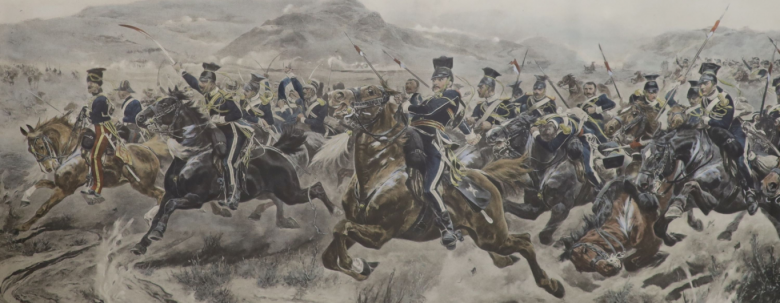
It is in this mythic frontier landscape that the figure of Roland appears. Historically, Roland was a minor official in Charlemagne’s army who died in 778 during a retreat through the Pyrenees— ambushed not by Muslims but by Basque highlanders. Yet by the eleventh century this small skirmish had been transfigured into the epic known as The Song of Roland, in which Roland becomes the ideal Christian knight, betrayed, surrounded, and martyred in battle against a vast Muslim army.
The poem is not history; it is cultural memory shaped into heroic legend. But its emotional truth mattered enormously. It gave mediaeval Europeans a symbolic framework for thinking about the meeting of faiths and cultures along the shifting frontier between Christendom and the Islamic world. In this sense, Roland functions as a lens: not a chronicle of what happened, but a story capturing how the European imagination understood itself—as a world pressed against another world and reshaped by that pressure.
The Great Schism and a Growing Divide
By 1054, long-standing tensions between Rome and Constantinople finally broke into open schism. Controversies over authority, language, liturgy, and political allegiance made unity impossible.
This schism had enormous consequences. A weakened East soon faced increasing military pressure, especially from Turkic powers who captured key territories. By the late eleventh century, the Byzantine emperor appealed to the West for help — setting in motion events that would reshape the world.
Why the Crusades Happened
The Crusades are often described in single moral terms: either heroic or barbaric. In truth, they were multi-layered: defensive, devotional, political, and economic.
These expeditions hardened the cultural boundaries between West and East. They also crystallised mutual suspicion, leaving a legacy of distrust that occasionally reignites even today.
A Second Great Movement of People—But Not an Invasion
Today’s movement of Muslims into Europe cannot be compared to mediaeval conquests. Historical “invasions” were state-driven expansions; modern migration is driven by economic globalisation, failed states, war, climate stress, and the search for opportunity.
It coincides, however, with a moment of Western uncertainty:
- declining trust in institutions
- overstretched social systems
- demographic pressures
- a weakening sense of cultural centre
This makes immigration politically explosive even when the migrants themselves are peaceful and seeking stability.
A Visual Timeline of the Long East–West Shift
A Modern Problem: Religion Has Lost Its Moral Centre
In earlier centuries, Christianity provided Europe with a moral framework, whether or not individuals lived up to it. Today, conventional Christianity no longer plays this role. The decline of organised religion has left a moral vacuum that politics, economics, and “identity” cannot easily fill.
One proposal is that we revisit the Gospels — not to revive doctrinal Christianity, but to rediscover the ethical core of Jesus’ message: compassion, humility, responsibility, and resistance to selfishness.
A proposal like this—to revisit the Gospels for their ethical core—must not be confused with the shallow “diversity” gestures that dominate much of contemporary culture. What I am describing is not the sanitised multiculturalism that removes the word “Christmas” from public life for fear of offence or the modern habit of cancelling school nativity plays in an effort to appear neutral. That approach is not respectful; it erases rather than honours.
My vision is different. It begins with mutual respect and respect for difference. It means acknowledging that Europe’s ethical vocabulary has historically been shaped by Christianity — and that this heritage can be revisited without imposing it as a monopoly or weaponising it against others. It also means recognising that other traditions carry their own insights, which can be taught, discussed, and appreciated in an educational setting without collapsing them into a vague, “woke” sameness.
In other words, the aim is not to prioritise one tradition out of fear or ideology, nor to flatten all traditions into a colourless neutrality. It is to foster a serious conversation in which each tradition may speak clearly in its own voice. A plural moral centre is not a marketing slogan; it is the result of adults taking ideas seriously — and teaching children to do the same.
Where This Leaves Us Today
Europe faces pressures from both within and without. But the deepest challenge is internal: the loss of a shared moral narrative. If we cannot articulate why human beings matter, why communities matter, or why mutual responsibility matters, then no border, institution, or political programme will compensate.
A plural renewal of moral seriousness — Christian, Jewish, Muslim, secular, humanist — would ask the same basic question:
How do we create rather than destroy?
On that axis, every tradition has something to contribute. And the Gospels, read afresh, offer a particularly powerful language for it.