
Joshua’s declaration, “As for me and my house, we will serve YHWH,” comes from a religious world very different from the universal, philosophical conception of God found in Acts 17. How did the national god of Israel become identified with the all-loving, all-merciful God of later Christianity?

How did medieval Europe, with small populations and limited technology, build thousands of churches and great cathedrals? The answer lies not only in wealth and belief, but in the Church’s inheritance of Roman structures of hierarchy, administration and social control — structures which helped shape European society long after the Middle Ages.

Women in priesthood should mean more than allowing women to occupy roles once reserved for men. What might women bring to priesthood precisely as women — nurture and tenderness, but also embodiment, fecundity, sensuality and the sheer erotic power of the feminine?
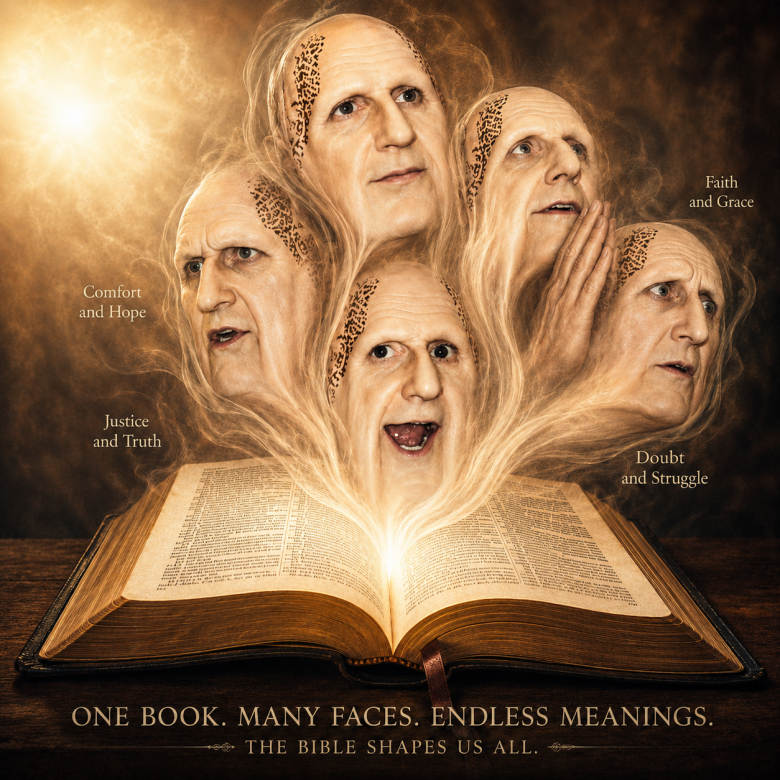
The Bible does not possess one unchanging historical meaning. Like law, politics and art, it is continually interpreted, selected and reshaped. Its special danger lies in the authority granted to those interpretations, which are often presented not as human judgments but as the unquestionable will of God.

Christianity began as a Jewish messianic movement, not as the fully developed religion later enforced by Rome. This article traces how Jesus, the hoped-for deliverer of Israel, was transformed through resurrection belief, Pauline theology, Greek philosophy and imperial authority into the universal saviour of Christian orthodoxy.

Christianity may be historically doubtful and institutionally distorted, yet it preserves ancient mysteries of sacrifice, renewal, death, reconciliation and transformation. Are these recurring themes merely products of the human mind, or echoes of something humanity once encountered?

Religious stories endure because they give form to possibilities already present within the human mind. At their best, they celebrate humanity’s potential for compassion, courage, sacrifice, forgiveness and care for the vulnerable. Their distortion begins when metaphor is converted into history, archetype into supernatural fact and human insight into divine commandment. We need not eradicate these patterns, even if that were possible. We need to understand them and allow them to serve life without submitting to the doctrines built upon them.

Jesus’ teaching about death and resurrection did not emerge in isolation. He was a man of his time, taking part in a vigorous Jewish debate shaped by apocalyptic expectation, Greek thought and conflicting ideas about the fate of the dead.
Political renewal begins with metanoia: a change in what individuals desire, value and understand by prosperity. A just nation should express that inner transformation through responsible care for food, land, energy, transport, waste and the common home.

A society rests upon shared stories, moral expectations and inherited institutions. The task is to distinguish the life-giving elements of its foundational narratives from the historical constructs that have gathered around them.