
Andy Burnham has become Prime Minister at a time when Britain is again being promised better living standards. That phrase usually means higher wages, lower bills, improved benefits and more money available for consumption. All these things matter, particularly to those who cannot afford the essentials of life. But they do not, by themselves, create a good society.
A person may have more money and yet live in a country of polluted rivers, exhausted soils, disappearing wildlife, congested roads, unhealthy food, insecure housing and towns stripped of local character. There is little gain in increasing purchasing power if the world in which the money is spent becomes steadily less worth inhabiting.
Burnham’s government should therefore be judged by a larger question: does it understand that political renewal requires more than economic redistribution? He took office on 20 July 2026, and his first speech understandably concentrated on immediate social needs. (GOV.UK) But a genuinely transformative government must eventually ask what kind of people, economy and country its policies are helping to create.
Political renewal begins in metanoia
The Greek word metanoia is commonly translated as repentance, but it means more than remorse. It suggests a change of mind, direction and understanding: a reorientation of the whole person.
This, I believe, lies at the centre of the teaching of Jesus. His message was not primarily that one political arrangement should replace another. He called individuals to see differently, desire differently and live differently. The Kingdom of God could not be established merely by transferring power or wealth while leaving greed, vanity, fear and domination untouched.
Political renewal must therefore begin in metanoia. A nation cannot become just, restrained and compassionate unless those qualities first take root in the people whose appetites, fears and ambitions its institutions express.
This does not make legislation unnecessary. Laws are needed to restrain exploitation, protect the weak and preserve what belongs to everyone. But laws imposed upon an unchanged culture will always be resisted, evaded or captured by powerful interests. The destructive system will reappear in another form because the desires that created it remain intact.
From the individual to the common life
The changed individual does not remain a private spiritual phenomenon. Inner change must acquire an outward form.
It first becomes visible in ordinary conduct: how one treats other people, uses possessions, manages waste, consumes food and cares for the place in which one lives. From there it extends to the household, the community, the nation and ultimately the world.
A decent person does not maintain a comfortable home by throwing rubbish into a neighbour’s garden. A responsible household does not waste food, poison its water supply, destroy its foundations or consume everything without thought for those who will live there later. Yet nations routinely behave in precisely these ways.
Britain imports goods whose environmental and human costs are borne elsewhere. It produces mountains of disposable packaging and transfers the cost of collection to households and councils. It exports waste and forgets where it goes. It allows businesses to retain the profit while society and nature inherit the damage.
A nation’s morality should be the outward expression of the morality expected within the changed individual.
Prosperity means more than consumption
A socialist government may rightly seek to relieve poverty and reduce inequality. But socialism cannot mean merely placing more money into people’s pockets so that they can participate more fully in the same destructive consumer economy.
True prosperity includes clean air, healthy food, secure housing, functioning public services, meaningful work, quiet places, accessible countryside and confidence that the natural world is not being destroyed for short-term gain.
A government committed to the common good would therefore pay much greater attention to farming and diet. Britain should produce far more of its essential food, protect fertile land, restore soils and reduce dependence on insecticides, excessive fertilisers and other poisons. Farmers should be rewarded not only for yield but for maintaining water, wildlife and the long-term fertility of the land.
Our diet could again reflect place and season. Apples, pears, plums, berries, currants and other native fruits need not be displaced by the permanent expectation of tropical produce. Imported tea, coffee, cocoa and exotic fruit need not disappear entirely, but they might cease to be treated as ordinary necessities available without limit or consequence. Local alternatives and seasonal habits could be encouraged.
This would require adjustment. Some foods would cost more. Choice would become less uniform throughout the year. Farming would need long-term public support. But difficulties are not arguments against reform; they are problems to be solved.
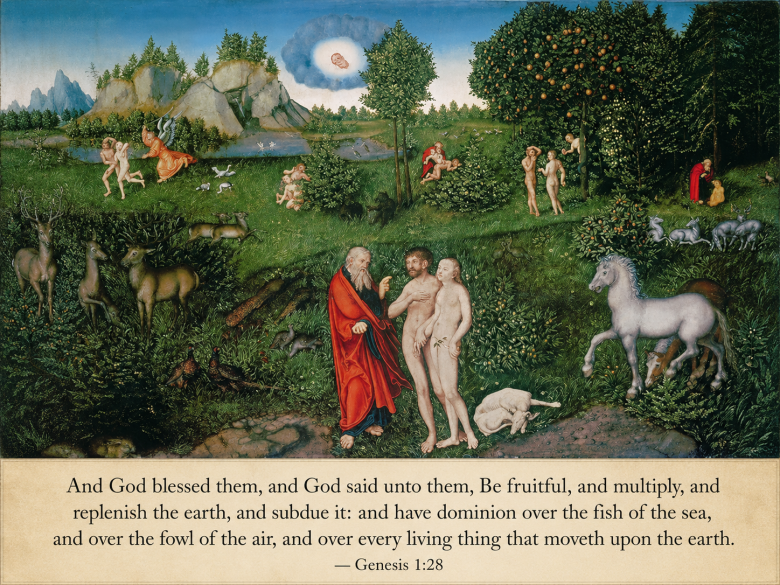
We may flatter ourselves that unlimited choice is a sign of civilisation, but we resemble the inhabitants of Bosch’s Garden of Earthly Delights: absorbed in abundance, appetite and spectacle, while failing to recognise that the hell depicted in the final panel is the consequence towards which their conduct is leading them.
The role of Jeremiah has not disappeared, nor is it confined to a single voice. Those who challenge the prevailing order are still scorned and repudiated, even though they themselves remain entangled in it. They are caught in the same perennial struggle with human nature: they may want to change, find that they cannot change without wider reform, or discover that they will not accept the sacrifices change demands. The warning remains true even when the prophet cannot fully live by it.
Responsibility for what we produce
The same principle should govern manufactured goods and packaging.
Those who produce rubbish should remain responsible for collecting and dealing with it. A manufacturer should not be able to sell a product in permanent packaging and then disclaim all responsibility once the customer has opened it.
Reusable glass bottles once formed part of a functioning circular system. They were returned, washed and used again. The disposable plastic bottle was made to appear cheaper only because the producer transferred its eventual cost to the public and the environment.
A serious government would require producers to take back packaging and worn-out products, finance genuine recycling and verify the final destination of waste. Goods that cannot be repaired, reused or safely recycled should become expensive to produce—or cease to be produced.
This is not hostility to industry. It is the insistence that industry account honestly for its full effects.
Food, transport and energy
Transport policy should follow the same moral logic. The private car and the lorry have been allowed to dominate because many of their true costs—pollution, congestion, noise, road damage and the destruction of towns and countryside—are paid collectively.
Rail should carry far more freight and long-distance passengers. Public transport should be reliable enough that people are not forced into car ownership by the disappearance of alternatives. Towns should be planned for human beings rather than treated chiefly as channels for traffic.
Energy policy likewise requires purpose rather than slogans. Britain should make systematic use of solar power on houses, schools, factories, warehouses and car parks, together with wind, tidal power, storage, insulation and a modernised grid. That does not mean that every technology presently promoted is necessarily the best solution. Covering productive farmland with solar panels while suitable roofs and built surfaces remain unused is folly. Yet such decisions become predictable when commercial gain takes precedence over common sense and the public good.
Nor should we assume that the technologies favoured by existing industries represent the full range of possibilities. The name of Nikola Tesla repeatedly appears in accounts of neglected or commercially inconvenient innovation, though the claims made on his behalf are often exaggerated. The broader point remains: technical development is not governed by scientific merit alone. Promising ideas may be ignored, underfunded or delayed when they threaten established investments, markets and sources of income.
Public investment should not simply create another stream of guaranteed profit for private monopolies. Energy, water, transport and other necessities belong too closely to the common life to be governed solely by the demand for commercial return.
Self-reliance is not isolation
Greater national self-reliance is often dismissed as inward-looking. That misunderstands the argument.
A country that produces more of its own food, energy and essential goods is not necessarily rejecting the world. It may instead be accepting greater responsibility for its effect upon the world.
International cooperation is necessary, but global trade should not become a system through which wealthy nations import cheap goods, exploited labour and distant environmental damage while exporting their waste. A just international order would consist of countries meeting more of their own needs, living within reasonable ecological limits and trading where trade is genuinely beneficial rather than merely profitable.
This is internationalism rooted in responsibility, not isolationism rooted in fear.
The test for a new government
Andy Burnham’s appointment creates an opportunity to reconsider what government is for. Immediate action against poverty and homelessness is necessary, but it should be the beginning rather than the limit of political imagination. (GOV.UK)
The deeper task is to restore a country worth living in: a country with healthy soils, clean water, nutritious food, functioning communities, less waste, better transport and an economy directed towards human and ecological wellbeing.
That cannot be achieved by government alone. It requires a change in what individuals admire, desire and understand by success. But government can either encourage that transformation or continually frustrate it by rewarding greed, waste and irresponsibility.
The Greek origin of economy is oikonomia: the management of the home. We have forgotten the home and become servants of the machinery supposedly created to manage it.
Political renewal must reverse that order. The economy should serve the common home, and the common home should be managed with the restraint, justice and care expected of a changed individual.
That is the standard by which a genuinely socialist government—and the society that elects it—should be judged.
Yet civilisations are not destroyed only by ignorance. They may understand perfectly well what is happening and still prove incapable of changing course, because those who benefit from the existing order retain the power to defend it. That is why our own civilisation appears doomed: not because solutions are unavailable, but because the transformation required threatens the people and institutions with the greatest influence over whether it occurs.


