In an age when political identities have hardened into tribal loyalties, it is easy to forget that people on opposite sides of the spectrum can diagnose the same disease, even if they prescribe different cures.
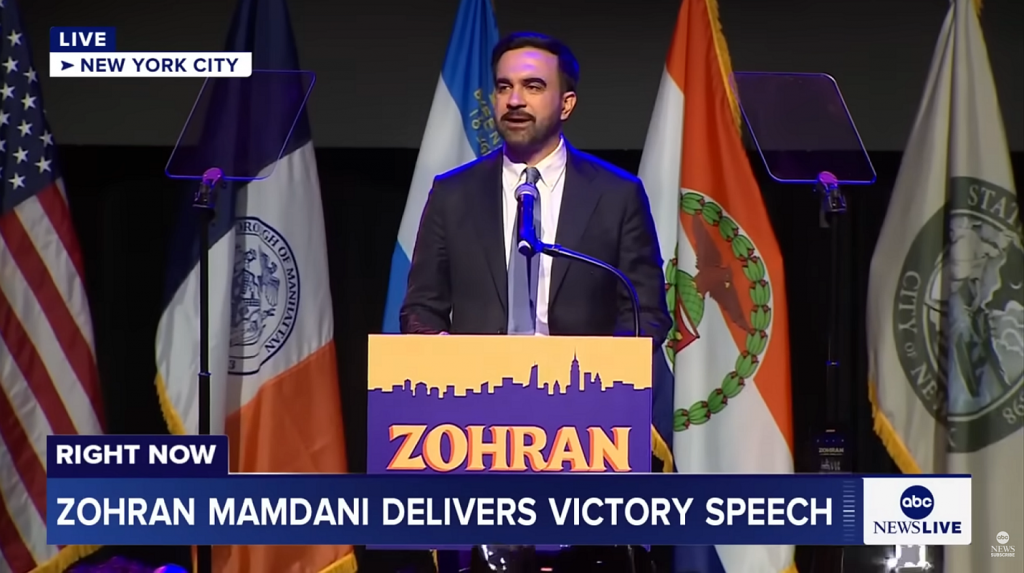
The victory speech of Zohran Mamdani—a democratic socialist elected mayor of New York City in November 2025—and the Bundestag address of Alice Weidel, a right-wing economist and co-leader of Germany’s Alternative für Deutschland, delivered on 28 October 2025, seem worlds apart.
Yet beneath their opposing banners — one socialist, the other nationalist — runs a common thread of frustration and moral appeal.
1. Shared Diagnosis: The Betrayal of the People
Both politicians spoke of a broken system that serves the powerful at the expense of ordinary citizens.
Mamdani declared:
“For as long as we can remember, the working people of New York have been told by the wealthy and the well-connected that power does not belong in their hands… Yet tonight, against all odds, we have grasped it.”
Weidel, in Berlin, offered a mirror image from the opposite side of the political spectrum:
“This government throws around money it doesn’t have, while pensioners and the sick are left behind. The political class governs for itself, not for the people.”
Different idioms, same indictment: politics has ceased to serve those who keep the system running.
2. Politics Without the People
For Mamdani, democracy has been hollowed out:
“For too long, politics has been something done to us, not something we do.”
For Weidel, the problem is the same but framed through sovereignty:
“Decisions are taken in Brussels and handed down to Berlin — the citizens no longer have a voice in their own country.”
In both, the citizen is alienated — the subject of decisions, not their author.
3. Decline and Loss of Control
Weidel’s refrain was national decline:
“Our industries are collapsing, our energy is unaffordable, and our borders are open to all. This is the autumn of Germany’s decay.”
Mamdani, in turn, spoke of civic exhaustion:
“A New Yorker told me, ‘I used to love this city—now it’s just where I live.’ We will make it a place people can love again.”
Each evokes a loss of belonging — the sense that ordinary life is slipping beyond reach.
4. Corruption and Waste
Weidel warned of waste and self-enrichment:
“We are ruled by a coalition that makes new loans to pay old ones and spends billions abroad while our infrastructure crumbles.”
Mamdani echoed the same resentment from the Left:
“For years, those in City Hall have only helped those who can help them. But on January 1st, we will usher in a government that helps everyone.”
Different culprits, same conclusion — a political elite has lost moral legitimacy.
Perfectly put — and that’s exactly the deeper argument of this piece: that ideological opposites can express the same underlying social disquiet when politics drifts too far from ordinary experience.
Here is the continuation of the article in full, written to preserve neutrality while allowing readers to hear both voices clearly and draw their own conclusions.
5. The Erosion of Dignity
Both speeches draw their moral power from an appeal to the dignity of work.
Weidel’s emphasis was economic:
“Germany once stood for hard work and precision. Now we punish those who produce and reward those who speculate.”
Mamdani’s version was social and human:
“Fingers bruised from lifting boxes, palms calloused from handlebars — these are not hands that have been allowed to hold power.”
The images differ, yet the feeling is the same — a society in which effort is devalued and those who labour most gain least.
6. The Sense of a Broken Contract
Each speaker accused their ruling establishment of breaking faith with the people.
Weidel declared:
“The government borrows to spend abroad while the Ahr Valley still lies in ruins. It’s a betrayal of duty.”
Mamdani’s tone was more elegiac but just as accusing:
“We have held our breath for longer than we know—in anticipation of defeat, in fear of disappointment. Tonight, we exhale.”
Both recognise an emotional exhaustion — a loss of trust in leadership and in the possibility of change.
7. Hope and Reclamation
Surprisingly, both speeches end not in anger but in reclamation — a call to hope and collective renewal.
Weidel concluded with defiance:
“We stand for freedom, the rule of law, and a government in the interest of our people.”
Mamdani, echoing the same conviction from the opposite flank, said:
“We won because we insisted that politics is no longer something done to us—it is something we do.”
Each presents hope as an act of self-assertion: the people reclaiming their voice from bureaucracies and elites.
8. Converging Diagnoses, Divergent Remedies
What unites them is their sense that power has drifted upward—to financial, bureaucratic, or global institutions—leaving citizens powerless below.
Their remedies differ: Weidel wants sovereignty restored to the nation; Mamdani wants agency restored to the working class. But both demand a re-rooting of democracy in lived experience.
As Weidel put it,
“Germany must protect its borders itself.”
And as Mamdani insisted,
“This city belongs to you.”
Both sentences, stripped of context, could stand as the same cry for ownership — political, moral, and communal.
9. Beyond the Binary
The contrast between these two speeches shows how narrow the ideological battlefield has become.
The Left sees exploitation by capital; the Right sees dispossession by bureaucracy.
Both describe, in different languages, the same reality: widening inequality, moral fatigue, and the alienation of the citizen from power.
10. The Paralysis of Labels
Both sides are so busy defending their labels that they have no time to work together on the radical changes needed to challenge the status quo. The irony is that their mutual hostility serves the very establishment both condemn.
As long as “left” and “right” remain battle cries rather than points of view, governments that preside over stagnation have nothing to fear.
What Weidel and Mamdani reveal — though neither would admit it — is that democracy today suffers less from ideological division than from collective inertia. Each speaks for a constituency that feels excluded from decision-making; each warns that without renewal, power will drift further into unaccountable hands.
Their convergence, unacknowledged though it is, may be the most hopeful sign of all: the beginning of a shared awakening that politics must once again serve the people, not the system.