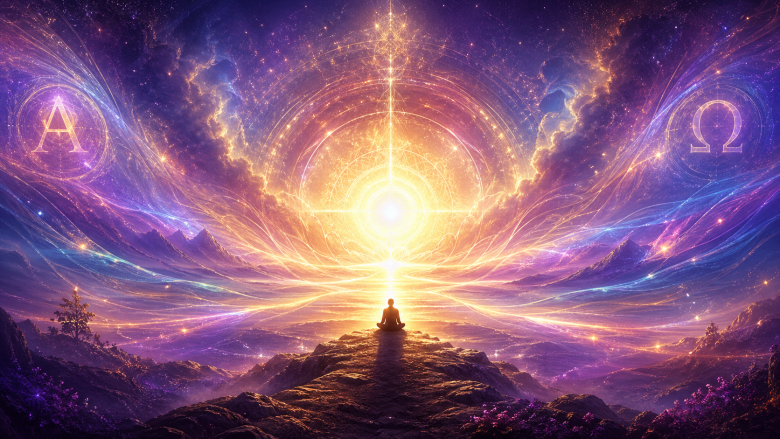
A short reflection on the present moment as the place where life is actually lived. Drawing on the phrase “I am Alpha and Omega” and the recovery saying “Yesterday is history, tomorrow is mystery — just for today,” this piece considers God not as a remote idea, but as the living depth of now: the point at which memory, hope, responsibility, and freedom meet.
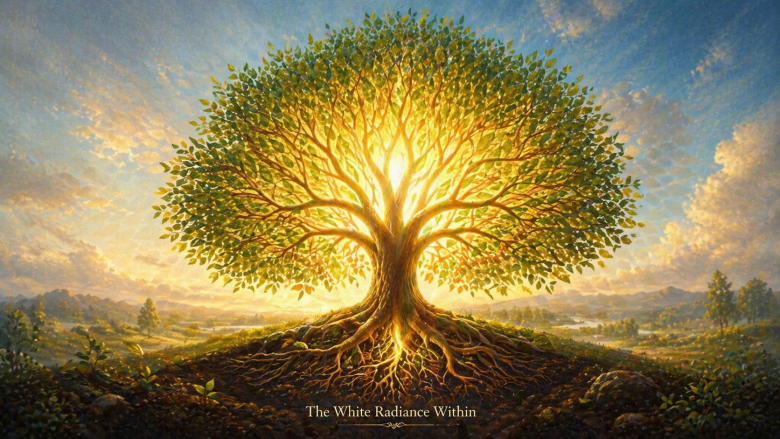
There are certain words in religious speech which are used so often that their meaning is easily assumed rather than examined: God, Spirit, light, grace, glory, kingdom, eternal life. They carry great emotional weight, but they are not always used with precision.
A reflection on the inner stillness that frees us from self-rejection and restores our capacity to love. Drawing on Jesus’ teaching of the Shema and contrasting the Western vision of wholeness with the Zen ideal of self-effacement, this meditation explores awareness as a natural state — a flight of the spirit in peace and light.
Roger Waters’ The Wall is more than a rock album — it is the requiem of a civilisation that rebuilt its cities and lost its soul. This essay traces the work’s roots in post-war disillusionment, its existential honesty, and its moral warning to the modern West. Blending personal memory with cultural analysis, it reflects on the hollow triumphs of the 1960s and the enduring need for inner renewal beyond the walls we build around ourselves.
Modern schooling does little to help children discover what moves them or what they might live for. The timetable is full, the spirit empty. Passion, curiosity, and imagination — those inner resources that make learning joyful — are treated as optional extras. Since the 1990s, legislation and professional fear have drained warmth from classrooms; teachers now perform roles rather than form relationships. The result is an education system that functions but no longer inspires — a wall between intellect and soul.
Religion and metaphysics are not revelations from beyond but the stories we tell ourselves to soften the facts of mortality and failure. The diversity of human behaviour arises from the shifting interplay between genes and experience — a balance science can describe but not yet measure. Even in an age of reason, we continue to weave meaning into suffering because we cannot bear the thought that there may be none.
While the public argues about chatbots and digital art, artificial intelligence has quietly crossed a threshold: it no longer merely assists research — it now makes discoveries of its own. From protein folding to mathematics, weather, and medicine, the pace of knowledge has shifted from human time to machine time. The question is no longer whether AI will transform science, but whether humanity can still keep pace with the knowledge it creates.
All great religions begin in fire and end in form. A living experience becomes a creed; a vision becomes a law; awakening hardens into obligation. This is not unique to Christianity but a recurring pattern in the spiritual history of humankind.
Resurrection can be read not only as a past event but as a symbol of awakening. The risen Christ becomes the image of consciousness itself — light overcoming darkness, fear giving way to awareness, union with the life already present within and around us.
Awe and altered states are not the private preserve of mystics. They are common human experiences, celebrated by poets across the centuries. The real work is not chasing “special states,” but learning to live more honestly in the here and now.