

A reassessment of Enoch Powell’s immigration argument in light of his academic distinction, his 1971 Dick Cavett interview, the Race Relations Act 1968, and Britain’s unresolved post-imperial citizenship problem. Powell’s case is examined as a constitutional and demographic argument, not as a simple slogan.

Kemi Badenoch speaks with confidence, but confidence is not judgement. Her support for Trump over Iran raises a wider question about modern politics: whether sharp performance and quick positioning are being mistaken for the seriousness needed to address Britain’s long-term problems.

A reflection on Brexit, sovereignty, and the failure to turn self-government into national renewal. The article argues that leaving the European Union only matters if sovereignty is used responsibly: to rebuild food security, water, energy, housing, industry, education, environmental protection, and public welfare. It also warns that sovereignty can become dangerous if power simply passes from Brussels to Westminster, Whitehall, surveillance systems, and digital identity schemes.

A reflection on Labour’s post-election dilemma, Britain’s long economic malaise since 2008, and the difference between strong leadership and responsible government. The deeper question is not simply whether Keir Starmer should stay or go, but whether any government can repair a country trapped by debt, low growth, weak trust, and years of underinvestment.

A reflection on Reform UK, political trust, and the question of whether a movement that presents itself as an alternative to the old political order can avoid repeating some of its familiar weaknesses.
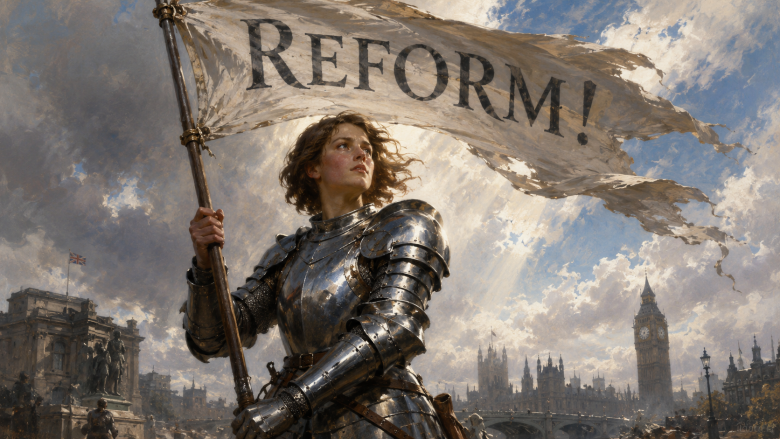
Reform may appear to offer rescue from the failures of Labour and the Conservatives, but no party can escape the hard arithmetic of modern Britain. Debt, ageing populations, public-service strain, defence costs, local decline, and voter impatience will confront whoever takes power. The politics of restoration is powerful when people despair, but history warns that promises of strength and renewal can disappoint — or become dangerous — when reality refuses to obey.
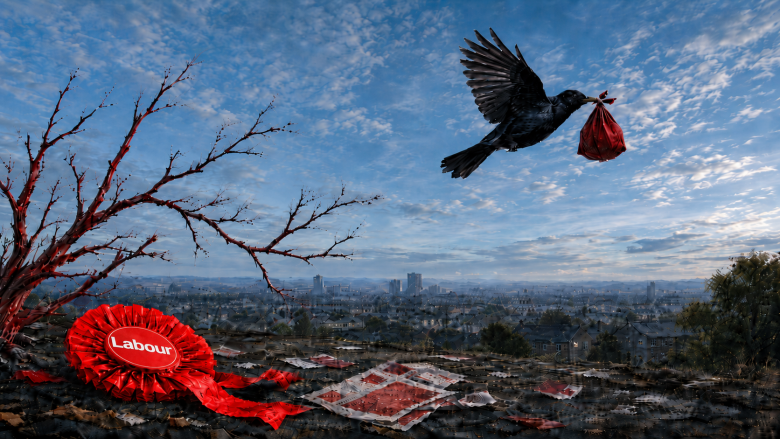
Labour’s local-election defeat was not merely a bad set of results. It exposed a deeper loss of trust: over taxation, pensions, welfare, policing, immigration, digital ID, Gaza, and the everyday condition of Britain’s towns and cities. The phrase “mistakes were made” is no longer enough. Voters want to know who made them, why they were made, and whether the party has understood the scale of its estrangement from the country.
Tony Blair, once Labour’s most successful leader, is now widely discredited. From the Iraq War and the culture of political spin to the lasting costs of New Labour’s economic reforms, his legacy has become a cautionary tale of broken trust and disillusionment.