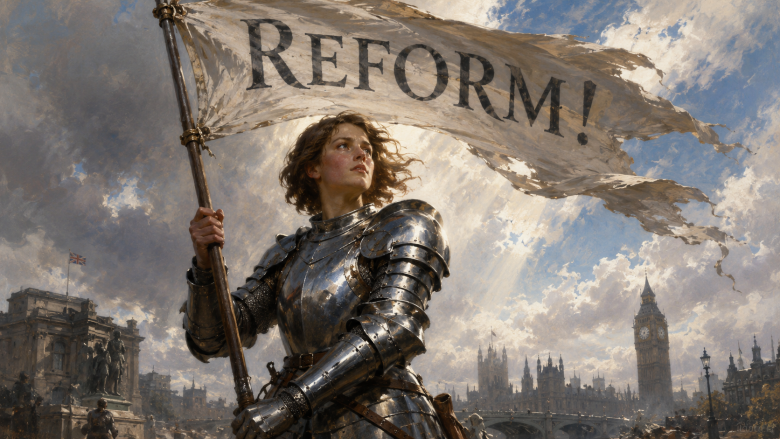
Reform may now be on the ascendant, but ascent is not the same as government. Opposition is the easy country, where every promise sounds affordable and every solution seems obvious. Government is the harder country, where debt, interest payments, ageing populations, weak productivity, public-service demand, defence costs, and welfare dependency all press in at once. Britain is not exceptional in this respect. Across Europe, states have made promises they can no longer easily fund. Politicians speak the language of renewal, but they inherit the arithmetic of decline.
The famous note left by Liam Byrne in 2010 — “I’m afraid there is no money” — was treated as a partisan joke, but it also expressed a deeper truth. Modern governments live by borrowing against the future, and sooner or later the future sends the bill back. Every party that takes office discovers that the state is less a machine waiting to be redirected than a vast set of obligations, entitlements, contracts, debts, institutions, and expectations. The helm may change hands, but the ship remains heavy, slow, and expensive to turn.
That is why Reform — or any party of similar political temperament — should not be imagined as a magical release from reality. It may speak more directly than Labour or the Conservatives on immigration, identity, national decline, and the failures of the political class. That is its strength. It gives voice to grievances that the established parties have often mishandled, minimized, or evaded.
But it will still face the same fiscal limits. The NHS will remain costly; pensions will remain expensive; defence will demand more money; local government will still be threadbare; infrastructure will still require investment; and voters will still want lower taxes and better services at the same time. Denunciation is easier than administration. Anger can win elections more quickly than it can repair public services, restore civic trust, or balance the books.
In that sense, Reform may become the next vessel for public disappointment. It can denounce the existing order, but if it gains power it will have to govern within the ruins of that order. The danger is that it may promise restoration while inheriting exhaustion. It may discover, as others have done, that the state is not a prize waiting to be claimed, but a vast burden of debts, obligations, public expectations, failing services, and institutional decay.
So the deeper question is not simply whether Reform will replace Labour or the Conservatives. It is whether any party can tell the public the truth: that Britain wants Scandinavian services, American taxes, European welfare, global military reach, cheap energy, controlled borders, high wages, low prices, and no painful trade-offs. No political movement can satisfy all of that. The public may change its rulers, but the hard arithmetic remains.
That may be the real tragedy of the moment. People are not wrong to be angry. Much has been mismanaged. But anger does not abolish debt, rebuild competence, or restore social trust. Reform may be the punishment the old parties have earned. It does not follow that it will be the remedy the country needs.


