A reflection on Britain’s long structural decline since the 2008 financial crisis, arguing that the country’s problems cannot be solved simply by replacing one leader or party. The article considers weak productivity, debt, austerity, Brexit, political fragmentation, and the wider European malaise facing France and Germany, before asking whether public patience can survive continued drift.

A reflection on Labour’s post-election dilemma, Britain’s long economic malaise since 2008, and the difference between strong leadership and responsible government. The deeper question is not simply whether Keir Starmer should stay or go, but whether any government can repair a country trapped by debt, low growth, weak trust, and years of underinvestment.
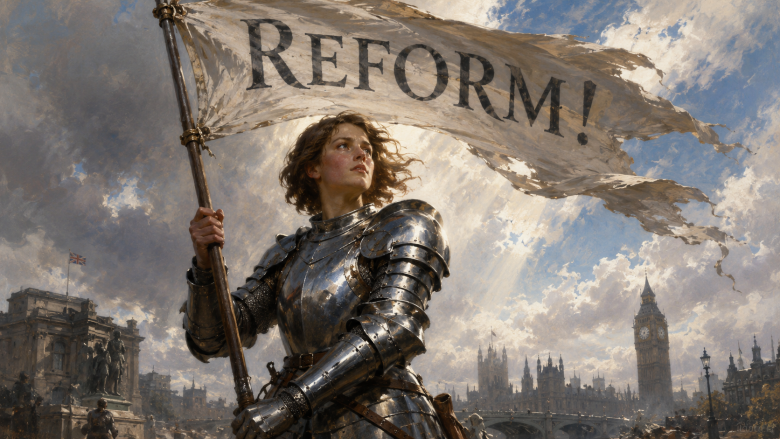
Reform may appear to offer rescue from the failures of Labour and the Conservatives, but no party can escape the hard arithmetic of modern Britain. Debt, ageing populations, public-service strain, defence costs, local decline, and voter impatience will confront whoever takes power. The politics of restoration is powerful when people despair, but history warns that promises of strength and renewal can disappoint — or become dangerous — when reality refuses to obey.

Labour’s local-election defeat was not merely a bad set of results. It exposed a deeper loss of trust: over taxation, pensions, welfare, policing, immigration, digital ID, Gaza, and the everyday condition of Britain’s towns and cities. The phrase “mistakes were made” is no longer enough. Voters want to know who made them, why they were made, and whether the party has understood the scale of its estrangement from the country.

A simple contrast between a Rolex and a Casio becomes a meditation on Christianity, conscience, and the age of AI. As automated systems expand, the real danger is not overt tyranny but the quiet erosion of inward life. When conscience is overshadowed by authority and behaviour becomes measurable performance, we edge closer to Orwell’s vision — not through malice, but through efficiency.
In both Germany and Britain, democracy still exists in form — but increasingly less in substance. As politics becomes more managerial and moralised, public trust erodes and genuine debate narrows. This essay reflects on Friedrich Merz and Keir Starmer as figures of a wider transformation: the quiet shift from democratic participation to administered consent, and the growing danger of a society in which freedom survives only in name.
In Deutschland wie in Großbritannien existiert Demokratie weiterhin in ihrer äußeren Form – doch ihr innerer Gehalt erodiert zunehmend. Während Politik immer stärker verwaltet und moralisch aufgeladen wird, schwindet das Vertrauen der Bürger, und der Raum für echte Auseinandersetzung verengt sich. Der Essay betrachtet Friedrich Merz und Keir Starmer als Ausdruck dieser Entwicklung und fragt, was geschieht, wenn Demokratie mehr verwaltet als gelebt wird.
Suella Braverman’s recent remark that “it’s humiliating and very sad that we’ve got politicians with such poor judgment leading our country” was more than partisan anger — it was a study in how moral emotion replaces analysis in public life.
Revelation’s “mark of the beast” warned of a future where no one could buy or sell without state approval. Orwell imagined the same logic in 1984. Today, proposals for digital ID cards echo both warnings. With National Insurance numbers already in place, the issue is not whether we are numbered, but how far that numbering can be used for control. From the Farage banking scandal to Starmer’s push for digital IDs, Britain faces a choice between efficiency and liberty.