
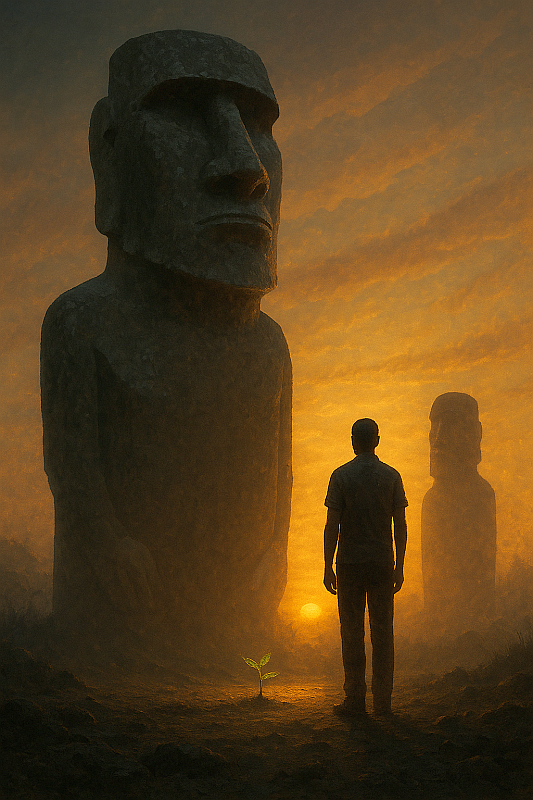
A sweeping reflection on humanity’s struggle to reconcile instinct and intellect, from the ancient gods of Mesopotamia to the teachings of Jesus. This essay argues that true transcendence lies not in power but in inner integration, and that mortality presses us toward completion. Through myth, psychology, memory, and personal experience, it shows that the only moment for wholeness is now.
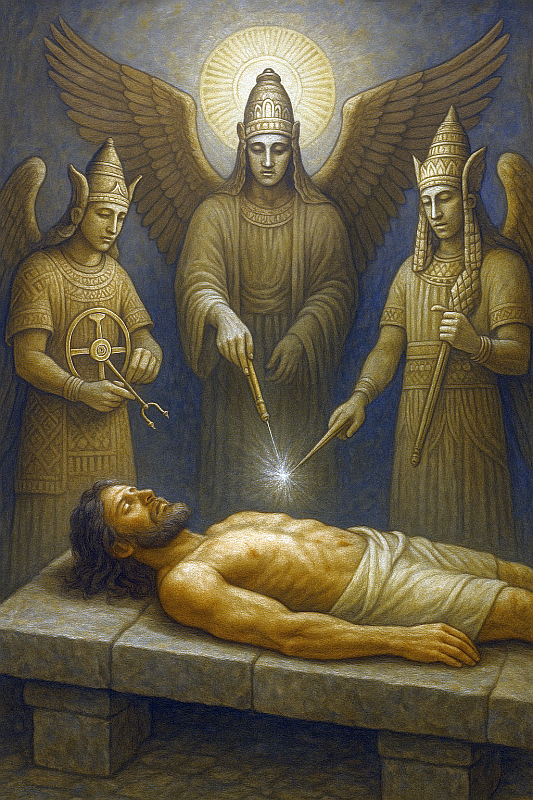
A demythologised reading of Genesis and the Gospels reveals a single thread running through human history: we are conflicted, powerful, unstable creatures trying to understand ourselves. Eden describes why we are dangerous; Jesus offers a path to inner transformation. Later doctrine turned this into metaphysics, but the original insight was psychological. This article explores Adam, Meister Eckhart, the Synoptics, and the Sumerian myths as early attempts to explain the divided human self — and what redemption really meant.

A reflection on the real meaning of enlightenment — not as mystical experience, but as the quiet reconciliation between our deeper vital dynamics and the surface structure of everyday life. The heart, the conscience, and the unconscious guide us long before reason recognises their pattern.

A poem and reflection on nature, solitude, and le fer dans l’âme — the iron in the soul. A meditation on how lives unfold without hierarchy, and how presence allows us to carry our inner weight with dignity.

From Roland at Roncevaux to Arthur of Camelot and Jesus of Galilee, history repeatedly grows into heroic myth. Small facts expand into symbols, and real lives acquire legendary afterlives. This aside explores how the process unfolds — and why some figures become cosmic.
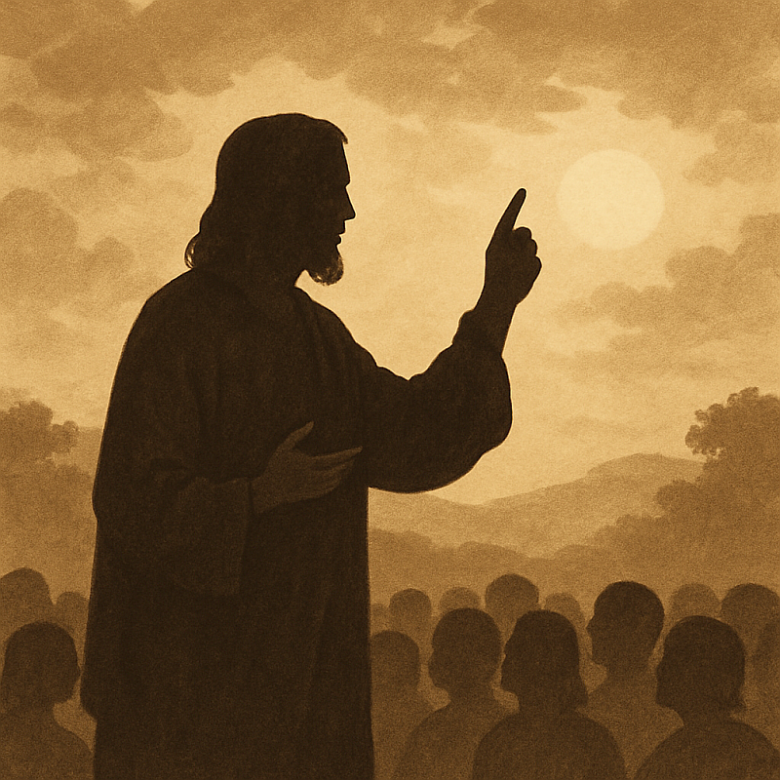
Jesus feels modern not because of theology, but because of his fearless moral clarity. Once we strip away the metaphysical layers, the radical teacher of the Synoptics emerges: a compassionate social philosopher who confronted wealth, hierarchy, exclusion, and fear. This article explores how the historical Jesus differs from the later “metaphysical Christ,” and why his vision still exposes the moral fault-lines of our own age.
A reflective essay viewing the Bible as an allegory of consciousness — where Abraham, Israel, and Jerusalem represent stages of inner growth, and the ancient covenant reveals itself as a timeless moral psychology of the human soul.
A reflection on the inner stillness that frees us from self-rejection and restores our capacity to love. Drawing on Jesus’ teaching of the Shema and contrasting the Western vision of wholeness with the Zen ideal of self-effacement, this meditation explores awareness as a natural state — a flight of the spirit in peace and light.
The lotus rises pure from the mud, uniting science and symbol, matter and mind. This reflection explores how the flower’s ancient imagery bridges the two magisteria of human understanding — the measurable and the mysterious.
Meditation does not mean emptying the mind. It means clearing space to think — a discipline of clarity that the Western tradition saw as sacred reasoning, not blankness.