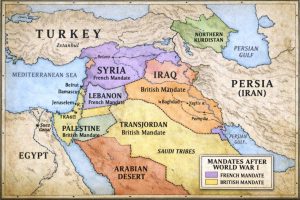
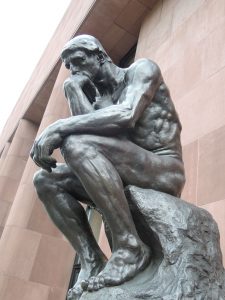
1. The Universality of Apocalyptic Thinking
Apocalyptic expectation is not a quirk of Christianity. It is a near-universal feature of human culture, stretching back at least three millennia.
- Ancient Near East: Mesopotamian flood myths, the Hebrew prophets, and Zoroastrian visions of cosmic struggle.
- India: Hinduism’s Kali Yuga, ending with the coming of Kalki; Buddhism’s future Buddha Maitreya.
- China: Dynastic collapses read as cosmic disfavor; Daoist sects predicting fiery renewals; the White Lotus movement.
- The Americas: The Aztec Five Suns myth (each age ending in catastrophe); the Ghost Dance among Native peoples foretelling the end of colonial rule.
- Africa and Oceania: Flood-and-fire cycles in Yoruba and Polynesian traditions; apocalyptic colonial-era movements like the Xhosa cattle-killing prophecy and Pacific cargo cults.
Wherever humans have lived under pressure — famine, conquest, plague, political decline — apocalyptic visions have arisen. They are not confined to the Roman-Jewish-Christian tradition.
2. Apocalypse as an Archetype
Psychologically, apocalypticism functions as an archetype — a recurring pattern of symbol and story.
- Mortality projected onto the cosmos: Just as individuals die, so too must the world.
- Chaos → Judgment → Renewal: Myths frame catastrophe as a threshold into a new age.
- Justice fulfilled: The oppressed imagine a cosmic reversal where the mighty fall and the poor are raised.
- Shared imagery: Fire, flood, earthquake, plague recur because they reflect common human experience of natural disaster.
Carl Jung saw these symbols as part of the collective unconscious, while historian Mircea Eliade noted that they allow societies to “reset” time by wiping away corruption and returning to the sacred beginning.
3. The Child’s Fear of Death
The same archetype can be seen in child psychology. Once children become aware of mortality (often between ages six and nine), they may wrestle with obsessive fears of death.
- To manage the anxiety, they develop rituals — repeated words, actions, or compulsive behaviours designed to “ward off” doom.
- These rituals are not unlike religious practices: both impose order on the uncontrollable and create a sense of safety in the face of inevitable loss.
- For the child: “If I step carefully, I will survive.”
- For the believer: “If I hold to the faith, I will be saved.”
Apocalyptic belief, then, can be understood as childhood anxiety writ large — a collective narrative that makes personal dread bearable.
4. The Evangelical Claim: “The End Is Nigh”
Evangelical Christians often claim to carry a unique message: that Christ will soon return, and the end of history is imminent.
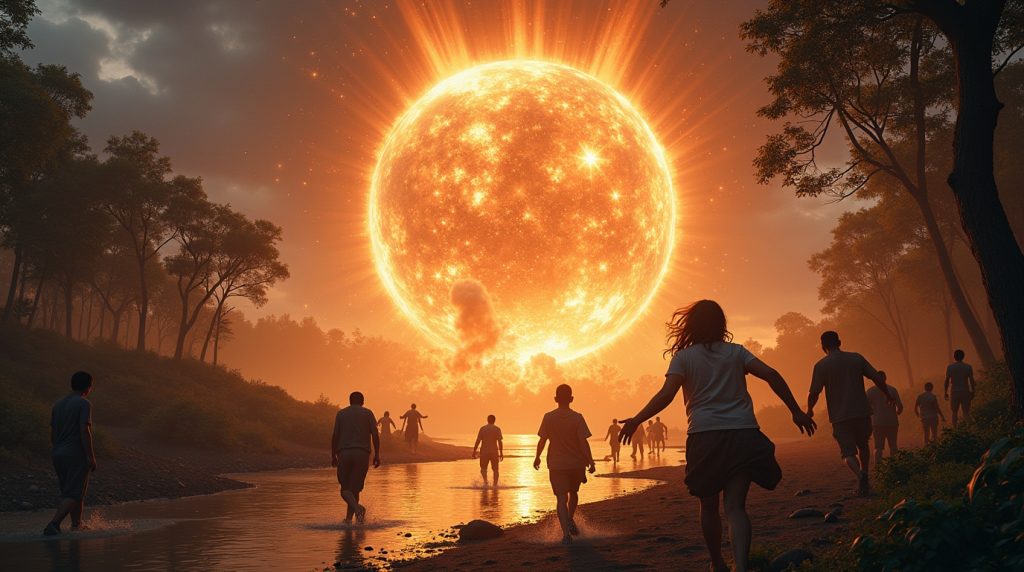
And the name of the star is called Wormwood: and the third part of the waters became wormwood; and many men died of the waters, because they were made bitter.” Revelation 8:10–11 (KJV)
Yet this is not unique. The impulse to see catastrophe just ahead is part of the human condition. What evangelicals experience is a universal fear refracted through their theology. Other cultures have their Kalki, Maitreya, Mahdi, Ragnarök, or Fifth Sun.
And modern secular society has its own apocalypses:
- Climate collapse
- Nuclear war
- Environmental degradation and pollution
- Pandemic and technological risks
In every case, the same archetype surfaces: fear that the world will end, paired with a faint hope that something better might arise from the ruins.
5. Conclusion: The End as Human Constant
Far from being a “special revelation,” apocalyptic expectation is a deeply human pattern. It arises wherever people face uncertainty, oppression, or the raw fact of mortality.
- It is universal across cultures.
- It functions as a psychological archetype of death and renewal.
- It mirrors the child’s fear of death, soothed by ritual and story.
- It shows that evangelicals, like all of us, are wrestling with the same fundamental fear: that everything we know may end.
The apocalypse, then, is not only about theology. It is about us — our mortality, our anxieties, and our enduring search for meaning in the shadow of the end.