The significance of the 2026 weather in France and Spain lies not simply in heat, drought or flooding, but in the speed of the transition between them. Saturated soils and swollen rivers were followed within months by exceptional warmth, rapid drying and destructive wildfires. These events do not prove every claim made in Parasol Lost, but they strengthen its central warning: climate risk is increasingly defined by violent swings between extremes rather than by gradual, predictable change.
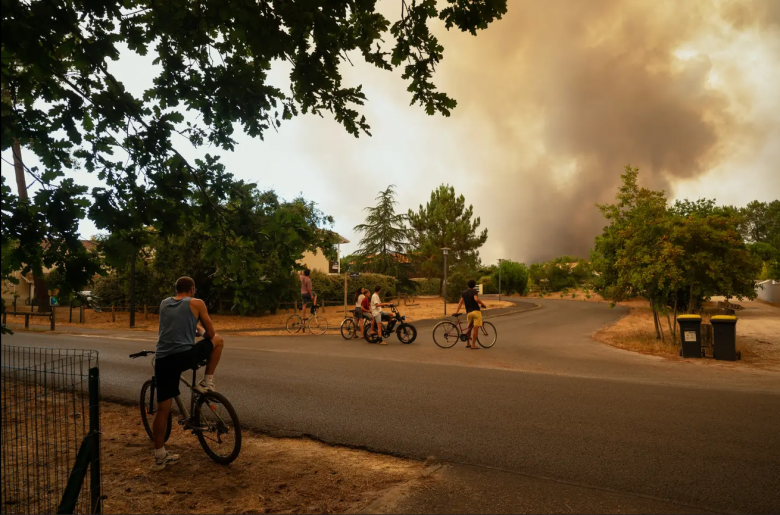
In 2026, Spain experienced the same violent climatic reversal as Bordeaux and the Gironde: months of storms, flooding and saturated ground followed by rapid drying, repeated heatwaves and destructive wildfires. The wet winter encouraged abundant vegetation, which later dried into fuel. Spain, too, went out of the swimming pool and into the fire.
Apocalyptic thinking is not a Christian novelty but a universal human archetype. From Mesopotamian floods to Hindu yugas, Aztec suns, and modern fears of climate collapse or nuclear war, humanity has always wrestled with visions of the end. Like children confronting the fear of death through rituals, societies create apocalyptic narratives to impose meaning on chaos. Evangelical warnings that “the end is nigh” are therefore not unique—they echo the same deep anxiety found across cultures and ages.