Excerpt:
Religion and metaphysics are not revelations from beyond but the stories we tell ourselves to soften the facts of mortality and failure. The diversity of human behaviour arises from the shifting interplay between genes and experience — a balance science can describe but not yet measure. Even in an age of reason, we continue to weave meaning into suffering because we cannot bear the thought that there may be none.
The Consolations of Narrative
Religion and metaphysics are the sum of the narratives we tell ourselves about life and death. The diversity of human character and behaviour arises from a shifting interplay between our genetic inheritance and our lived experience — a balance that varies from person to person and across the course of a life, and which science can describe but not yet measure. Yet rather than accept responsibility for our failings, we reinterpret them within the comforting frame of story: they become an expression of God’s will, a test of faith, or a lesson to be learnt. Because we cannot face either our mortality or our imperfection, we hide both behind the veil of narrative.
The human mind abhors blankness. It cannot bear the void, the unaccountable accident, the sheer contingency of existence. So we weave meaning into everything — into suffering, loss, failure, and death — to rescue them from chaos. Religion once provided the master pattern of this weaving. Every wound could be explained, every injustice deferred to a higher reckoning, every death softened by the promise of an afterlife. But these consolations, though noble in origin, were also evasions: they turned the rawness of being into allegory.
Even in an age of science, the impulse survives. The secular world no longer invokes gods or angels, but still arranges its chaos into stories: of progress, of self-improvement, of psychological growth. “Everything happens for a reason” has replaced “It is God’s will.” The structure is the same; only the vocabulary has changed. We remain storytellers in search of meaning because we cannot abide the possibility that there may be none.
Yet there is a kind of honesty — and perhaps even peace — in letting go of these reflexive stories. To see our lives as they are: fragile, finite, and flawed, sufficient only in their brief duration. The task is not to interpret our failures as moral lessons but to recognise them as the simple consequences of being human — creatures of appetite, error, and desire. In this acceptance there is no despair, only clarity. We no longer need to sanctify our pain or explain our mortality. We can meet both with the quiet dignity of understanding.
If religion and metaphysics have been the mirrors in which humanity has studied its reflection, then perhaps the time has come to lower the mirror and look directly. The stories will still matter — for beauty, for art, for community — but not as disguises for truth. To live without illusion is not to live without meaning. It is to discover meaning that does not depend on denial.
Postscript: It Is What It Is
In ordinary speech, people sometimes say, “It is what it is.” The phrase can sound like resignation or helplessness, yet at its core it expresses a quiet wisdom — the recognition that some things cannot be altered or explained. It dispenses with narrative and judgement alike. In that moment of acceptance, there is a faint trace of stoicism: not defeat, but the calm acknowledgement of reality as it stands.
This is a more realistic perception than wringing one’s hands at the sky and blaming God — that ineffable and inexorable mystery to which we attribute both mercy and misfortune. Acceptance does not deny the mystery; it simply refuses to dramatise it. It senses divinity not as something there, but as the silent depth into which all things fall and from which they return.
Coda: Existence and Morality
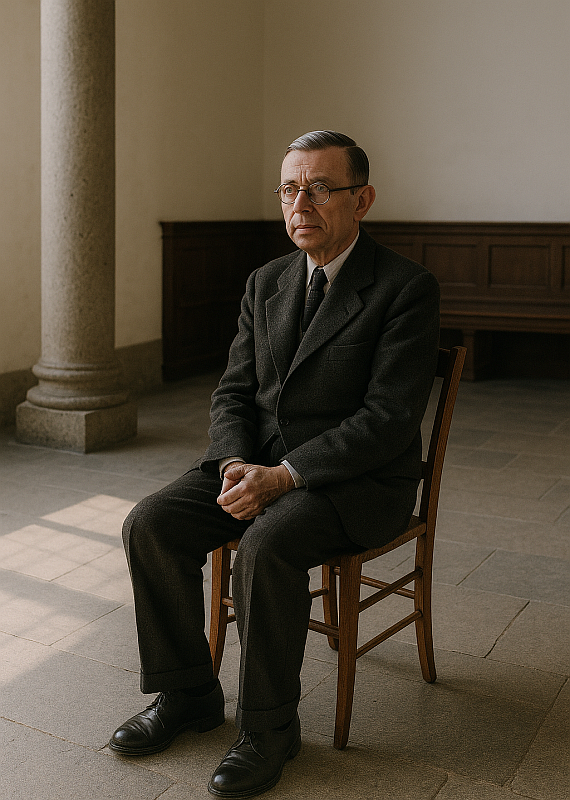
Morality is the resolution of the existentialist problem of what meaning to give to behaviour in a meaningless universe. If existence precedes essence, as Sartre wrote, then moral order is not discovered but made. In a godless or indifferent cosmos, goodness is no longer obedience but creation — the shaping of value from within consciousness itself. To act morally is to affirm that life, though without inherent purpose, is still worth living rightly.