Bochum-Wattenscheid, October 2025
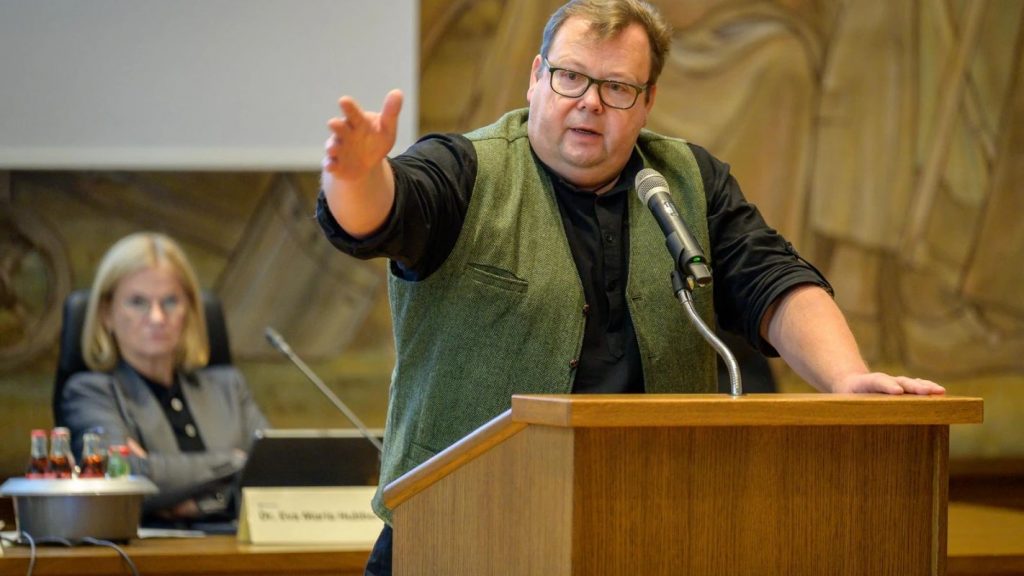
In Bochum-Wattenscheid, a small corner of Germany’s Ruhr region, the façade of political unity cracked. During the inaugural session of the district council on 31 October 2025, the AfD’s Cedric Sontowski was unexpectedly elected second deputy district mayor — a modest post, yet one loaded with political significance. Despite a cross-party pact between the SPD (centre left), CDU (centre right), Greens, and UWG:Freie Bürger (a local independent citizens’ group) to exclude the AfD from all offices, a secret ballot under the D’Hondt proportional method produced one extra vote for the AfD list, giving it the seat.
The reaction was instant and furious. The new SPD district mayor Holger Dünnebacke declared himself “shocked” by the result and refused to shake hands with the AfD leader Maik Klaus. Councillors from the governing alliance called it a “defeat for democracy” and even a “catastrophe.” The Green representative Oliver Buschmann went further, branding the AfD “right-wing extremists” and accusing an unnamed colleague of being “a traitor to democracy” for crossing party lines.
Yet the episode reveals a deeper truth: that the very mechanisms designed to protect democracy can no longer conceal the growing disaffection of ordinary voters. When a forbidden party gains power not through subversion but through procedure, it is no longer the system that is being threatened, but the illusion that it still commands universal consent.
What stands out most in the Bochum episode is not merely the fury directed at the AfD, but the blindness of those who call themselves defenders of democracy. In the name of safeguarding it, they are willing to distort its procedures and silence dissent — the use of the Verfassungsschutz (Federal Office for the Protection of the Constitution) since 2021 to monitor and potentially outlaw the AfD being the clearest example.
The Verfassungsschutz was established in 1950, in the early years of the Federal Republic, to ensure that democracy would never again be undermined by totalitarian forces. Yet today it risks dismantling the very freedoms it was created to defend. In the zeal to suppress what is deemed “dangerous,” the state itself begins to resemble the authoritarian systems it once opposed.
The irony could hardly be greater: in post-war Germany, fear of extremism was supposed to inoculate society against dictatorship, yet the instruments of vigilance are now being turned inward — against elected representatives and dissenting citizens. The modern Left, both in Germany and arguably in Britain, increasingly displays the same traits once associated with the communist movements it so feared in the 1970s: ideological rigidity, moral certainty, and an instinct to control the narrative rather than engage in open debate.
When those who claim to defend democracy no longer trust its processes, democracy itself becomes the casualty. One might recall the old definition of communism as “equal shares of misery for all.” Despite mounting evidence of social decay — unemployment, insecurity, uncontrolled migration, and civic fragmentation — the Left clings stubbornly to policies that deepen the malaise. What is most troubling is not their passion, but their blindness. The more rigidly they police opinion, the more they drive ordinary citizens toward the very movements they condemn.
Germany’s dilemma — mirrored increasingly in Britain under both Labour and Conservative governments—is that its political elites speak the language of democracy while distrusting the people who give it life. The outrage in Bochum is thus more than a local embarrassment: it is a mirror held up to a political class that fears freedom because it no longer understands it.