A private spiritual reflection on the inward altar of the soul, the beauty of silence, worship as joy and gratitude, and the ancient psalmic recognition that existence — God — was before us. The piece links personal inward awareness with Psalm 19, Psalm 8, and the humility of knowing that we are not first, but secondary.
A short reflection on the elegiac English pastoral tradition, giving Charles Wilfred Orr particular prominence and seeing his A Cotswold Hill Tune as part of the same landscape of folk memory, restraint, melancholy and tenderness found in Vaughan Williams, Butterworth, Gurney and Finzi.
A short reflection on the Government’s proposed under-16 social media ban, arguing that online harm to children is real, but that protection must not become the route by which family responsibility is replaced by state control and digital identity.
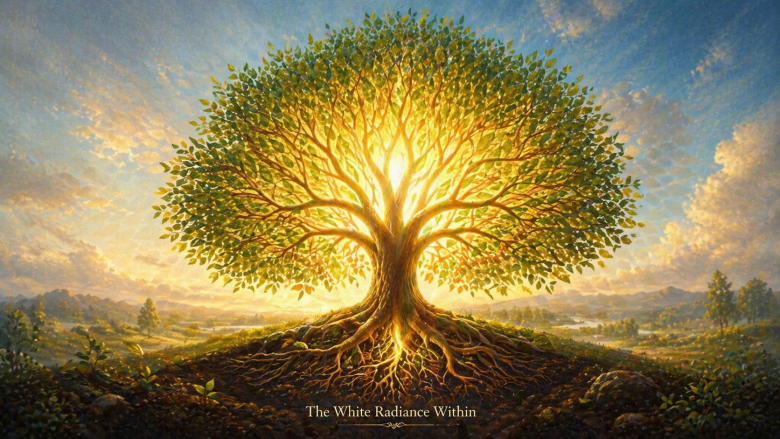
A reflection on euphemism, bodily embarrassment and spiritual idealism. Beginning with the way blunt words shock us, the essay moves through Shelley’s image of “the white radiance of Eternity” to ask whether religion and idealist philosophy are, in part, humanity’s most beautiful evasion of the body, decay and death.
Jordan Peterson’s struggle with Christianity raises a wider question: do human beings live by truth, by happiness, or by the narratives that give life meaning? This reflection argues that stories can guide or mislead us, and that the deepest relief lies in finding the source of goodness within ourselves and following it.

Teaching is often presented as a helping profession, but goodwill is not enough. A classroom is not the army, but neither is it a therapy circle. This article argues that prospective teachers need more than method, empathy, and good lesson plans: they need the temperament to exercise authority, enforce standards, and make teaching possible.
A good life may be measured by the old rule of the picnic spot: leave the place better than you found it. If the individual mind ends with the living organism, then dignity lies not in survival after death, but in the care, truth, restraint, and generosity we leave behind.

A short reflection on the present moment as the place where life is actually lived. Drawing on the phrase “I am Alpha and Omega” and the recovery saying “Yesterday is history, tomorrow is mystery — just for today,” this piece considers God not as a remote idea, but as the living depth of now: the point at which memory, hope, responsibility, and freedom meet.
There are certain words in religious speech which are used so often that their meaning is easily assumed rather than examined: God, Spirit, light, grace, glory, kingdom, eternal life. They carry great emotional weight, but they are not always used with precision.
Some truths cannot be taught as information. They can only be pointed to, lived, and inwardly recognised. Drawing on Ecclesiastes, Paul, Eckhart, Tolstoy, and the teaching of Jesus, this reflection explores the possibility that the divine is encountered not as doctrine but as experience: a depth within consciousness that upholds, illumines, and transforms. Whether that experience comes from beyond us, from within the brain, or from some mystery joining the two, the practical question remains the same: whether we live in contact with that depth or merely skim the surface of life.