Gestalt Preface
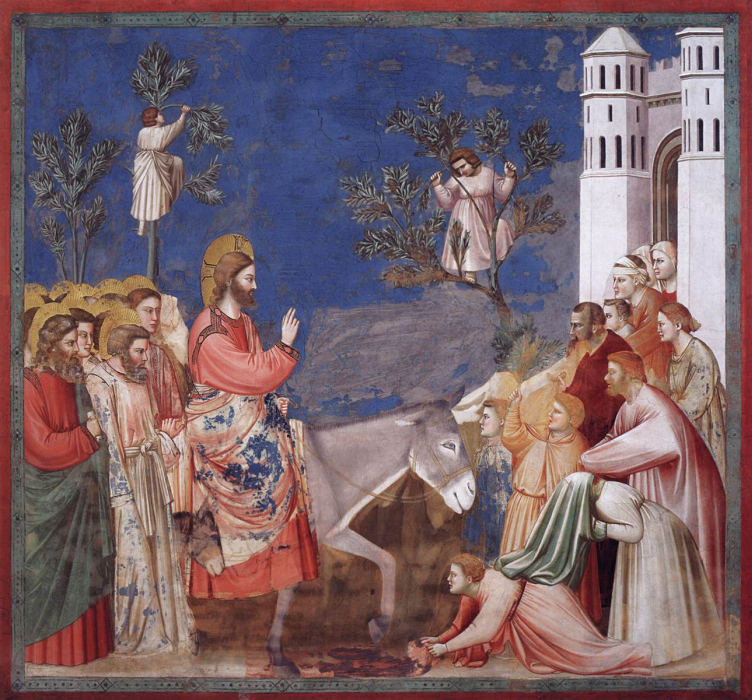
A lone figure rides a donkey through a city already taut with expectation. A loyal cluster of followers cheer and scatter garments; a group of pilgrims, excited by rumours, wave palm branches. Yet the city itself stands apart and unsettled, regarding the scene not with joy but with agitation. This is not a coronation but a provocation, not a triumph but a misfire. That tension, between Jesus’ enacted symbols and the public’s expectations, lies at the heart of the Gospel narratives and forms the interpretative puzzle this essay seeks to untangle.
I. Introduction: The Puzzle at the Heart of the Gospels
The final week of Jesus’ life is one of the most perplexing sequences in ancient literature. The Gospels portray a teacher whose symbolic actions were bold and deliberate, yet whose meaning was frequently misunderstood, resisted, or inverted by those who witnessed them. He entered Jerusalem in a manner the evangelists interpret as fulfilment of Scripture, yet which his contemporaries seem to have interpreted quite differently. He spoke in riddles to Pilate, provoking both bewilderment and frustration. And he persistently evaded the categories — political, nationalistic, apocalyptic — that various groups attempted to impose upon him. Running beneath all of this is a pervasive tension between Jesus’ identity as a teacher of moral transformation and the messianic role others expected him to inhabit. The Gospels are shaped by theology and devotion, but within that shaping lies something surprisingly consistent: the unmistakable voice of Jesus the teacher, whose sayings retain their power and authenticity even when the surrounding stories diverge or conflict.
II. The Messianic Pressure-Cooker of First-Century Judea
To understand why Jesus’ actions provoked such confusion, we must recognise the atmosphere of his world. First-century Judea lived under Roman occupation, and the combination of punitive taxation, political repression, military presence, and cultural humiliation created a society filled with both resentment and longing. People yearned for deliverance — not metaphorically but concretely — and any charismatic figure who attracted attention risked becoming a vessel for these national hopes. Jesus’ reputation as a healer and teacher ensured that such projections accumulated around him whether he invited them or not. The result was predictable: heightened expectations, dramatic misunderstandings, and eventual disappointment when he refused to embody the kind of political or military leadership the people desired.
This “messianic pressure-cooker” shaped the context in which Jesus entered Jerusalem. It explains why certain symbolic actions could be interpreted radically differently by various groups, depending on what they hoped to see — or feared they might see — in him.
III. The Donkey-Entry: A Symbolic Act That Backfired
The donkey-entry is perhaps the clearest example of this interpretive tension. According to the Synoptic Gospels, Jesus’ choice to ride on a donkey was a conscious enactment of Zechariah 9:9, a prophetic image of a humble, peaceful king. In Jesus’ hands, this gesture likely served as a parable: a rejection of martial nationalism and a declaration that the “kingdom of God” was a moral and spiritual reality rather than a political uprising. Yet symbols are notoriously dependent on context and audience. What Jesus meant to communicate — humility over triumph, inner transformation over outward revolt — could be understood only by those attuned to prophetic symbolism. For others, the gesture risked appearing ridiculous. A man with an ambiguous reputation, surrounded not by dignitaries but by fishermen, zealots, and women of uncertain standing, riding a borrowed colt into a politically volatile capital at Passover, would have looked less like a king and more like a provocateur.
The texts themselves acknowledge this ambiguity. Matthew tells us that “the whole city was stirred” when Jesus entered, asking, “Who is this?” (Matt. 21:10). The Greek verb eseisthē implies agitation rather than admiration. Luke indicates that the celebratory shouting came primarily from “the multitude of the disciples” (Luke 19:37), not from the population of Jerusalem itself. John notes that the excitement came mainly from pilgrims who had heard reports about Lazarus (John 12:17–18). The city, in other words, did not embrace Jesus; it hesitated, puzzled and unsettled by an act that seemed neither royal nor dignified.
What Jesus intended as a non-violent re-imagining of kingship may therefore have appeared, to many, as a mockery of the very hopes they cherished.
IV. A Movement with a Reputation: The Disreputable Edges of Jesus and His Followers
The reception of Jesus’ entry cannot be understood apart from the public reputation he and his followers had already acquired. Later Christian imagination often presents Jesus and the disciples as serene, immaculate figures. Yet the Gospels themselves preserve a wealth of material suggesting that the movement appeared suspicious, disorderly, and socially marginal to many observers.
Matthew and Luke preserve a revealing accusation: “Look! A glutton and a drunkard, a friend of tax collectors and sinners” (Matt. 11:19; Luke 7:34). This charge would hardly have been recorded unless it was widely circulated and difficult to suppress. Jesus touched lepers (Mark 1:41) and a corpse (Luke 7:14), crossing boundaries of ritual purity. He associated with tax collectors and household sinners (Mark 2:15–17). A woman of questionable reputation publicly touched him and anointed his feet, provoking his host to doubt his prophetic character (Luke 7:37–39). His disciples plucked grain on the Sabbath (Mark 2:23–28), did not fast when expected (Mark 2:18), and neglected traditional hand-washing rituals (Mark 7:2–5). Even Jesus’ own family attempted to restrain him because “people were saying, ‘He is out of his mind’” (Mark 3:21). Others accused him of being demon-possessed (John 7:20; 8:48). When he was arrested, at least one disciple was armed (John 18:10; Luke 22:38), hinting at a degree of volatility within the group.
This composite picture is essential. It suggests that Jesus’ movement resembled, from the outside, the sort of itinerant, charismatic fringe group that could easily provoke suspicion or alarm, especially during Passover. Against that background, Jesus’ arrival on a donkey might not have looked like the fulfilment of peaceful prophecy but the staging of a parody — an affront rather than a consolation.
V. The Crowd Dynamics: Why Barabbas Made More Sense
The rapid shift from the donkey-entry to the cry for Barabbas has often been interpreted as evidence of crowd fickleness. Yet a more psychologically coherent interpretation emerges once we recognise the mismatch between public expectation and Jesus’ message.
Barabbas was involved in violent insurrection (Mark 15:7). He represented the sort of militant leadership that many Jews believed necessary for liberation. He was, in short, a recognisable type. Jesus, by contrast, had challenged the very foundations of such hope. His symbolic entry on a donkey, far from signalling readiness for revolt, publicly rejected it. From the perspective of those who longed for political deliverance, Jesus’ gesture was not merely disappointing; it was insulting. It suggested that their suffering and their aspirations were being trivialised.
Thus the choice between Jesus and Barabbas was not arbitrary. Barabbas matched the expectations of a wounded people; Jesus contradicted them. The disappointment, sharpened into resentment, explains the crowd’s hostility more convincingly than any notion of capricious enthusiasm.
VI. Jesus Before Pilate: The Refusal to Be Defined
This tension finds its clearest expression in the dialogue with Pilate. Pilate asks, “Are you the king of the Jews?” (Mark 15:2), probing whether Jesus poses a political threat. Jesus’ response — “You say so” — is enigmatic not because it is evasive but because the question itself is malformed. If Jesus had answered “yes,” he would have accepted a political category he had spent his ministry rejecting. If he had answered “no,” he would have denied the symbolic truth of his role. The reply acknowledges the inadequacy of Pilate’s framework while simultaneously refusing to oppose it outright. Rome spoke the language of control and kingship; Jesus spoke the language of moral transformation. The two worlds, despite touching at this moment, did not intersect.
VII. The Human Edges: A Movement Less Sanitised Than We Imagine
As the Gospels evolved, written decades after the events, Christian communities naturally reshaped the story to emphasise theological meaning and moral edification. Softening occurs. Rough edges are smoothed. Disciples become saints; controversies become teaching moments; misunderstandings become preludes to revelation. Yet even within this shaped narrative, enough human detail survives to reveal a Jesus who moved among the marginal, challenged the respectable, and provoked both admiration and alarm. He travelled without a home (Matt. 8:20), lived in continual motion, and attracted followers who were raw, diverse, and unpredictable. The later idealisations cannot fully conceal this reality.
Recognising this human texture does not diminish Jesus; it allows us to see the scale of the misunderstanding that surrounded him and the courage with which he held to his vocation.
VIII. The Critical Distinction: Events Shift, but Teaching Endures
If the narrative elements are shaped and sometimes opaque, the sayings of Jesus present a remarkably coherent voice. Across Matthew, Mark, and Luke, his teachings display a consistent rhythm and moral clarity: paradoxical, poetic, subversive, and oriented toward inner transformation. “Turn the other cheek,” “bless those who curse you,” “forgive seventy times seven,” “the Kingdom is within you,” “the last shall be first”: these are not the utterances of a political revolutionary but of a moral visionary.
Jewish culture placed high value on the accurate preservation of a teacher’s sayings, and this tradition of memorisation helps explain why the teaching voice of Jesus remains so stable, even where the narrative differs. The authentic Jesus survives most reliably in the parables, aphorisms, and ethical commands that invite the hearer to rethink the world from the inside out.
IX. Conclusion: The Teacher Who Would Not Be a Messiah
In the end, Jesus refused every external role imposed upon him. He resisted the expectations of the crowds, declined the categories of Rome, and challenged the theological assumptions of his own tradition. His entry into Jerusalem on a donkey signalled a rejection of violent liberation. His silence before Pilate revealed the limits of political definition. His actions unsettled the city because they announced a kingdom inconsistent with the desires of a people hungry for national deliverance.
And yet, through all the misunderstanding and distortion, the voice of Jesus endures. What remains is not a failed king but a teacher whose moral imagination continues to challenge and unsettle. His ethic of compassion, forgiveness, and awakening has outlasted the political hopes that once swirled around him. The stories may be shaped by expectation, and the public may have recoiled from what they misinterpreted, but the inner vision persists: a teaching that refuses violence, overturns hierarchy, and calls the human spirit to a deeper and more demanding freedom.