
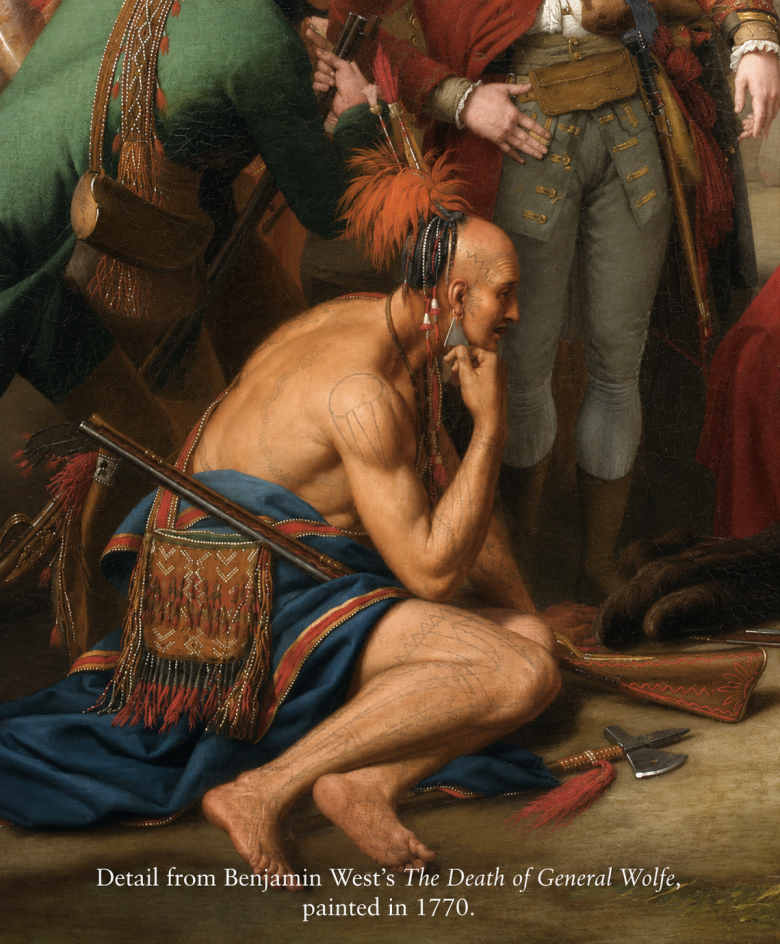
For the French Romantics, the American Indian represented more than an exotic other. He became a symbolic figure through whom Europe reflected on its own condition: freedom and estrangement, nature and civilisation, innocence and loss. In writers such as Rousseau and Chateaubriand, Indigenous America appeared as a world less divided, less artificial and closer to nature, even if that vision often told us as much about European longing as about Native American reality.
A good life may be measured by the old rule of the picnic spot: leave the place better than you found it. If the individual mind ends with the living organism, then dignity lies not in survival after death, but in the care, truth, restraint, and generosity we leave behind.

A poem and reflection on nature, solitude, and le fer dans l’âme — the iron in the soul. A meditation on how lives unfold without hierarchy, and how presence allows us to carry our inner weight with dignity.
An elemental lesson in contrasts — water and fire, calm and energy, coolness and heat. This passage introduces neuter nouns and reinforces adjective agreement through scenes of domestic and natural life.
A quiet riverside scene introducing 3rd declension nouns and adjective agreement. Learners expand natural vocabulary—river, wind, cloud, and sun—while practising how adjectives adapt to match the gender and case of different nouns.