
Religious stories endure because they give form to possibilities already present within the human mind. At their best, they celebrate humanity’s potential for compassion, courage, sacrifice, forgiveness and care for the vulnerable. Their distortion begins when metaphor is converted into history, archetype into supernatural fact and human insight into divine commandment. We need not eradicate these patterns, even if that were possible. We need to understand them and allow them to serve life without submitting to the doctrines built upon them.
Reason can expose prejudice, but it can also be recruited to defend it. Philosophy tests inherited assumptions; poetry enlarges sympathy by restoring the individual behind the label.
Religions arose from genuine human experiences, but their interpretations hardened into objective truths. Reification turns symbols into dogma and inherited belief into a prejudiced way of seeing the world.
Power can attract and reward people low in empathy and high in dominance, manipulation and appetite for risk. The danger lies in institutions that allow such traits to operate without effective restraint.
Conscience develops from our inborn capacities for attachment, empathy, reciprocity and concern for others. Early experience shapes these capacities, while reflection can expose and revise the programme laid down in childhood.
The danger is not that AI will become evil, but that it will pursue human objectives without judgement, sympathy or restraint. HAL warns us what can happen when obedience itself becomes dangerous.
AI may possess intelligence without will: it can process, compare and respond without hunger, fear, ambition or any purpose of its own. The central question is whether consciousness requires more than the intelligent processing of input.
This morning’s Thought for the Day, given by the Revd Dr Michael Banner of Trinity College, Cambridge, used the death of Desmond Morris to raise an old question in a new form: are human beings fallen angels or risen devils? That reflection led me back to the postwar cultural watershed and to a select list of books that challenged inherited ideas about religion, science, human nature, and modern civilisation.

The Bible recognises that societies organised around wealth and power easily drift toward injustice. Yet it offers no political blueprint for a perfect society. Instead, it proposes a moral framework built on prophetic criticism of injustice, limits on the accumulation of wealth, and—most radically—an inner transformation of the human heart. The teaching of Jesus challenges not only unjust systems but the human desire for possession and status that sustains them.
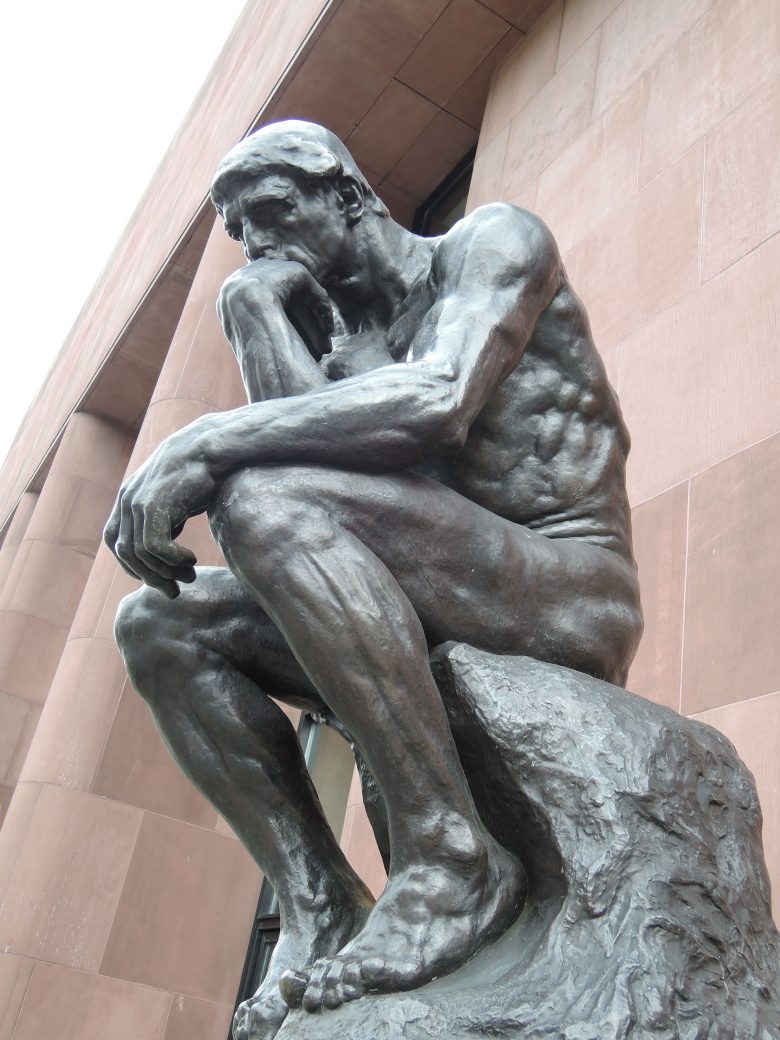
Religion can be understood not as literal cosmology but as a symbolic language through which humanity reflects on its own existence. From Feuerbach and Durkheim to modern psychology, religious ideas reveal how rational animals attempt to interpret consciousness, morality, and the mystery of being human. Seen this way, the emergence of reflective awareness is not a tragedy but one of the great gifts of evolution.