
A retelling of twenty foundational Greek myths, read not as entertaining fables but as early attempts to understand the origins of civilisation itself. From chaos and creation to law, hubris, restraint, and social order, these stories reveal how ancient cultures grappled with power, responsibility, and the fragile balance between destruction and meaning. Read alongside parallel narratives from the Bible, they suggest that the struggle to build and preserve civilisation is a shared human concern — one that transcends time, religion, and geography.
Society exists to establish order, not fulfilment. Social constraint makes collective life possible, but it does not recognise the autonomy or particularity of the individual. This essay explores the tension between survival instinct and human meaning, arguing that conflict arises not from moral failure but from scarcity, fear, and the limits of social design. Between raw survival and moral idealism lies the harder task of living truthfully within constraint, without illusions of purity, rebellion, or final harmony.
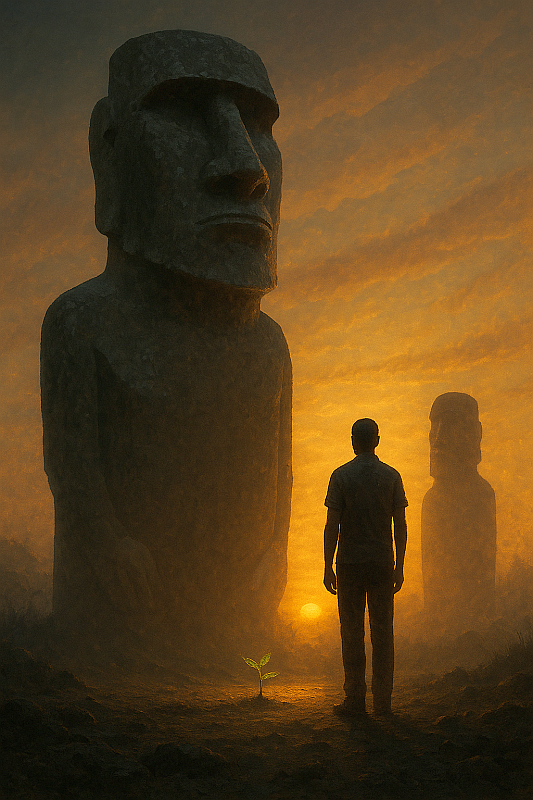
A sweeping reflection on humanity’s struggle to reconcile instinct and intellect, from the ancient gods of Mesopotamia to the teachings of Jesus. This essay argues that true transcendence lies not in power but in inner integration, and that mortality presses us toward completion. Through myth, psychology, memory, and personal experience, it shows that the only moment for wholeness is now.
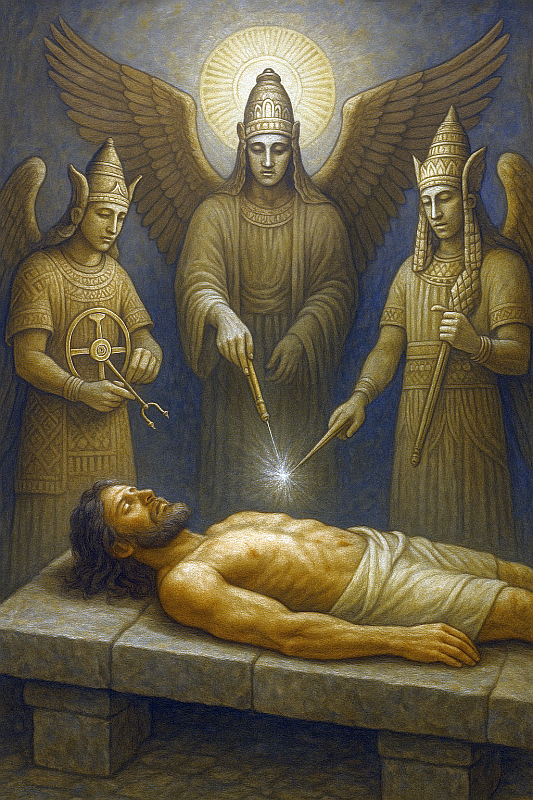
A demythologised reading of Genesis and the Gospels reveals a single thread running through human history: we are conflicted, powerful, unstable creatures trying to understand ourselves. Eden describes why we are dangerous; Jesus offers a path to inner transformation. Later doctrine turned this into metaphysics, but the original insight was psychological. This article explores Adam, Meister Eckhart, the Synoptics, and the Sumerian myths as early attempts to explain the divided human self — and what redemption really meant.
Are humans naturally exploitative, or do we learn domination from culture? This essay traces the roots of exploitation from evolution to empire and argues that individual virtue must be joined to collective