
From Augustine to Eckhart, from Teresa to Tolstoy and beyond, the same lesson returns: the deepest truth cannot simply be taught from outside but must be realised inwardly. This essay follows that long mystical trajectory through childhood faith, doubt, animism, Jesus’ inward law of love, and the betrayal of his message by empire and institution.
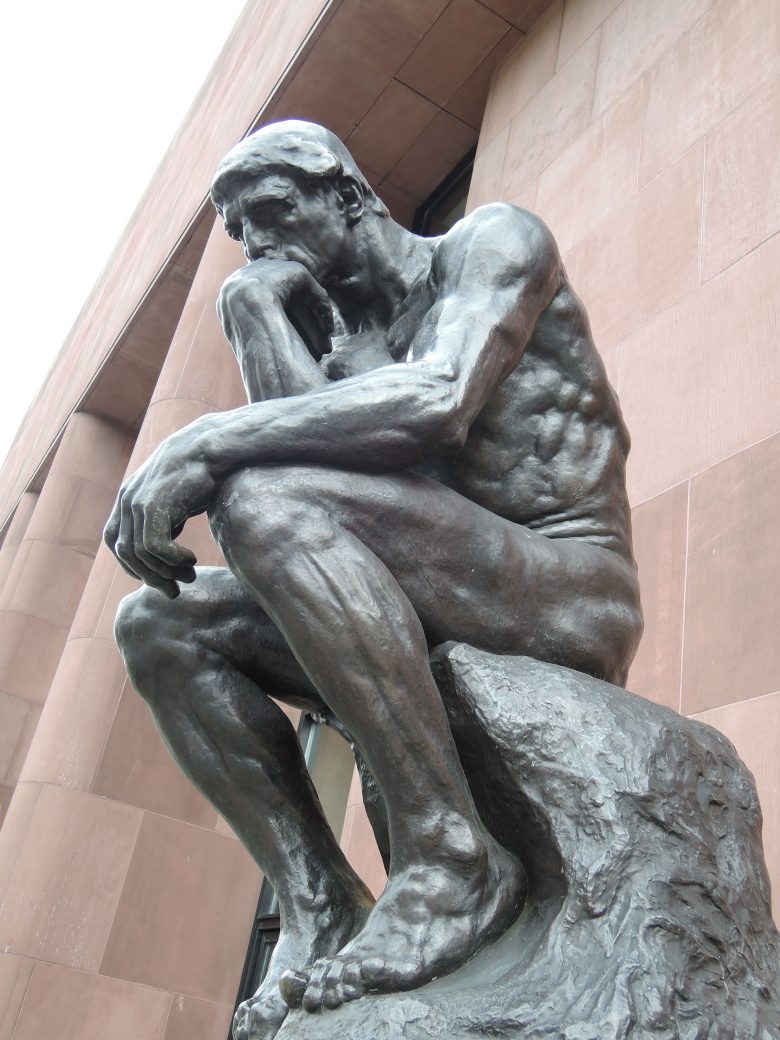
Religion can be understood not as literal cosmology but as a symbolic language through which humanity reflects on its own existence. From Feuerbach and Durkheim to modern psychology, religious ideas reveal how rational animals attempt to interpret consciousness, morality, and the mystery of being human. Seen this way, the emergence of reflective awareness is not a tragedy but one of the great gifts of evolution.
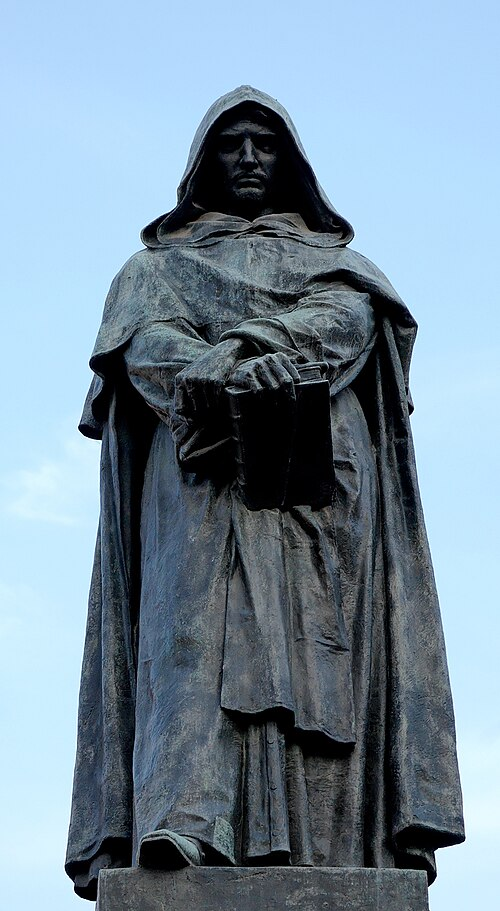
Giordano Bruno saw, more than 500 years ago, that human beings project their inner life onto the cosmos. His “infinite universe” was not astronomy but a vision of the human psyche speaking through myth — a truth that echoes across my own work. In an age that has lost its spiritual depth, Bruno’s voice returns with renewed urgency.
A reflective essay viewing the Bible as an allegory of consciousness — where Abraham, Israel, and Jerusalem represent stages of inner growth, and the ancient covenant reveals itself as a timeless moral psychology of the human soul.
A meditation on the evolution of consciousness in Christian thought — from Paul’s “unknown God” to Jesus’ vision of the divine within — exploring how faith, philosophy, and awareness converge in the search for unity with the living spirit.
Syd Barrett, the founding spirit of Pink Floyd, sought illumination through LSD and found disintegration instead. His life traces the tragic arc from vision to madness — a false awakening born of brilliance without balance. Genius opened the door; suffering held him there. In the end, he became the King’s Fool: a man who saw too much, too soon.
A reflective essay on how Isaiah’s compassion, Jesus’ inner kingdom, and the Gnostic idea of the divine spark reveal a long evolution in humanity’s understanding of God — from fear of an external ruler to awareness of the divine within.
For two thousand years, the West has lived inside a sacred dream — the story of divine redemption. Yet the man who inspired it, Jesus of Nazareth, spoke not of metaphysical rescue but of inner change. This essay distinguishes between Jesus the teacher and the Christ of theology, tracing how faith became power and how its original insight can still guide a new awakening.
The attempt to read the New Testament as history has occupied scholars, believers, and sceptics for centuries. From the moment the printing press placed the Bible into ordinary hands, the question has been asked again and again: What really happened? The search often becomes obsessive, because the stakes are not merely academic. To discard the message of the Bible is to risk being cast into “outer darkness,” as Jesus himself put it. To accept it uncritically is to surrender reason to myth.
A reflection on Jesus, Paul, and the problem of dogma. Against original sin and externalised divinity, this essay argues that nurturing human potential and living within mystery are more important than rigid belief.