
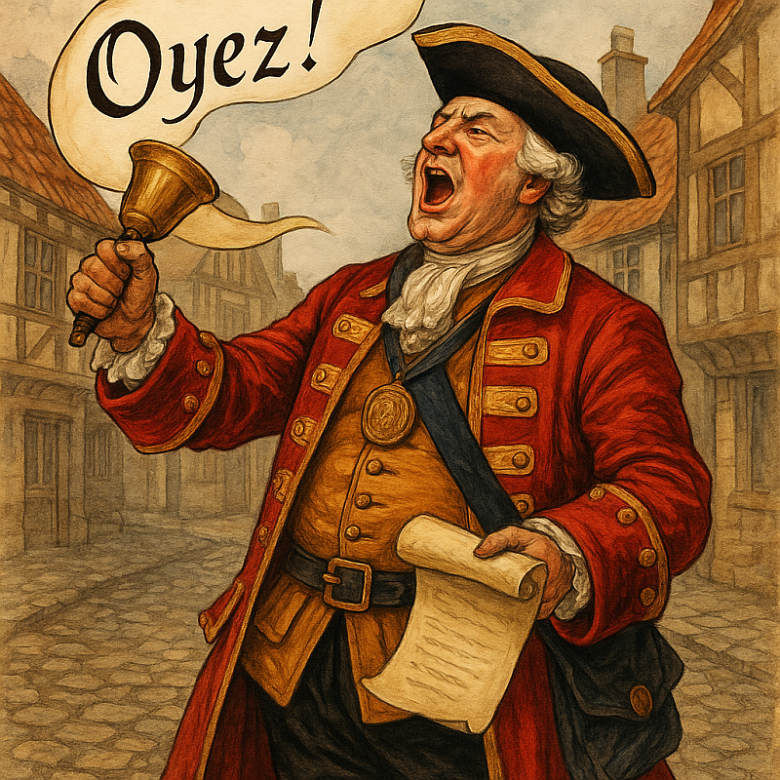
A reflection on how broadcasting has shifted from its original public mission — to inform, to educate, to entertain — into a marketplace driven by attention, emotion, and confirmation. From medieval town criers to the BBC, from early newspapers to today’s partisan media, the thirst for drama and validation has always shaped the news. This essay asks what broadcasting is now for, why audiences gravitate toward outrage and simplicity, and why I write without seeking approval — letting my thoughts exist, like Shakespeare’s sonnet, for those who may one day find them.
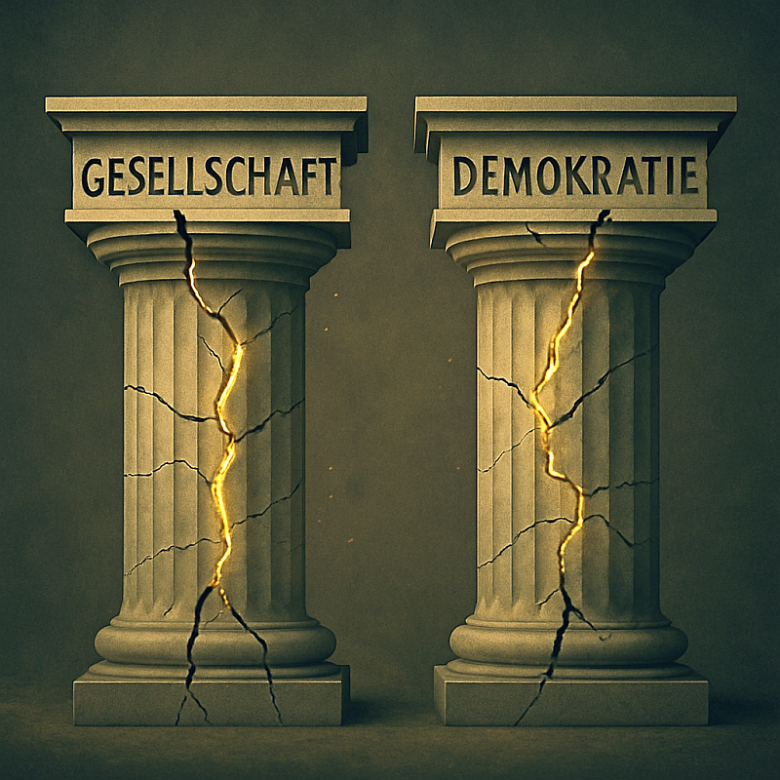
Public debate in Britain and Germany increasingly blames immigration for social and political strain. Yet most pressures—housing shortages, overstretched schools and hospitals, stagnant wages, declining neighbourhoods, and falling trust—began decades before recent migration waves. Immigration is not the cause of systemic weakness; it merely exposes it. This essay traces the deeper forces behind today’s instability: long-term underinvestment, the neoliberal shift since the 1980s, demographic ageing, bureaucratic rigidity, and the erosion of social cohesion. It also examines why parties like the AfD and Reform UK attract support—and why their rise reflects a democratic system struggling to correct itself.
Ein wachsender Teil der Bevölkerung in Deutschland und Großbritannien macht Migration für soziale und politische Spannungen verantwortlich. Doch bei näherem Hinsehen zeigt sich: Die meisten Probleme – Wohnungsnot, überlastete Schulen, lange Wartezeiten, stagnierende Löhne, bröckelnde Nachbarschaften – entstanden lange vor größeren Zuwanderungswellen. Migration verstärkt sie nur. Der eigentliche Kern der Krise liegt in jahrzehntelanger Unterinvestition, neoliberaler Politik seit den 1980er Jahren, der Erosion sozialer Infrastruktur und eines schwindenden Vertrauens in die Demokratie. Die AfD wird dadurch sowohl zum Symptom als auch zum Problem eines Systems, das weder Korrektur noch offene Diskussion zulässt.
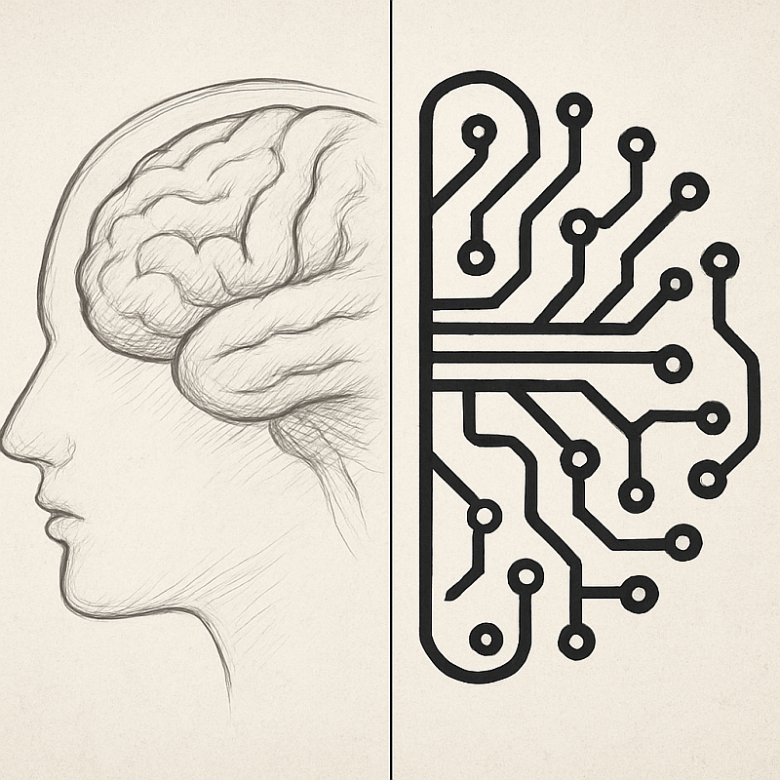
A visual reflection on the deepest difference between humans and AI: the human mind grows through experience and becomes itself over time, while AI arrives fully formed, pre-structured, and without a lived past. This split image captures the contrast between organic consciousness and engineered intelligence.
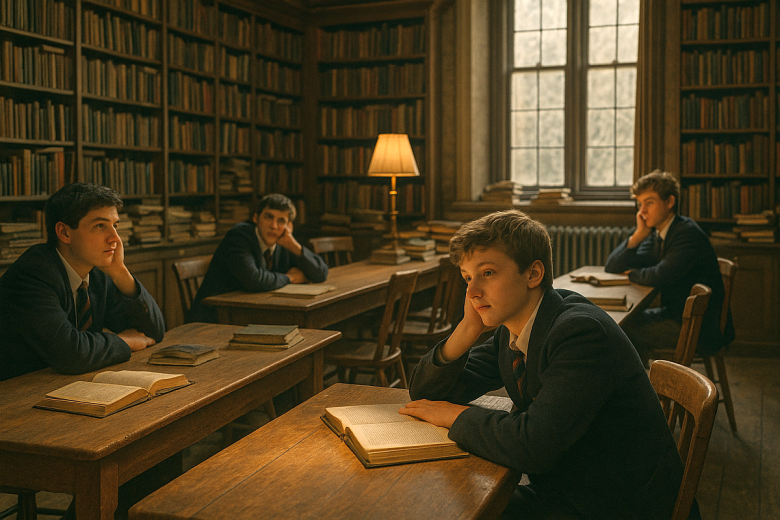
Eine persönliche Erinnerung an die Debattiergesellschaft einer englischen Schule führt zu einer grundsätzlichen Analyse: Debatte als Bildungsform bleibt in Großbritannien ein Privileg weniger. Der Text plädiert für einen neuen pädagogischen Humanismus, der moralische, bürgerliche und intellektuelle Bildung neu zusammendenkt.
A reflection on how debate in Britain has become the preserve of the few, leaving most pupils trained to perform rather than to think. Drawing on personal experience, it argues for a new educational humanism grounded in moral, civic and intellectual formation.

A sharp analysis of Gerald Grosz’s recent speech accusing Germany’s leaders of manufacturing fear to distract from domestic failures. This summary examines the speech’s claims, rhetorical strategies, emotional appeal, and weaknesses, showing how populist performances galvanise disillusioned voters while offering little balanced analysis. It explores why such messages resonate in today’s climate of distrust and political fragmentation.

A reflection on the real meaning of enlightenment — not as mystical experience, but as the quiet reconciliation between our deeper vital dynamics and the surface structure of everyday life. The heart, the conscience, and the unconscious guide us long before reason recognises their pattern.

A poem and reflection on nature, solitude, and le fer dans l’âme — the iron in the soul. A meditation on how lives unfold without hierarchy, and how presence allows us to carry our inner weight with dignity.

From Roland at Roncevaux to Arthur of Camelot and Jesus of Galilee, history repeatedly grows into heroic myth. Small facts expand into symbols, and real lives acquire legendary afterlives. This aside explores how the process unfolds — and why some figures become cosmic.